

Line by line: Phillips heeds voices in ‘Lark & Termite’
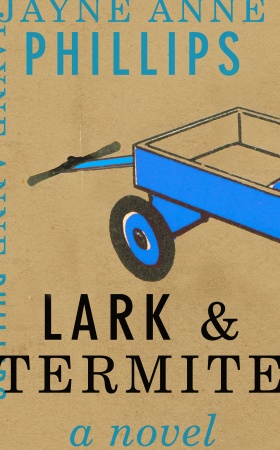

Jayne Anne Phillips has released “Lark and Termite” after a 30-year career of examining politics and violence in American culture.
Boston ? Falling in love with a writer requires commitment; the long haul, thick and thin. They get old, you get old. The relationship waxes and wanes. Most readers can recall times of perfect synchronicity — when the book was the necessary enzyme, the catalyst, the missing piece. “Black Tickets,” Jayne Anne Phillips’ first collection of stories, published in 1979, was, for more than one earnest English major, such a book.
Phillips came of writing age in the post-Vietnam era: Each of her deeply political books, including her latest, the novel “Lark and Termite” (Alfred A. Knopf, $24), set during the Korean War, has examined trickle-down violence in American culture.
“Black Tickets” was not a nice book: It was full of drugs, rape, murder, incest, poverty and pain. And, because Jayne Anne Phillips was and is a literary fiction writer, she knew, even then, how to bypass the reader’s brain and inject her words into the bloodstream. This is what makes literary fiction so dangerous; it is a genre that requires a comprehensive understanding of the soul’s vulnerability.
Phillips gave the green light to writers such as Susanna Moore (“In the Cut”), Kathryn Harrison and many, many others who came up through academia, through creative writing classes in which women didn’t always, whether from shyness or fear of recrimination in a good-girl culture, tell it exactly like it was.
When “Black Tickets” was published, Phillips was praised to high heaven by Raymond Carver, John Irving, Annie Dillard, Tim O’Brien and many others. Nadine Gordimer called Phillips “the best short story writer since Eudora Welty.” Sometimes praise like that can stop a young writer short in her tracks, but not Phillips. Her other work includes “Sweethearts” (1976), “Machine Dreams” (1984), “Fast Lanes” (1987), “Shelter” (1994), “MotherKind” (2000) and now, “Lark and Termite.”
“It means a lot that writers support my work,” Phillips says. We are sitting in her living room in a Boston suburb on a snowy December day. The house is a mustard-colored Victorian in a neighborhood of cafes and secondhand clothing stores. The kitchen is bright, clean and suspiciously quiet — somewhere in the house Phillips’ grown children are sleeping off Christmas. Two Siamese cats furl around the andirons of an unused fireplace. The world of “Black Tickets” is far, far away.
Sedimentary writer
“Lark and Termite” moves between North Chungchong Province, South Korea, in 1950 and Winfield, W. Va., 1959. Cpl. Robert Leavitt, against all his better judgment and training, has saved a young Korean woman, her old mother and a young boy who is blind and deaf by dragging them into a tunnel to avoid the bullets from American airplanes strafing Korean refugees and their own troops. Back home, the love of his life, Lola, is about to give birth to their son, who will be nicknamed Termite because, as his half-sister, Lark, explains, “he’s in himself like a termite’s in a wall.” Lark is Lola’s child from some previous relationship: She has grown up with Lola’s more responsible, God-fearing sister, Nonie. The novel is a masterpiece of sedimentary writing; layers so thin and fine you can see through them into the past or almost to the future. How does the writer do this?
“I heard the first line and followed the language into the book,” Phillips says. “I started with Lark’s voice and she told me what she didn’t know.” Phillips describes the sounds that echoed in her head as she began the book — a train, the river, echoing in a tunnel.
The novel also began with a strong image that Phillips had carried with her for three decades. “I was visiting a friend in Virginia, where I grew up. I looked out her window into an alley and saw a boy seated on a metal chair holding a blue strip from a dry cleaning bag. He sat there for hours.” Yet another ingredient came in the form of the story of the massacre of hundreds of Korean civilians at No Gun Ri in 1950, reported by The Associated Press’ Charles J. Hanley in 1999 (Hanley shared a Pulitzer with two colleagues for the story in 2000).
“He feels the girl behind him,” Phillips writes of Leavitt, in the tunnel, imagining Lola at home giving birth even as he lies dying. “It’s now, he can feel it. His baby is born, deep inside him where the pain throbs. It’s all wrong and it’s true, his legs are dead and his guts are torn apart but his spine opens up like a star. He can feel Lola split apart, the baby fighting her, tearing his way. The girl’s arm tightens across Leavitt. She holds the boy motionless and pulls Leavitt tighter against them, against the tunnel wall. He draws back, into her hard thin limitless chest, inside her embrace.”
Images and sounds
While many authors of literary fiction focus on metaphor as the germinating principle, Phillips begins with images and sounds that she tunnels into as she creates the layering effect that gives “Lark and Termite” its eerie resonance — the image, for example, of Leavitt dying in the tunnel and Lark, finding refuge for herself and Termite in a tunnel as flood waters eviscerate their neighborhood.
Whereas metaphors depend on narrative, on context and story, on the author’s vision, images force the writer to move through the book alongside the reader. “The voice of the book should be inside the reader; it should become your voice,” Phillips says in exactly the kind of calm, measured, eye-of-the-hurricane voice one would need to allow the bullets, the voices of dying children and the rising waters to fall just short of deafening cacophony. “I work with the roots of language,” she says, “with sense-memories to create a link to the readers’ consciousness, to make them connect to the story at a deep level.”
Phillips has come to believe that writers are the conscience of a culture; they write the memory of a culture. “The past contains meaning — how do events connect?” She quotes T.S. Eliot’s dictum that the deeper the writer can go into our collective consciousness, the closer she will come to “the still point of the turning world.” At that point, she says, “identity becomes specific and universal. The writer takes sense-memories that are specific and applies them to a broader world. I never lost a brother. I could not know what that was like except by writing my way into it.”
Outside, the temperature is dropping, and snow is making the roads more daunting. Someone coughs in the next room. “I don’t believe in happiness,” Phillips says, and just hearing it, from someone who has spent much of her life tunneling into meaning, has a relaxing effect. Her books are not weighed down by expectations of how the world should be. “It’s a transitory state that we move through,” she says.
Phillips is working on another book. She thinks it’s a good sign when her editor at Random House, Ann Close, can read a manuscript many times and not tire of it. She’s proud of the work she did on “Lark and Termite,” the stresses in the lines, the familiar geography. “I write like a poet,” she says, “line by line.”
Arts and Entertainment

Photos: Lawrence begins World Cup festivities with downtown block party
Watkins Museum to open special exhibit detailing how Douglas County celebrated America’s Bicentennial

Go, See, Do: Kaw River Roots Festival, markets and more

Soccer gear honoring Lawrence history’s all-star team is now on sale as part of city’s public art exhibition

Nominations, call for artists open for Lawrence’s 2026 Phoenix Awards