

Cameras can be an important garden tool
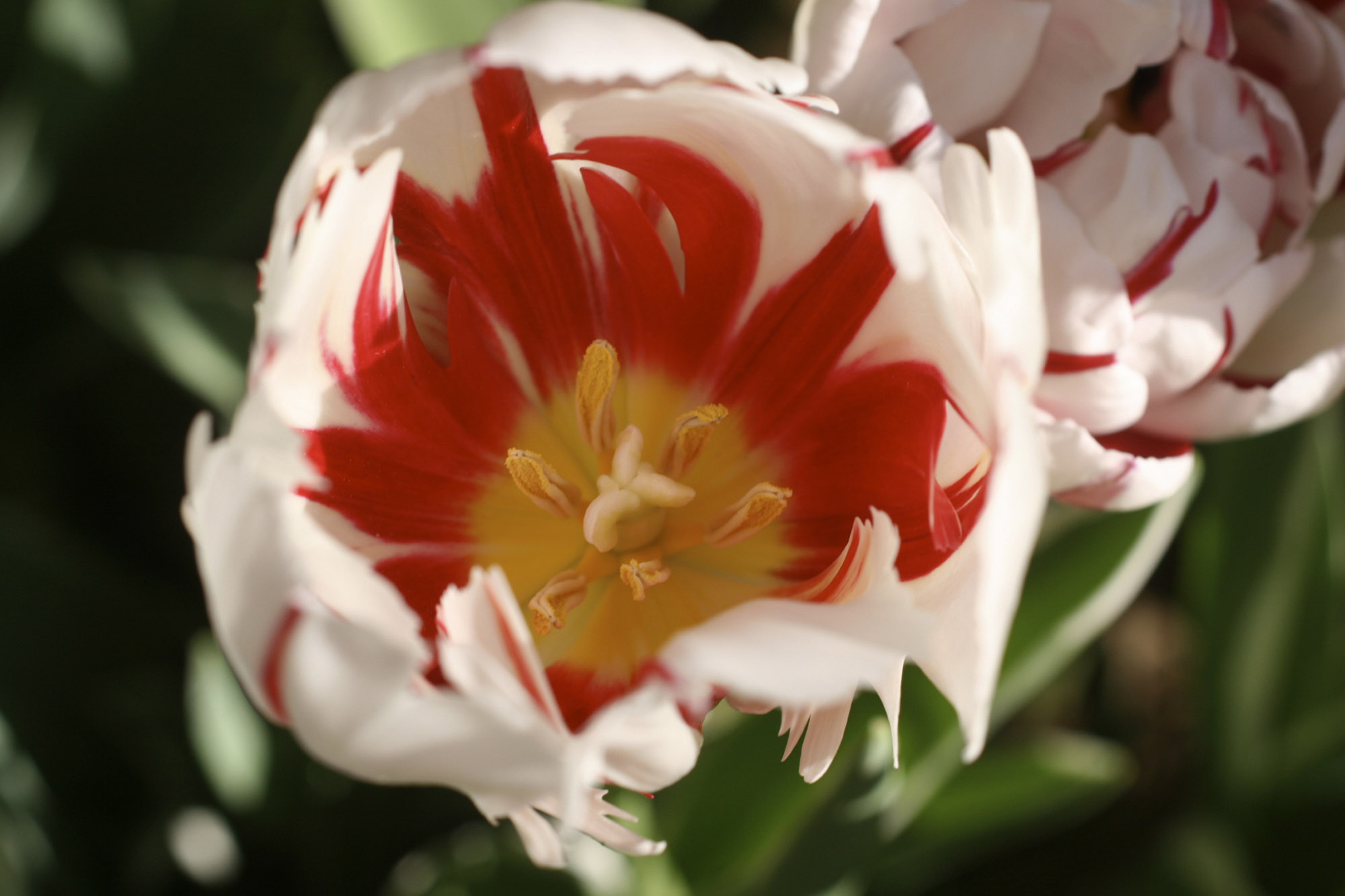
The inside of a bearded tulip is seen in this photo shot in New Market, Va. This is a pollinator’s-eye view of the inside of a bearded tulip taken with a macro lens attached to a digital camera.
Advances in digital cameras are making garden photography a snap, not only in the quality of images but also in their usefulness.
Backyard gardeners are using digital photography for everything from landscape design to identifying plants.
For example, “If you run across an area of insect infestation, you can take a picture of it and e-mail it to somebody — a county agent or entomologist,” says Alan Detrick, author of “Macro Photography for Gardeners and Nature Lovers” (Timber Press, 2008).
“Instead of shipping an actual sample and hoping that the animal or infestation is alive when it gets there, you can get somebody to look at the image and diagnose the problem in real time.”
And you don’t have to pony up a big wad of cash to get started. The price of a good point-and-shoot camera (compact, fixed lens) begins around $150. A top quality digital single-lens reflex camera (larger body, interchangeable lenses) runs about $500. Accessories can be purchased later, primarily a tripod, special purpose lenses and auxiliary lighting (think ring flash for close-in work).
The popular point-and-shoots are compact enough to carry comfortably in a pocket while you garden, Detrick noted.
A computer for downloading and editing images is essential. A printer helps, too, but then many people already have that kind of gear.
Some other practical uses for digital cameras in the garden include record-keeping, landscape ideas, identification, succession planting and more.
Here are some ideas for using your camera in the garden:
• Record-keeping. A picture really is worth a thousand words, especially if you’re keeping a journal or diary tracking the gardening changes you’ve made season by season. Many cameras will stamp the images with date and time taken.
• Landscape ideas. Visit public gardens or tour well-tended neighborhoods to record designs, colors, patterns or plant combinations you like. Be careful about such things as copyright, invasion of privacy and trespassing laws, though, especially if you intend to publish your pictures. Seek permission — written, if possible — before setting up a tripod or pointing your camera toward privately owned gardens.
• Identification. Link the names with the images, whether plant varieties or beneficial bugs. Take “mug shots” of troublesome insects to help in the hunt for safeguards. Document changes in plant maturity as you would a child’s growth spurts — from seed to sprout to full bloom.
• Memory prompt. Collect images of your garden through the seasons to identify empty spaces and perennial sites.
“About this time of year, you look at your garden and you only have a vague idea of where the perennials are planted,” said Walter Chandoha, a photographer and lecturer from Annandale, N.J. “Come spring, you’ll get a couple of pots of something from the nursery and you’ll dig down and uproot the peonies. But if you use the camera when they’re in bloom, then you’ll know.”
• Photograph the plants that worked well and those that didn’t. Build on your successes and avoid repeating the failures.
• Succession planting. “Use your camera four seasons a year,” Chandoha said. “It will help you know where the gaps are in bloom periods so you can put some annuals in there. Or it can help you design your garden a different way each year.”
• Inventories. A photographic record of your tools, implements, garden furniture, yard art and outbuildings will help document insurance claims or choose replacements if something is damaged, borrowed or lost.
• Wildlife pictures. Working in the garden is a natural way to encounter wildlife, and photographers often pursue images of plants and critters at the same time. “There really are no differences in technique between garden or nature photography,” said Ian Adams, author of “The Art of Garden Photography” (Timber Press, 2005). “Tools of the trade are exactly the same. The subjects are different but the cameras are identical.”
• Fine art. There are no deep, dark secrets that beginners should know for taking good garden photographs, said Chandoha, a member of the Garden Writers Association Hall of Fame whose pictures of flora and fauna have appeared on more than 300 magazine covers and in thousands of ads. “All you have to do is copy pictures you like. Look at published garden pictures. Study (the) paintings of classic artists. Then try to make something similar.”
Arts and Entertainment

Photos: Lawrence begins World Cup festivities with downtown block party

Watkins Museum to open special exhibit detailing how Douglas County celebrated America’s Bicentennial

Go, See, Do: Kaw River Roots Festival, markets and more

Soccer gear honoring Lawrence history’s all-star team is now on sale as part of city’s public art exhibition

Nominations, call for artists open for Lawrence’s 2026 Phoenix Awards