Monsanto’s practices under scrutiny
Agribusiness accused of violating U.S. antitrust laws
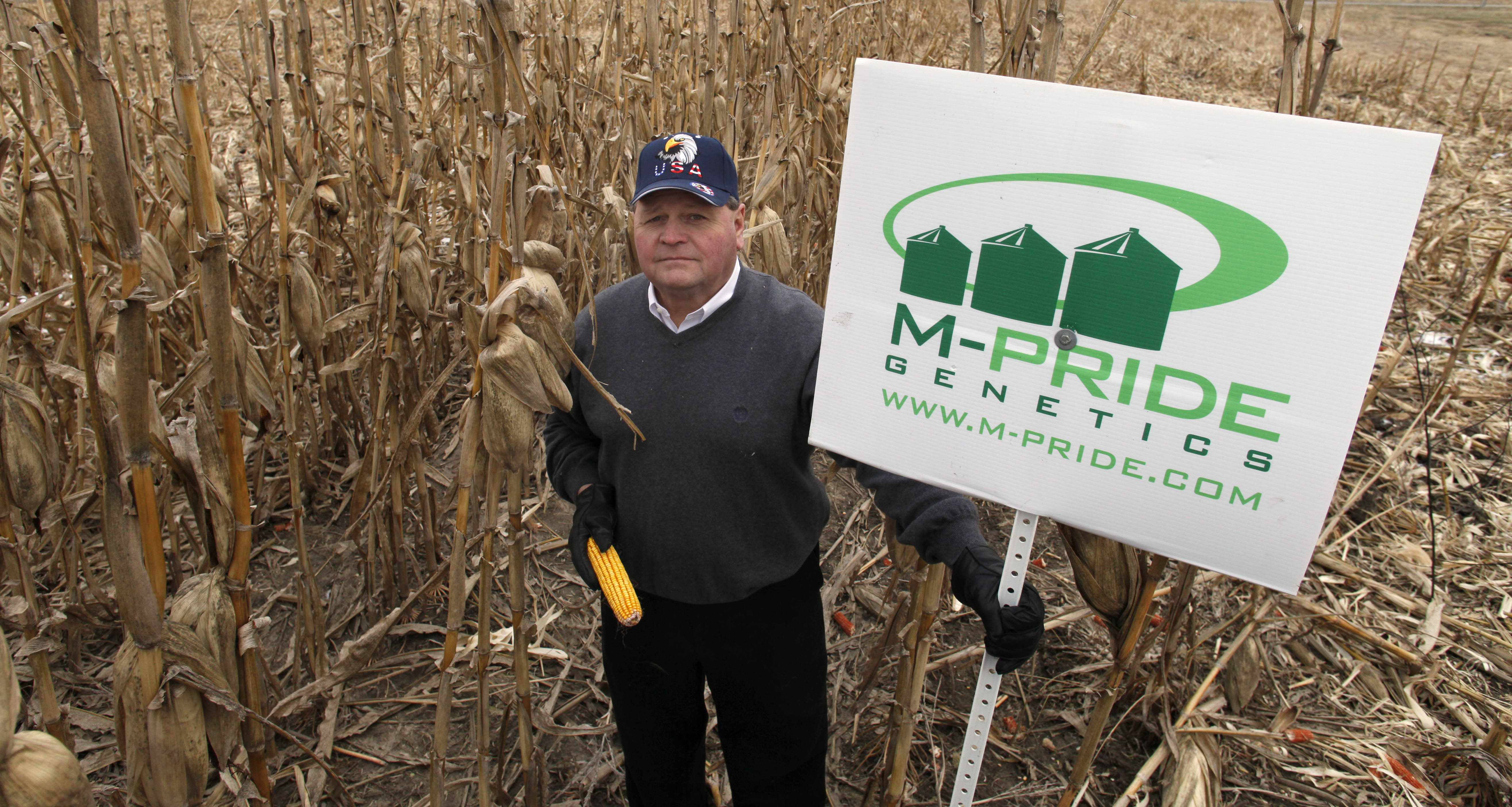
Bill Cook, co-owner of M-Pride Genetics seed company, stands in his corn field Saturday near Garden City, Mo. An Associated Press investigation has found that Monsanto, a global seed developer, is dominating a multibillion-dollar market for genetically engineered crops by squeezing competitors and controlling smaller seed companies. “They have the capital, they have the resources, they own lots of companies, and buying more. We’re small town, they’re Wall Street,” Cook says.

A farmer holds Monsanto’s Roundup Ready soybean seeds in this July 5, 2008, file photo at his family farm in Bunceton, Mo. The company’s patented genes are inserted into approximately 95 percent of all soybeans grown in the United States.
St. Louis ? Confidential contracts detailing Monsanto Co.’s business practices reveal how the world’s biggest seed developer is squeezing competitors, controlling smaller seed companies and protecting its dominance over the multibillion-dollar market for genetically altered crops, an Associated Press investigation has found.
With Monsanto’s patented genes inserted into roughly 95 percent of all soybeans and 80 percent of all corn grown in the U.S., the company also is controlling the ability of new biotech firms to get wide distribution for their products, according to a review of several Monsanto licensing agreements and dozens of interviews with seed industry participants, agriculture and legal experts.
Potential for price hikes
Declining competition in the seed business could lead to price hikes that reach every family’s dinner table. Your breakfast corn flakes, lunch soda and dinner beef stew, for example, likely were produced from crops grown with Monsanto’s patented genes.
Monsanto’s methods are spelled out in a series of confidential commercial licensing agreements obtained by the AP. The contracts, as long as 30 pages, include basic terms for the selling of engineered crops resistant to Monsanto’s Roundup herbicide, along with shorter supplementary agreements that address new Monsanto traits or other contract amendments.
The company has used the agreements to give some 200 smaller companies the right to insert Monsanto’s genes in their strains of corn and soybean plants. But, the AP found, access to Monsanto’s genes comes at a cost, with strings attached.
For example, one contract provision bans independent companies from breeding plants that contain both Monsanto’s genes and the genes of any of its competitors, unless Monsanto gives prior written permission — giving Monsanto the ability to effectively lock out competitors from inserting their patented traits into the vast share of U.S. crops that already contain Monsanto’s genes.
Monsanto’s business strategies and licensing agreements are being investigated by the U.S. Department of Justice and at least two state attorneys general, who are trying to determine if the practices violate U.S. antitrust laws. The practices also are at the heart of civil antitrust suits filed against Monsanto by its competitors, including a 2004 suit filed by Syngenta AG and settled with an agreement and ongoing litigation filed this summer by DuPont.
‘Unbelievable’ level of control
The suburban St. Louis-based agricultural giant said it’s done nothing wrong.
“We do not believe there is any merit to allegations about our licensing agreement or the terms within,” said Monsanto spokesman Lee Quarles. He said he couldn’t comment on many specific provisions of the agreements because they are confidential and the subject of ongoing litigation.
Some of its major competitors and smaller seed firms claim the company is using strong-arm tactics to further its control.
“We now believe that Monsanto has control over as much as 90 percent of (seed genetics). This level of control is almost unbelievable,” said Neil Harl, agricultural economist at Iowa State University who has studied the seed industry for decades.
At issue is how much power one company can have over seeds, the foundation of the world’s food supply. Without stiff competition, Monsanto could raise its seed prices at will, which could raise the cost of everything from animal feed to wheat bread and cookies.
The price of seeds is already rising. Monsanto increased some corn seed prices last year by 25 percent, with an additional 7 percent hike planned for corn seeds in 2010. Monsanto brand soybean seeds climbed 28 percent last year and will be flat or up 6 percent in 2010, said company spokeswoman Kelli Powers.
Contract provisions
Monsanto’s broad use of licensing agreements has made its biotech traits among the most widely and rapidly adopted technologies in farming history. When farmers buy bags of seed with brand names like AgVenture or M-Pride Genetics, they are paying for Monsanto’s licensed products.
One of the numerous provisions in the licensing agreements is a ban on mixing genes — or “stacking” in industry lingo — that enhance Monsanto’s power.
One contract provision likely helped Monsanto buy 24 independent seed companies throughout the Farm Belt over the last few years: that corn seed agreement says that if a smaller company changes ownership, its inventory with Monsanto’s traits “shall be destroyed immediately.”
Independent seed company owners could drop their contracts with Monsanto and return to selling conventional seed, but they say it could be financially ruinous. Monsanto’s Roundup Ready gene has become the industry standard over the last decade, and small companies fear losing customers if they drop it. It also can take years of breeding and investment to mix Monsanto’s genes into a seed company’s product line, so dropping the genes can be costly.
Monsanto Chairman and Chief Executive Officer Hugh Grant told investment analysts during a conference call this fall that the price increases are justified by the productivity boost farmers get from the company’s seeds. But recent price hikes have still been tough to swallow on the farm.
“It’s just like I got hit with bad weather and got a poor yield. It just means I’ve got less in the bottom line,” said Markus Reinke, a corn and soybean farmer near Concordia, Mo. who took over his family’s farm in 1965. “They can charge because they can do it, and get away with it.”
National
Lawyers for man accused of killing Charlie Kirk try to block death penalty

Trump’s name poised to come off Kennedy Center

Suspect in Texas shooting had fired at police days earlier, officials say

Man pleads guilty to killing a top Minnesota Democrat and her husband

New tornadoes outside Chicago as severe storms pummel the Midwest