Senate now void of dealmaker
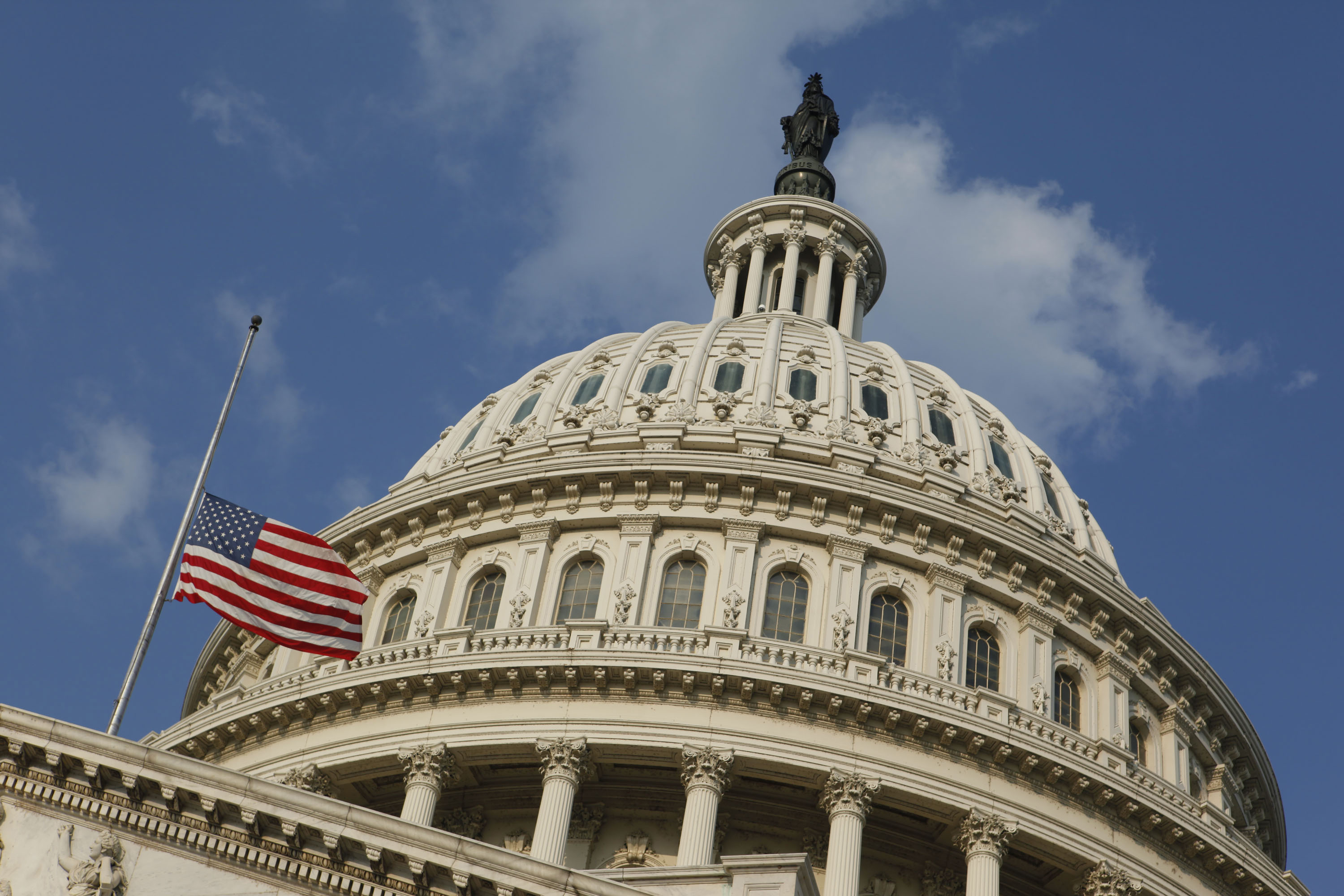
A flag flies at half-staff Wednesday at the Capitol in Washington in honor of Sen. Edward Kennedy, D-Mass., the last surviving brother in an enduring political dynasty, who died Tuesday night at his home on Cape Cod after a yearlong battle with brain cancer. He was 77.
Washington ? In an era of bitter political division, Sen. Edward M. Kennedy’s death silenced a singular voice of bipartisanship at a time when colleagues are struggling with angry constituents and each other over an elusive plan to overhaul the nation’s health care system.
Some lawmakers said Tuesday the current stalemate is the result of Kennedy’s absence for the past few, crucial months. Some hope to rescue the embattled legislation as his legacy.
It’s not clear that the post-Kennedy Senate includes anyone with the credibility among ideological opponents, the dealmaking skills or the inside knowledge to strike a quick agreement.
“There is nobody else like him,” said Sen. Judd Gregg, R-N.H., who alternated with Kennedy over the years as chairman and ranking minority-party member of the health committee. “If he had been physically up to it and been engaged on this, we probably would have an agreement by now.”
“Teddy was the only Democrat who could move their whole base,” Sen. Orrin Hatch, R-Utah, said. “If he finally agreed, the whole base would come along even if they didn’t like it.”
Kennedy lost the fight he couldn’t win Tuesday, to brain cancer at 77. But he had won countless others by embodying an increasingly rare type of bipartisanship — the kind perceived not as a threat to ideology or fundraising prowess, but as a way of getting something done, however imperfect.
“Bipartisanship takes a person that has leadership and personal charm, quite frankly, and a desire to get a result,” said former Senate Republican Leader Trent Lott of Mississippi. “He didn’t try to destroy you. That’s what’s happening in Washington now. It’s gotten so mean.”
Over 47 years in the Senate, Kennedy evolved into an institution himself, equal parts liberal icon and dealmaker who combined those skills to forge agreement on some of the most sweeping and controversial social legislation of his time.
Kennedy worked out an agreement with President George W. Bush on the No Child Left Behind Act. He regularly worked with Hatch, notably on a federally funded program for those with HIV/AIDS, health insurance for lower-income children and tax breaks to encourage the development of medicines for rare diseases.
When he compromised, Kennedy’s base may have grumbled but did not question his fidelity to liberal principles. Republicans trusted him to be straight with them in tough negotiations and not make it personal. And no one questioned his knowledge of Senate procedure, rivaling even West Virginia’s Robert C. Byrd, who no longer plays a big role in Senate business.
Without Kennedy, the 99-member chamber lacks anyone playing precisely his role doling out the goodwill and procedural expertise necessary to make the Senate wheels spin through controversial legislation. The Democratic caucus falls from an effective supermajority of 60, enough to kill Republican filibusters, to 59, including two independents.
No one is irreplaceable in the Senate, or so a popular saying goes. But John McCain, R-Ariz., called Kennedy just that in a statement Wednesday. McCain, last year the GOP presidential nominee, was even clearer over the weekend.
“He had a way of sitting down with the parties at a table and making the right concessions, which really are the essence of successful negotiations,” McCain said on ABC’s “This Week.”
“It’s huge that he’s absent,” McCain added. If Kennedy had been engaged in the debate past June, when he handed his committee chairmanship duties to Chris Dodd, D-Conn., “I think the health care reform might be in a very different place today.”
National
Teens’ reading and math scores have stagnated, US test results show
WASHINGTON (AP) — Younger students have regained ground academically after the pandemic's disruptions while older ...
Lawyers for man accused of killing Charlie Kirk try to block death penalty

Trump’s name poised to come off Kennedy Center

Suspect in Texas shooting had fired at police days earlier, officials say
Man pleads guilty to killing a top Minnesota Democrat and her husband