‘Lion of the Senate’ Edward Kennedy dies of brain cancer
Washington ? U.S. Sen. Edward Moore Kennedy, the last of the Kennedy brothers who profoundly reshaped American politics over the past half-century, died shortly before midnight Tuesday at his home in Hyannisport, Mass.
He was one of history’s most towering senators, a skilled lawmaker who crafted scores of statutes that helped how children learn, how doctors treat the sick, and how workers are paid and protected.
“He was the Henry Clay of the 20th century,” said Thomas Whelan, associate professor of social science at Boston University, citing the “Great Compromiser” of the mid-19th century. “He got the job done.”
He was 77 years old and had been battling brain cancer for more than a year.
Kennedy’s life was in many ways the story of American politics over two generations.
He was the youngest child of Joseph and Rose Kennedy, last in line behind brothers groomed for the presidency. He lacked the polished charm of his brother John, who won the presidency in 1960, or the grit and fire of brother Bobby, who pursued the White House in 1968.
He virtually inherited John’s Senate seat upon turning 30 in 1962, and he rose fast. His first Senate speech announced his passionate support of the 1964 Civil Rights Act, and he was instrumental in pushing an overhaul of immigration law through the chamber a year later.
When Robert was assassinated in 1968, Ted Kennedy became the heir to the family legacy. In January 1969, he upset veteran Sen. Russell Long of Louisiana to become majority whip, the Senate’s second-ranking position.
The close vote was a statement by the party’s liberal wing that Kennedy, who had opposed the Vietnam War since 1967, was its undisputed leader and the front-runner to challenge Richard Nixon for the presidency in 1972.
That scenario was shattered shortly after midnight on July 19, 1969, when the car he was driving sailed off a bridge and sank in a pond on Chappaquiddick Island, off the coast of Martha’s Vineyard in Massachusetts.
Former Robert Kennedy campaign worker Mary Jo Kopechne died in the accident. Edward Kennedy did not report the incident for nine hours, and six days later pleaded guilty to leaving the scene. He got a two-month suspended sentence, the minimum penalty, and went on national television to explain the series of events.
His true punishment was the damage to his career. In an era when the “silent majority” was holding “decency rallies” protesting the erosion of moral values in American life, Kennedy was a vivid symbol to many of all that had gone wrong.
“There was a sense he always got special treatment, and Chappaquiddick was part of that,” said Michael Franc, vice president for government relations at the Heritage Foundation, a conservative research group. “Conservatives have this sense that he’s always held to a different standard.”
At the same time, Kennedy was quietly building a reputation in the Senate as someone who made the system work, negotiating, often successfully, with the Nixon administration on key domestic initiatives.
“He was getting things done. Think of Kennedy’s initiatives — more spending on health and education, creating the Environmental Protection Agency, even wage and price controls. Nixon supported them,” recalled Alvin Felzenberg, a presidential historian.
In 2008, he won approval of, and praised President George W. Bush for signing, legislation giving students easier access to college loans. At the same time, he ripped into Bush for his management of the economy.
“The president continues to bail out Wall Street and help the oil industry reap even larger profits, while blocking needed relief for the American people,” Kennedy said.
He made that statement in late April. On May 17, he was rushed to Massachusetts General Hospital after suffering a seizure and was found to have a malignant brain tumor.
A few days later, Kennedy, his wife and their dogs were sailing in his 50-foot schooner on Nantucket Sound.
That’s the Kennedy his friends and colleagues remember.
He was a survivor, one who would read the Hotline political briefing to see what jokes Jay Leno had made at his expense, then shrug.
National
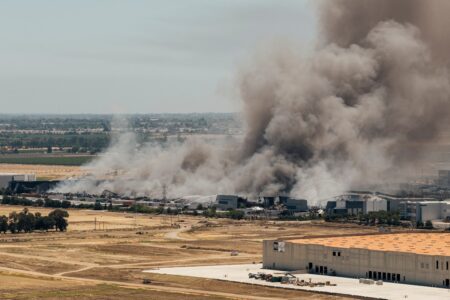
Unhealthy air quality in California city as huge warehouse fire burns for 3rd day
Judge orders Trump administration to restore National Park changes at sites that ‘disparaged’ US
Teens’ reading and math scores have stagnated, US test results show
WASHINGTON (AP) — Younger students have regained ground academically after the pandemic's disruptions while older ...
Lawyers for man accused of killing Charlie Kirk try to block death penalty

Trump’s name poised to come off Kennedy Center