

‘Last Ember’ works as a ‘Da Vinci Code’-type thriller
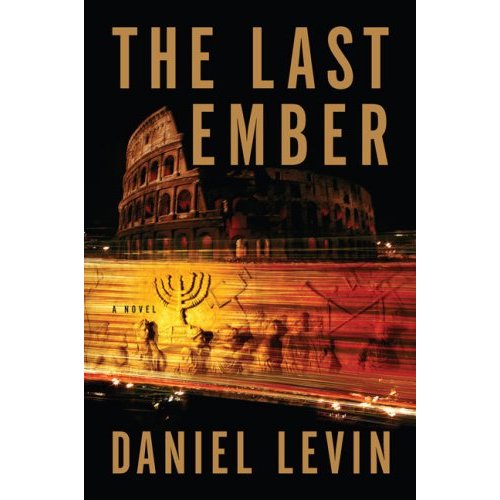
It may be a coincidence — or just good marketing — but it seems as if many publishers are launching mysteries that deal with myths, antiquities or icons before Dan Brown’s “The Lost Symbol” comes out Sept. 15.
After all, Brown’s “The Da Vinci Code” made fiction about symbols and religion palatable for the masses. Getting on the Brown bandwagon before his new novel is published makes good business sense. But whoever thought antiques would be fodder for action?
While Daniel Levin’s debut deals with Brown-like subjects, this New York-based author is no copy cat. “The Last Ember” (Riverhead Books, $25.95) is an exciting, action-packed story about history, religion, archaeology, antiques and tension in the Middle East. Realistic characters with believable motives further elevate “The Last Ember.”
Levin juggles a complicated plot into a cohesive story that never drags.
A classics scholar turned attorney, Jonathan Marcus is sent to Rome by his firm to inspect a fragment of a first-century stone map. But this is no simple case. A cryptic message in the map leads to an ancient spy ring that smuggled out the Tabernacle Menorah, Jerusalem’s most precious artifact. Jonathan teams up with Emili Travia, an U.N. antiquities expert who happens to be his ex-girlfriend, to find out who’s behind the illegal excavation that is destroying Jewish and Christian artifacts.
“The Last Ember” becomes a global chase from the Coliseum’s hidden tunnels and Rome’s Jewish ghetto to Jerusalem, giving both a historical and a contemporary perspective to each. Jonathan and Emili decipher clues in brittle maps and ancient manuscripts while rekindling their romance.
Levin occasionally falls back on thriller cliches — naturally hero and heroine will find time for a long overdue tryst and many a treasure is rigged to cause harm when touched by a villain, a la “Indiana Jones.” But Levin’s original storytelling overrides any deficiencies.
An attorney, Levin’s bachelor’s degree was in Roman and Greek civilizations. He does what many textbooks can’t make these eras feel as vibrant and as fresh as they were in reality. Readers unfamiliar with the details of Judaic and Roman history will not be lost in Levin’s intricate plot but will find themselves swept up by his storytelling.
“The Last Ember” also is timely. The U.S. Congress has a bill to stop the Waqf Authority’s destruction beneath Temple Mount in Jerusalem, which plays a large role in Levin’s novel.
Arts and Entertainment

Photos: Lawrence begins World Cup festivities with downtown block party

Watkins Museum to open special exhibit detailing how Douglas County celebrated America’s Bicentennial

Go, See, Do: Kaw River Roots Festival, markets and more

Soccer gear honoring Lawrence history’s all-star team is now on sale as part of city’s public art exhibition

Nominations, call for artists open for Lawrence’s 2026 Phoenix Awards