66 killed in double bombing at shrine
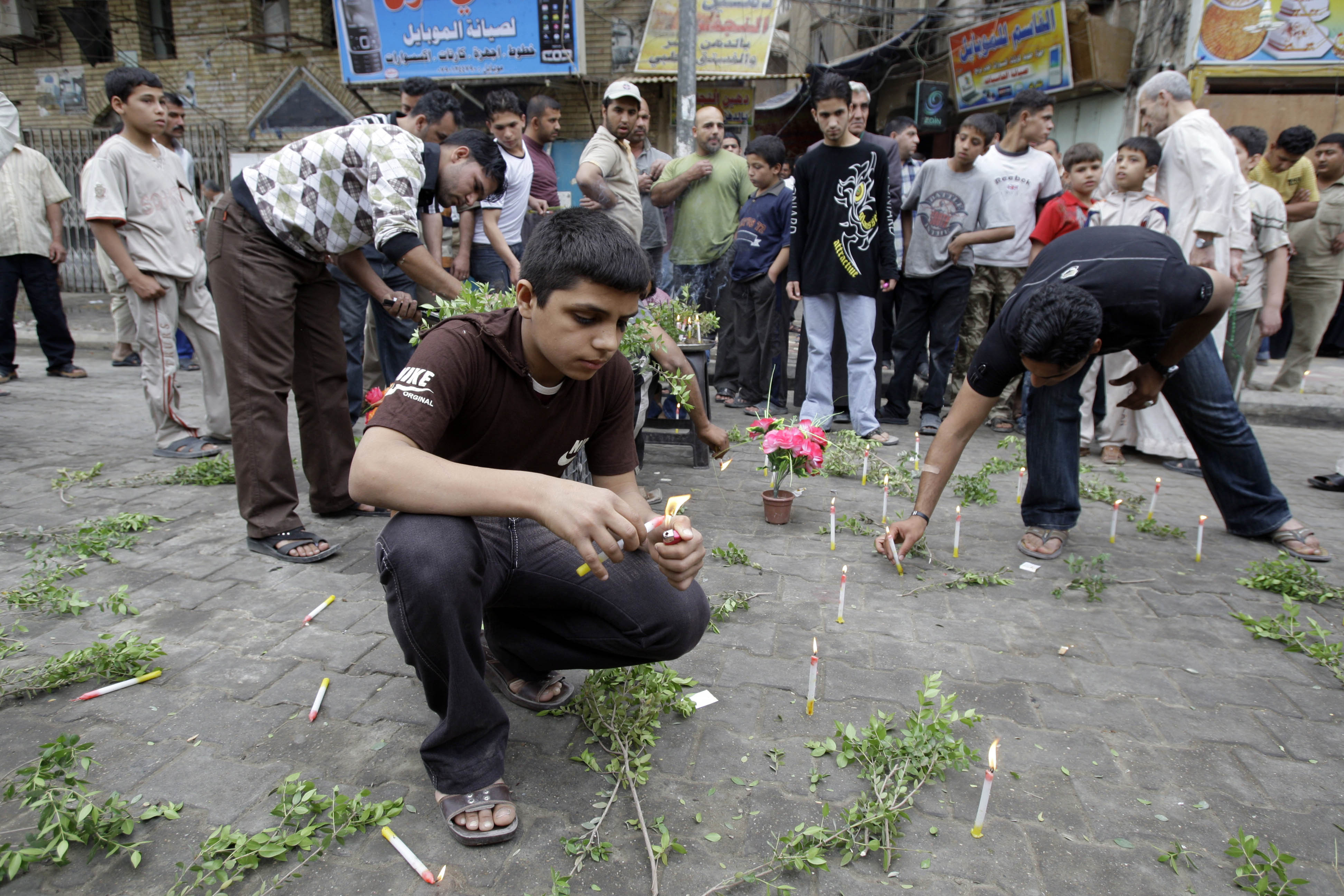
People light candles at the scene of a suicide bombing Friday in Baghdad’s Kazimiyah neighborhood. Back-to-back suicide bombings killed at least 66 people Friday outside the shrine of Imam Mousa al-Kazim, most important Shiite shrine in Baghdad, a day after the country was rocked by its most deadly violence in more than a year, police officials said.
Baghdad ? Two female suicide bombers hiding explosives in their purses struck worshippers streaming into Baghdad’s most important Shiite shrine for Friday prayers, killing at least 66 people a day after Iraq’s most deadly violence in more than a year.
Dozens of Iranian pilgrims were again said to be among the dead.
The two days of attacks — both against civilian targets — marked a troubling twist to what had already been a recent rise in suicide blasts, many of them against security forces. The bombings, typical of Sunni extremists linked with al-Qaida in Iraq, are raising fresh concerns about the ability of Iraqis to take the lead role in protecting the capital and nearby areas as the Americans shift their focus and resources to Afghanistan.
“It is just like a massacre took place,” said Laith Ali, 35, who owns a shop near the tomb of Shiite saint Imam Mousa al-Kazim. The golden-domed shrine, a popular destination for pilgrims, is located in the northern neighborhood of Kazimiyah.
“Where are the security precautions that the security officials are talking about?” Ali asked.
The female bombers, believed to be in their 30s, detonated explosives that were stuffed inside their leather bags and linked to a grenade, according to Maj. Gen. Jihad al-Jabiri, the head of the Interior Ministry’s explosives department.
The women detonated the explosives by pulling the ring of the grenade, al-Jabiri told Iraqi state television late Friday.
The number of bombings carried out by women has spiked this year — even as overall violence has declined — because of their ability to often avoid detection at checkpoints.
Prime Minister Nouri al-Maliki ordered a military task force to investigate the bombings, said military spokesman Maj. Gen. Qassim al-Moussawi. He also suspended the area commanders for failing to provide adequate security around the shrine.
The blasts took place within minutes of each other near separate gates of the tomb, said a police official. Another police official said the bombers struck shortly before the start of Friday prayers as worshippers streamed into the mosque.
The attack left the bodies of the dead — some of them burned — scattered on the ground near the entrance of the shrine. Hours later, pools of blood streaked the sidewalks.
Many of the wounded were taken to Kazimiyah Teaching Hospital, overwhelming the staff. AP Television News footage showed many victims, including women and children, forced to wait outside before they could be seen by medical staff.
Among the dead were 25 Iranian pilgrims, said police and hospital officials. At least 127 people, including 80 Iranian pilgrims, also were wounded in the blast, the officials said on condition of anonymity because they were not authorized to release the information.
On Thursday, suicide bomb blasts tore through crowds waiting for food aid in central Baghdad and inside a roadside restaurant filled with Iranian pilgrims to the north in Diyala province. Eighty-eight people were killed Thursday, Iraq’s deadliest day since March 8, 2008.
Iran’s powerful former president and influential cleric Akbar Hashemi Rafsanjani condemned the attacks and accused the United States of failing to protect the Shiite pilgrims.
“The extremists are the big criminals who launch jihad (holy war) out of ignorance,” he said, according to Iran’s official IRNA news agency. “The security should be guaranteed so that we will not witness such events in the future.”
The U.S. military said it could not provide further details because the area around the shrine was patrolled by Iraqi security forces.
National
Unhealthy air quality in California city as huge warehouse fire burns for 3rd day
Judge orders Trump administration to restore National Park changes at sites that ‘disparaged’ US
Teens’ reading and math scores have stagnated, US test results show
WASHINGTON (AP) — Younger students have regained ground academically after the pandemic's disruptions while older ...
Lawyers for man accused of killing Charlie Kirk try to block death penalty
Trump’s name poised to come off Kennedy Center