

Will Obama’s victory force hip-hop to change its tune?
Barack Obama was in his last year of high school in 1979 when hip-hop broke out of the ghettos of New York on its way to becoming a national phenomenon.
He is in many ways a child of hip-hop, but sometimes a reluctant one. Even as the president-elect claims to “love hip-hop” he has spoken out against its more explicit lyrics. When Ludacris released “Obama’s Here” a few months ago, the Southern rapper extolled the future president’s credentials while viciously putting down Obama’s rivals. An Obama spokesman issued a stinging rebuke: “While Ludacris is a talented rapper he should be ashamed of these lyrics.”
Yet Obama has been embraced by the hip-hop community like no presidential candidate in history. Bill Clinton was the first president to forge a bond with the ’60s and ’70s classic-rock generation (even persuading Fleetwood Mac to reunite and perform at his inaugural ball in 1993). Obama now commands the respect of the voters who came of age when hip-hop transformed pop culture.
The non-partisan group Hip-Hop Caucus and rappers T.I., Jay-Z, T Pain and others spearheaded the “Respect My Vote” campaign, which registered voters between the ages of 18 and 29, most of whom voted for Obama. Will.i.am wrote and produced no fewer than three songs in recent months extolling the Obama campaign, including the YouTube hit video “Yes We Can.” Rappers such as Chicago’s Common and New York’s Talib Kweli were dropping Obama references into their songs as early as 2007.
Obama has embraced hip-hop whenever he has been asked about the subject in interviews, specifically citing Jay-Z, Kanye West and Common as personal favorites. But he also has been outspoken in his disgust for rap lyrics that go too far.
“There are times, even on the artists I’ve named, the artists that I love, that there is a message that’s sometimes degrading to women, uses the ‘n’ word a little too frequently,” he said in an interview on BET. “But also something that I’m really concerned about is (they’re) always talking about material things, about how I can get something; more money, more cars.”
In the wake of racially charged remarks by talk show host Don Imus last year, Obama said rap wasn’t blameless because it too contained derogatory language. Hip-hop pioneer Russell Simmons called Obama “a mouse, too, like everyone else,” and urged him to take a closer look at the social conditions that made such lyrics commonplace.
In the wake of Obama’s victory, Simmons struck a more conciliatory tone, calling it a “glorious” affirmation of “the hip-hop generation and its young people.”
“I was just defending hip-hop,” he said of his earlier criticism of Obama. “It’s good for politicians to say they’re against hip-hop. But hip-hop’s job is to tell the truth, and the truth can be shocking.”
But activist Rev. Al Sharpton said Obama’s victory will force hip-hop to change its tune. “You can’t be using the ‘b’ word, the ‘n’ word, the ‘h’ word when you have Barack Obama redefining overnight the image that black people want to have. Here’s the greatest political victory in the history of black America, and the thug rappers can’t come near it. They will have to change or become irrelevant.”
Simmons says that’s hogwash. “Young people will use their language the way they want,” he said. “If it’s in their heart, they will express it.”
President-elect Obama will have far bigger problems to address than the content of rap lyrics when he takes office. Meanwhile, rappers will begin confronting a new reality starting Jan. 20: How rebellious can they be when one of their fans occupies the most powerful office in the world?
Arts and Entertainment
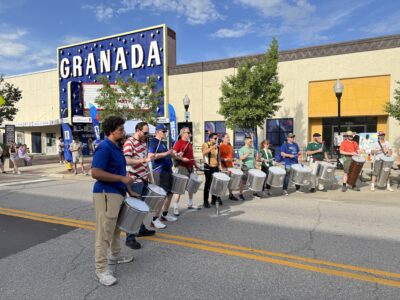
Photos: Lawrence begins World Cup festivities with downtown block party
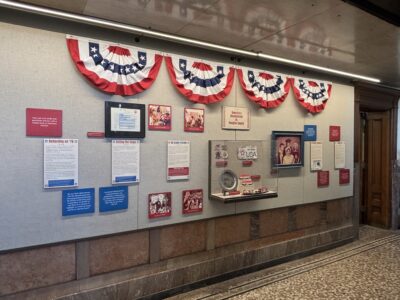
Watkins Museum to open special exhibit detailing how Douglas County celebrated America’s Bicentennial

Go, See, Do: Kaw River Roots Festival, markets and more
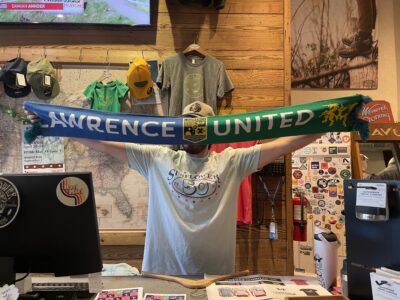
Soccer gear honoring Lawrence history’s all-star team is now on sale as part of city’s public art exhibition

Nominations, call for artists open for Lawrence’s 2026 Phoenix Awards