Obama’s soaring rhetoric now collides with cold reality
Washington ? Forget “hope” and “change” and “yes, we can.” The word that will matter most, when Barack Obama assumes the Oval Office, is “doable.”
Teary-eyed jubilation is giving way to clear-eyed realism. As his campaign rhetoric runs into governing reality, Obama will have to contend with a set of political and practical restrictions that are perhaps more daunting than any faced by an incoming president since Franklin Roosevelt took over amid the Great Depression. And he will have to tailor his early policy agenda accordingly.
Obama is set to inherit a plunging economy, ongoing wars and a massive federal deficit coupled with a long national wish-list. His party owns large House and Senate majorities, but the numbers hide major disagreements over priorities. He will be pulled by core Democratic groups who have waited years to advance their interests, by the weight of his campaign promises and by the expectations of a beleaguered electorate.
So what can he do? With those constraints and history in mind, politicians and policy experts suggest several domestic and foreign initiatives, costing relatively modest amounts by today’s spending standards, many of them tinged in green.
Nearly all the office-holders and experts said the president-elect must begin by stimulating the economy further, a move Obama himself called “long overdue” in a Friday press conference. Several suggested building the stimulus package around energy development, including modernizing the electric grid, building mass transit lines and creating manufacturing jobs in the alternative energy sector.
“I hope they realize the seriousness of what’s in front of them and make the economy an absolute priority,” said Gov. Ted Strickland of Ohio, a Democrat who has pushed alternative energy development to soothe his state’s aching economy.
Added Colorado Gov. Bill Ritter, a Democrat who took office two years after his party won control of the state legislature – the same scenario Obama will face in Washington: “From the perspective of creating jobs, at a time when you also have to alter course on our energy policy, thinking about a new energy economy is absolutely the way to do it.”
One possible blueprint for an energy-themed stimulus plan comes from the Center for American Progress Action Fund, headed by Obama transition team member – and former chief of staff to President Bill Clinton – John Podesta. The Center’s nearly $55 billion proposal aims to immediately boost energy production and efficiency, including weatherizing 1 million homes, encouraging solar panel construction and funding transit projects in 23 states.
Daniel Weiss, a senior fellow at the Center, estimates the plan would create 1 million jobs. As a side benefit, it would help cut heating costs, save energy and nudge the country away from its dependence on foreign oil – benefits that “you wouldn’t get from, say, repaving a highway,” he said.
Robert Shapiro, a former Clinton economic advisor who now chairs the Globalization Initiative for Washington-based NDN, a progressive think tank, said Obama should include alternative energy development in a stimulus package that also advances his campaign goals of health care reform and worker training.
Obama should use the stimulus, Shapiro said, “to make down payments on the long-term investments he’s committed to already for the health of the economy.”
Shapiro and others also say Obama needs more stimulus to address the economy early on; in Weiss’ words, it’s step one of a three-part “stop the bleeding, surgery, healing” process that also includes stabilizing the banking and automotive industries and fostering economic growth.
National
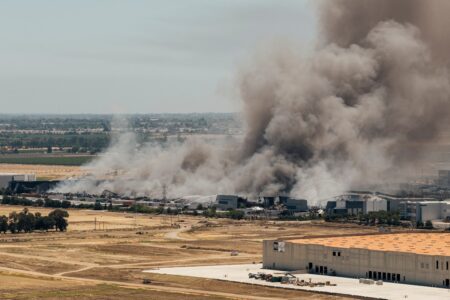
Unhealthy air quality in California city as huge warehouse fire burns for 3rd day
Judge orders Trump administration to restore National Park changes at sites that ‘disparaged’ US
Teens’ reading and math scores have stagnated, US test results show
WASHINGTON (AP) — Younger students have regained ground academically after the pandemic's disruptions while older ...
Lawyers for man accused of killing Charlie Kirk try to block death penalty
Trump’s name poised to come off Kennedy Center