

Literary liars
More are joining an infamous club of writers whose work contains more fiction than fact
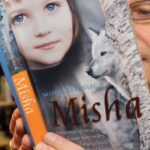
A Dutch reader peruses Misha:
On the eve of a national tour to promote her “memoir” of life as an abused half-white, half-Native American girl raised by a black foster mom on the mean streets of south Los Angeles, Margaret B. Jones was revealed this week to be a white woman raised in middle-class Sherman Oaks by her natural parents and educated at a tony private school. Margaret Seltzer was outed by her sister, who had seen an article in The New York Times lauding the book, “Love and Consequences.”
A week earlier, Misha Defonseca fessed up that “Misha: A Memoire of the Holocaust Years” was really a work of fiction. The 1997 best-selling book has been translated into 18 languages and made into a feature film in France. Through her lawyers, the Belgian-born author admitted to the Boston Globe on Feb. 28 that her story of trekking across Europe with a pack of wolves during the Holocaust wasn’t true. She not only did not make the journey with a pack of wolves in search of her deported Jewish parents during World War II, but she also isn’t Jewish.
The 71-year-old writer now lives in Dudley, Mass. In the statement released by her lawyers, Defonseca said that her real name is Monique De Wael and that she never fled her home in Brussels during the war to find her parents. She said they were arrested and killed by Nazis as Belgian resistance fighters.
They are just the latest in a long line of writers who fabricated their stories or in other ways misled readers. Here are some of the more memorable literary liars:
¢ James Frey, “A Million Little Pieces” (2003). Frey’s best-selling “memoir,” an Oprah Winfrey pick, was revealed to be largely a fabrication in January 2006 by the Smoking Gun Web site. The Web site disproved Frey’s claim to have been jailed for crashing his car while drunk and high on crack cocaine, then hitting a police officer. Frey later said he was having trouble selling his fiction project and instead turned it into a memoir.
¢ JT LeRoy, an HIV-positive former drug addict and hustler in his 20s, was revealed to be New York writer Laura Albert, who said she invented the androgynous persona of LeRoy in therapy a few days after the Frey hoax was revealed. The elaborate hoax lasted several years through numerous books, including the bestselling novels “Sarah” and “The Heart Is Deceitful Above All Things.”
¢ Nasdijj, “The Blood Runs Like a River Through My Dreams” (2000), “The Boy and the Dog Are Sleeping” (2003) and “Geronimo’s Bones: A Memoir of My Brother and Me” (2004). The award-winning writer claimed to be a Navajo who, as a child, was a migrant worker with self-destructive and abusive parents. Hailed as a powerful writer on the Native American experience, Nasdijj was unmasked by an LA Weekly article in 2006 that revealed him to be Timothy Patrick Barrus.
¢ Jayson Blair, the former New York Times reporter who resigned in May 2003 after he was caught plagiarizing and fabricating elements of his news stories. His book, “Burning Down My Master’s House,” detailed his con.
¢ Andreas Karavis, “Island: The Poetry of Andreas Karavis” (2000). David Solway, a Canadian poet, claimed to have discovered a new Greek poet, Andreas Karavis, a reclusive fisherman whose poetry he began to translate into English. Soon Karavis was being hailed as a “modern Homer.” For a book-launch party at the Greek embassy in Montreal in 2000, Solway recruited his dentist to play the part. The hoax was discovered after a journalist at the Globe and Mail, a Canadian newspaper, began asking questions about Karavis.
¢ Binjamin Wilkomirski’s 1996 Holocaust memoir, “Fragments,” which recalled the horror of life in two Nazi death camps in Poland, won the National Jewish Book Award for autobiography. It was hailed by many as a masterpiece of its subject until its author was uncovered in 1999 to be Bruno Grosjean Dessekker, who was born in Switzerland and raised there by adoptive parents.
¢ Stephen Glass, a reporter for the New Republic, was fired in 1998 for fabricating articles, quotes, sources and events.
¢ Anthony Godby Johnson, “A Rock and a Hard Place” (1993). The 14-year-old HIV-positive boy described enduring ritual sexual abuse, but curious reporters noticed that the writing in the book was similar to that of his so-called foster mother, Vicki Fraginals. One of his biggest supporters, Armistead Maupin, wrote about the betrayal in his 2000 novel, “The Night Listener.”
¢ Danny Santiago, “Famous All Over Town” (1984). The award-winning autobiographical novel by the presumably young Chicano writer turned out to have been written by Daniel James, a 73-year-old former black-listed Anglo screenwriter.
¢ “The Hitler Diaries,” published first in 1983 in a German magazine, turns out to have been the work of a forger, Konrad Kujau, in partnership with Gerd Heidemann, the journalist who claimed to have unearthed the “diaries.”
¢ Janet Cooke, a Washington Post writer, won a Pulitzer Prize for her September 1980 story, “Jimmy’s World,” a profile of an 8-year-old heroin addict. Two days after she received the Pulitzer, the newspaper’s editor announced it as an elaborate hoax.
¢ Forrest Carter, “The Education of Little Tree” (1977). This memoir by a “Cherokee orphan” who battled racism and struggled to find his heritage, was actually written by Asa Carter, a white Ku Klux Klan member who’d worked for Alabama Gov. George Wallace. (In more recent reprints, “The Education of Little Tree” was labeled “fiction.”)
¢ “Go Ask Alice,” by anonymous, was ostensibly the 1971 diary of a teenage girl who’d died of a drug overdose and it was published posthumously as a cautionary tale. Years later, it was revealed to have been written by the book’s “editor,” Beatrice Sparks, a psychologist and Mormon youth counselor who said she based it on the stories told by some of her students. Sparks has gone on to produce many other “actual diaries” about troubled adolescents, including “Annie’s Baby: The Diary of an Anonymous Pregnant Teenager.”
¢ Penelope Ashe’s best-selling 1969 novel “Naked Came the Stranger,” about the sexual adventures of a suburban housewife, was actually written by 25 writers at Newsday. The revelation did nothing to stem book sales.
Arts and Entertainment
Photos: Lawrence begins World Cup festivities with downtown block party
Watkins Museum to open special exhibit detailing how Douglas County celebrated America’s Bicentennial

Go, See, Do: Kaw River Roots Festival, markets and more

Soccer gear honoring Lawrence history’s all-star team is now on sale as part of city’s public art exhibition

Nominations, call for artists open for Lawrence’s 2026 Phoenix Awards