

Journalism’s wild one, loved and loathed
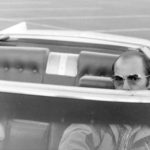
Hunter S. Thompson (shown in the 1970s) is the subject of Alex Gibney's documentary Gonzo:
The chain-smoking, pill-popping, shades-wearing journalist Hunter S. Thompson whose counterculture musings about the Kentucky Derby and the Hells Angels led to a couple of Fear and Loathing epics, was, if nothing else, wildly independent.
He was also, as Alex Gibney’s absorbing documentary “Gonzo: The Life and Work of Dr. Hunter S. Thompson” lays testament to, a self-obsessed nutjob who habitually recorded his rants and ramblings, shot himself on film and video and then, years into a booze-soaked burnout, literally shot himself.
Enabled by Jann Wenner’s feisty, fledgling Rolling Stone, Thompson, in the late ’60s and early ’70s, pioneered a type of journalism that jettisoned any pretense of objectivity – and thereby explored deeper, stranger truths. Ignoring deadlines and racking up expenses – and ingesting vast quantities of drugs and alcohol – Thompson filed reports from America’s capital of gambling and vice (“Fear and Loathing in Las Vegas”) and then turned his attention to the 1972 Nixon/McGovern presidential race (“Fear and Loathing on the Campaign Trail”).
At its best, his writing was genius. At its worst – and it got worse as Thompson started buying into his own hype – it was belligerent and self-indulgent.
Gibney, who made “Gonzo” concurrently with this year’s Oscar-winning documentary “Taxi to the Dark Side,” gets all that. Incorporating gleaming chunks of Thompson’s prose, intercutting bits from the author’s audio and video archives, and splicing footage from Terry Gilliam’s 1998 movie adaptation of “Fear and Loathing in Las Vegas,” “Gonzo” paints a rich portrait.
Talking head interviews include: George McGovern (livelier now than he was in the ’70s!), Jimmy Carter, Thompson’s first and second wives, his son, and the illustrator Ralph Steadman, who gave the “Fear and Loathing” articles their trademark inkwell-in-an-earthquake visual style.
Johnny Depp, who portrayed Thompson’s alter-ego in Gilliam’s film, provides the narration. If there’s hagiography here, it’s counterbalanced by biographical truth: Lots of people come out to say that the good Doctor was not much fun to be around, especially in those end days, with his arsenal of guns and bunker in the Colorado hills.
But Gibney also wants to honor what it was that made Thompson a celebrity in the first place: his brilliant, blotto writing, and his ability to smell out the liars and the hypocrites and expose them for the feral beasts that they were.
Arts and Entertainment

Photos: Lawrence begins World Cup festivities with downtown block party

Watkins Museum to open special exhibit detailing how Douglas County celebrated America’s Bicentennial

Go, See, Do: Kaw River Roots Festival, markets and more

Soccer gear honoring Lawrence history’s all-star team is now on sale as part of city’s public art exhibition

Nominations, call for artists open for Lawrence’s 2026 Phoenix Awards