

Striking gold?
With no clear front-runner, the Academy Awards could offer up many surprises
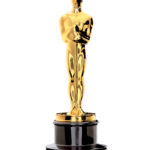
War, assassinations and natural disasters have never been able to prevent the Oscar ceremonies.
But until last week, things were getting rather dicey for the Academy of Motion Picture Arts and Sciences. That’s because the Writers Guild of America strike had threatened to do more than make audiences miss the latest episode of “Two and a Half Men”; it had posed a legitimate risk to the sanctity of the Academy Awards.
That’s a big deal for those who love movies, because the Oscars are ultimately more significant than the Grammys, Emmys, Tonys and Golden Globes combined.
They mean additional box-office revenue. They mean invaluable career clout. They mean when movie stars die, the first words on their obituaries state “Oscar-winning actor …”
In 2008, they also mean genuine drama and mystery for audiences tuning in to the telecast. While a few of the acting categories look to already be decided, there is no overall front-runner poised to dominate the awards. Expect no single flick to net more than four gold statuettes, meaning a lot of different folks will be chugging champagne at the few post-Oscar parties not canceled due to strike fears.
After 80 years, the Academy Awards continue to represent the most important three to four hours in America’s biggest export industry. So take comfort in the fact that the show really must go on.
Now here’s hoping the impending Screen Actors Guild strike doesn’t force the cancellation of next year’s ceremony.
ACTOR
There are safe bets, and there are can’t-miss slam dunks. Such is the case this year with the leading men.
Nominees include the reliable George Clooney (“Michael Clayton”), the unpredictable Johnny Depp (“Sweeney Todd: The Demon Barber of Fleet Street”), the veteran Tommy Lee Jones (“In the Valley of Elah”) and the Oscar newcomer Viggo Mortensen (“Eastern Promises”).
Not one of these dudes stands a chance against Daniel Day-Lewis in “There Will Be Blood.”
The London-born actor gives a portrayal of stunning ferocity as oil baron Daniel Plainview, a man whose purpose in life increasingly centers on accumulating more wealth than his competitors.
“There are times when I look at people and I see nothing worth liking. I want to earn enough money that I can get away from everyone,” says the rapacious Plainview in a homespun voice that conjures John Huston.
Both candid and deceptive, Day-Lewis’ Plainview offers anything but a plain view into the soul of a simmering madman.
Best Actor (99 percent certain): Daniel Day-Lewis for “There Will Be Blood.”
ACTRESS
Ellen Page (“Juno”) is too young.
Cate Blanchett (“Elizabeth: The Golden Age”) appears in a sequel that was universally panned.
Laura Linney (“The Savages”) inhabits a role that voters might find a tad low-key.
The race is really between Marion Cotillard (“La Vie en Rose”) and Julie Christie (“Away from Her”).
Critics groups have been split when assessing this category. Cotillard gets to age, sing, weep and go nutty in bringing the life of vocalist Edith Piaf to the screen. And Oscar voters love to watch a gorgeous woman play someone far less attractive (a la Charlize Theron in “Monster,” Nicole Kidman in “The Hours,” etc.).
Yet Christie – still insanely beautiful at age 66 – gives a stronger performance in a much more touching movie than the jumbled French biopic. As a woman coming to grips with Alzheimer’s, she completely avoids the traps performers often fall into when interpreting a “disease-of-the-month” role.
Best Actress (80 percent certain): Julie Christie for “Away from Her.”
SUPPORTING ACTOR
Hands down the strongest of all the 2008 categories, Supporting Actor offers performances that in any other year might be deemed the front-runner: Casey Affleck (“The Assassination of Jesse James by the Coward Robert Ford”), Tom Wilkinson (“Michael Clayton”), Hal Holbrook (“Into the Wild”) and Philip Seymour Hoffman (“Charlie Wilson’s War”).
Yet Javier Bardem did something none of the others did this year: He attained historical significance.
In “No Country for Old Men,” Bardem sires a character that will forever be listed as one of the greatest screen villains of all time. His relentless, disturbed hit man Anton Chigurh can safely take a place alongside Hannibal Lecter, Norman Bates, Harry Lime and Nurse Ratched at the roundtable of infamy.
Best Supporting Actor (90 percent certain): Javier Bardem for “No Country for Old Men.”
SUPPORTING ACTRESS
The collective groan heard around the nation during the Oscars telecast isn’t always due to witnessing another musical number choreographed by Debbie Allen. No, it’s usually the sound emitted after the announcement of the Supporting Actress category by those who have money invested in an Oscars pool.
The category thrives on wacky choices, and this year is no exception.
Critical year-end awards made Amy Ryan (“Gone Baby Gone”) the early favorite.
But then Cate Blanchett won a Golden Globe for her Dylanesque tribute in “I’m Not There.” Then this was eclipsed by Ruby Dee netting the SAG award for her borderline cameo in “American Gangster.”
There is also a 13-year-old competitor in Saoirse Ronan (“Atonement”) – and history has proven that a youngster can always surprise in a supporting category.
Plus, there is the much-respected veteran Tilda Swinton receiving a first-ever nomination for her excellent turn as a cutthroat litigator in “Michael Clayton.” (An upset-in-the-making to be sure.)
When there are so many reasons for why someone should win, the best strategy is often to reflect on which of the characters made the most impression. It’s hard to deny that Ryan earns that distinction. As a Boston drug addict forced to contend with her daughter being abducted, Ryan wowed with her ability to be so believable … aggressively unsympathetic.
Best Supporting Actress (45 percent certain): Amy Ryan for “Gone Baby Gone.”
DIRECTOR
No matter what film nabs best picture, the Coen Brothers should walk away with their first directorial Oscar.
For over two decades Joel and Ethan Coen have been cranking out classics such as “Fargo,” “Blood Simple” and “Raising Arizona” – as well as their share of forgettable misfires (“The Ladykillers,” anyone?). “No Country for Old Men” showcases their mastery of depicting a small crime that escalates into a bloodbath for everyone involved.
Competition for the award really only comes in the form of Paul Thomas Anderson (“There Will Be Blood”). Otherwise, don’t expect Julian Schnabel (“The Diving Bell and the Butterfly”), Tony Gilroy (“Michael Clayton”) and Jason Reitman (“Juno”) to factor into the outcome.
Love it or hate it, “No Country for Old Men” is undoubtedly a director’s picture. Or to be more specific, a directors’ picture.
Best Director (90 percent certain): Joel and Ethan Coen for “No Country for Old Men.”
PICTURE
Stop the presses. Hold the phone.
For the first time in modern history, all five Best Picture nominees have a legitimate shot of winning.
Usually it’s something of a victory for viewers if even two pictures are still in contention by the time the broadcast airs. But 2008 features a fistful, each with a bevy of reasons for and against their respective chances.
The “favorite” status still rests with “No Country for Old Men,” but the crime drama also frustrates audiences with a cryptic, unsatisfying third act. It’s safe to say that a significant number of the 5,829 Oscar voters actively hate the ending.
Same can be said for the ambitious, introspective epic “There Will Be Blood.” The film may be more admired than liked by the Academy.
“Michael Clayton” is very slick and entertaining, but it just seems outgunned by the competition.
“Atonement” appears the more stately, old-school type of flick that often takes Best Picture. (Think “The English Patient.”) Yet it’s hard to find anybody who adores this movie.
And “Juno” is a comedy.
One thing the Oscars have proven, though, is that it’s better to be loved by a minority than liked by a majority.
“Country” and “Blood” are period character studies similar in tone and scope, so they could split the vote. Plus, those who approve of the two movies do so with many reservations, whereas the folks who champion “Juno” embrace it wholeheartedly. People either love or hate “Juno.” But, mathematically, there are probably far more of the former.
Thus, a clever teen pregnancy flick is poised to become the first straight-up comedy to win since 1977’s “Annie Hall.”
The Coens may be left wishing a strike had occurred.
Best Picture (35 percent certain): “Juno.”
Arts and Entertainment

Photos: Lawrence begins World Cup festivities with downtown block party

Watkins Museum to open special exhibit detailing how Douglas County celebrated America’s Bicentennial

Go, See, Do: Kaw River Roots Festival, markets and more

Soccer gear honoring Lawrence history’s all-star team is now on sale as part of city’s public art exhibition

Nominations, call for artists open for Lawrence’s 2026 Phoenix Awards