Breakfast serves up issues for Legislature
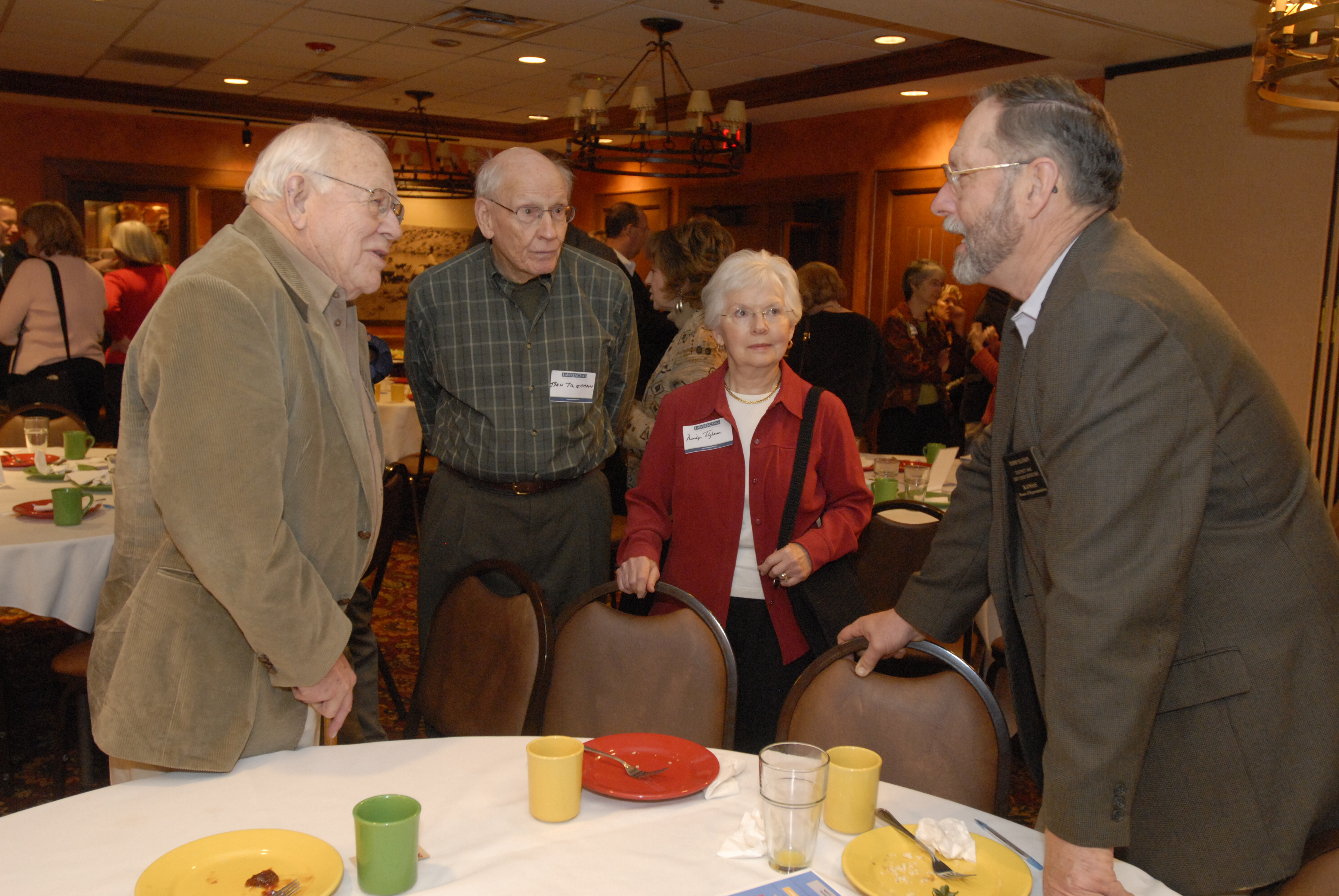
From left, Bill Hambleton, Ben Tilghman, Marilyn Tilghman and state Rep. Tom Sloan, R-Lawrence, discuss carbon dioxide emissions at the Lawrence Chamber of Commerce's annual Eggs & Issues meeting on Saturday morning at the HH Bar and Grill, 4931 W. Sixth St. The meeting is the first of a series that allows individuals to speak with state legislators and learn more about issues in the Senate and House.
There were no eggs at Saturday’s Eggs & Issues breakfast forum, at HH Bar and Grill, 4931 W. Sixth St., but issues were many.
In the year’s first question-and-answer session with state legislators, energy and education were the top issues on the minds of about 70 community members and lawmakers alike.
State Rep. Tom Sloan, R-Lawrence, said the long-term health of the state’s reservoirs was important, as well as adopting energy practices to sustain Kansas in the future.
“Water, education and energy are the three things that will define our state in the long run,” he said. “Long term, the state needs an energy plan that includes a variety of energy sources,” including nuclear, wind, solar and coal.
Rep. Ann Mah, D-Topeka, told the Journal-World she does not support the bill in its current form because it could cause energy rates to increase and that “passage of the bill would remove the (Kansas Department of Health and Environment) from the process and could cause Kansas to become an ashtray.”
Sen. Roger Pine, R-Lawrence, said one issue that needs more attention is the environmental benefits of coal energy.
The need for more teachers and education was heavily discussed as well, and Rep. Tom Holland, D-Baldwin City, said introducing high-speed Internet connections to rural areas is “a key cornerstone of economic development.”
Holland bemoaned a 25 percent drop in the number of new teachers in the state, and advocated more funding for small school districts.
Sen. Marci Francisco, D-Lawrence, called for higher wages for teachers. She said federal cutbacks have required the state to dip into special-needs funds to pay teachers. Mah said federal cuts have reduced funds used for teacher mentoring programs for educators in their first and second years.
Mah, who candidly said the Legislature had passed only six bills so far this session, said the state faces a shortage of technically trained workers. She feared Kansas would soon be importing thousands of workers, who could be illegal immigrants or face poor working conditions.
“What we do not need is a festering underground economy, where people are working for third-world wages,” Mah said.
Holland and Francisco both addressed illegal immigration. Francisco said she wanted to make it more difficult for illegal immigrants to obtain driver’s licenses by implementing a program requiring applicants to have their photograph taken before paperwork is completed. It would help establish a statewide database of photos, making it easier to verify who is eligible to receive a driver’s license.
Holland said Kansas must adopt a verification system to make it harder for employers to hire illegal immigrants.
The breakfast meeting was well-attended, with organizers saying the room in which it was conducted met capacity.
Pine said he appreciated the opportunity to hear what his constituents were thinking.
“It’s always good to hear conversations like this so we can learn what we are doing right, what we are doing wrong and what we can do better,” he said.
The next Eggs & Issues forum is scheduled for March 1 at HH Bar and Grill.
City Government
Soccer gear honoring Lawrence history’s all-star team is now on sale as part of city’s public art exhibition
To honor public servants, Lawrence’s July 4 celebration will have a whole gallery of their photos on display; submissions open now
North Lawrence study consultants look at possibilities for a grocery store, food truck park, traffic calming and more
Algerian ambassador gives Lawrence a gift for supporting national team – a piece of art
Lawrence City Commission approves incentives for Alarm.com’s office project in downtown building