Clinton, Obama prepare for long haul
With both candidates claiming the lead, Democrats dug in Wednesday for a prolonged nominating fight testing Sen. Hillary Rodham Clinton’s establishment support against Sen. Barack Obama’s growing financial edge.
As Missouri tipped into Obama’s column, giving him 13 Super Tuesday states to eight for Clinton, campaign strategists spent the day crunching vote totals to determine their share of delegates to the party’s national nominating convention.
Their tallies differed – each side asserting they were ahead – but both camps agreed the numbers were exceedingly close, making for the most competitive Democratic race in at least 40 years.
Clinton revealed she had loaned her campaign $5 million to keep pace with Obama’s torrid fundraising. Separately, campaign insiders acknowledged that some staff members were working without pay, including campaign manager Patti Solis Doyle.
Clinton and Obama ended last year on a near-even financial footing, but in January the Illinois senator raised $32 million compared to less than $14 million for Clinton. She said Tuesday’s results, including big wins in California and the Northeast, “proved the wisdom” of her personal investment.
With another seven states voting over the next six days, Clinton promised no respite, despite a voice raw from overuse. “It’s going to be a mad dash until Tuesday,” the New York senator told reporters at her campaign headquarters outside Washington. “Not a lot of time to catch your breath. We are full speed ahead.”
In Chicago, Obama also claimed victory, asserting he not only won more states Tuesday but will beat Clinton in the delegate count once the final results are known days or weeks from now. “I think the Clinton camp’s basic attitude was that the whole calendar was set up to deliver the knockout blow on Feb. 5,” Obama told reporters before flying to Washington for a day off the campaign trail. “We’ve got many more rounds to fight.”
He waved off Clinton’s proposal for a series of debates between now and March 4, when Texas and Ohio hold primaries. “I don’t think anybody is clamoring for more debates,” Obama said, noting there have been 18 so far. His priority, he said, was “to spend time with voters.”
The full Super Tuesday fallout was unclear. Hundreds of thousands of ballots are still to be counted from the day’s 22 contests, including as many as 2 million in California. New Mexico remained too close to call, with Clinton ahead by slightly more than 200 votes.
As of Wednesday night, Clinton had won 784 delegates to Obama’s 758, according to The Associated Press. Overall, that gave Clinton a delegate lead of 1,045 to 960, with 2,025 delegates needed to claim the Democratic nomination this summer in Denver.
Given the way the party divides its delegates – on a proportional basis, rather than winner-take-all – most analysts predict a long, grinding fight to the nomination. “We’re in for a state-by-state, delegate-by-delegate slog to the finish and it’s likely to remain very close,” said Mark Mellman, a longtime Democratic pollster who is sitting out the party primary.
The contest is not so much a split over issues or ideology, though the candidates have differences. Rather, it has turned into a competition between coalitions. For Clinton, it is women, Hispanics, older voters and the economically hard-pressed. For Obama, it is men, blacks, younger and more upscale voters.
Each would appear to enjoy advantages in the upcoming contests. For Obama, it starts this Saturday in Louisiana – a state with a large black population – and continues Tuesday in Virginia, Maryland and the District of Columbia, all of which combine big black populations with pockets of affluent white voters.
For Clinton, the prospects look promising next month in Texas – which is heavily Hispanic – and Ohio, an industrial state that has struggled economically. From here out, the major contests are primaries – not caucuses – and Clinton has done better in primary states.
National
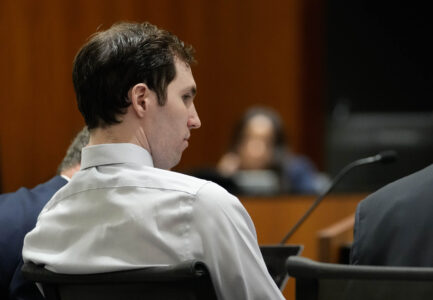
Lawyers for man accused of killing Charlie Kirk try to block death penalty

Trump’s name poised to come off Kennedy Center

Suspect in Texas shooting had fired at police days earlier, officials say

Man pleads guilty to killing a top Minnesota Democrat and her husband
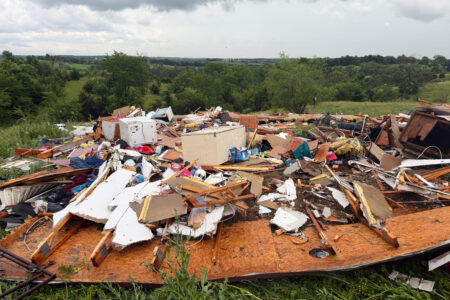
New tornadoes outside Chicago as severe storms pummel the Midwest