Anti-US cleric threatens new uprising
US Deaths
As of Saturday at least 4,039 members of the U.S. military have died since the beginning of the Iraq war in March 2003, according to an Associated Press count.
Baghdad ? Anti-American Shiite cleric Muqtada al-Sadr gave a “final warning” to the government Saturday to halt a U.S.-Iraqi crackdown against his followers or he would declare “open war until liberation.”
A full-blown uprising by al-Sadr, who led two rebellions against U.S.-led forces in 2004, could lead to a dramatic increase in violence in Iraq at a time when the Sunni extremist group al-Qaida in Iraq appears poised for new attacks after suffering severe blows last year.
Al-Sadr’s warning appeared on his Web site as Iraq’s Shiite-dominated government claimed success in a new push against Shiite militants in the southern city of Basra. Fighting claimed 14 more lives in Sadr City, the Baghdad stronghold of al-Sadr’s Mahdi Army.
Fighting in Sadr City and the crackdown in Basra are part of a government campaign against followers of al-Sadr and Iranian-backed Shiite splinter groups that the U.S. has identified as the gravest threat to a democratic Iraq.
Prime Minister Nouri al-Maliki, also a Shiite, has ordered al-Sadr to disband the Mahdi Army, Iraq’s biggest Shiite militia, or face a ban from politics.
In the statement, al-Sadr lashed back, accusing the government of selling out to the Americans and branding his followers as criminals.
Al-Sadr, who is believed to be in Iran, said he had tried to defuse tensions last August by declaring a unilateral truce, only to see the government respond by closing his offices and “resorting to assassinations.”
“So I am giving my final warning … to the Iraqi government … to take the path of peace and abandon violence against its people,” al-Sadr said. “If the government does not refrain … we will declare an open war until liberation.”
Al-Sadr’s statements came as al-Qaida in Iraq announced a one-month offensive against U.S. troops. In a new audiotape released on a militant Web site, a man claiming to be the purported leader of al-Qaida in Iraq, Abu Ayyub al-Masri, called on followers to attack U.S. soldiers and members of awakening councils, Sunni Arab tribesmen and former insurgents who changed sides and are now fighting al-Qaida.
A week of violence has raised concerns that suspected Sunni insurgents are regrouping in the north. U.S. and Iraqi troops have stepped up security operations in Mosul, believed to be one of the last urban strongholds of al-Qaida in Iraq.
U.S. officials say the awakening councils and al-Sadr’s truce were instrumental in reducing violence last year. But the truce is in tatters after Iraqi forces launched an offensive last month against “criminal gangs and militias” in the southern city of Basra.
The conflict spread rapidly to Baghdad, where Shiite militiamen based in Sadr City fired rockets at the U.S.-protected Green Zone, killing at least four Americans. U.S. officials say many of the rockets fired at the Green Zone were manufactured in Iran.
The Iranians helped mediate a truce March 30, which eased clashes in Basra and elsewhere in the Shiite south. But fighting persisted in Baghdad as U.S. and Iraqi forces sought to push militiamen beyond the range where they could fire rockets and mortars at the Green Zone.
The Americans are attempting to seal off much of Sadr City, home to an estimated 2.5 million people, and have used helicopter gunships and Predator drones to fire missiles at militiamen seeking refuge in the sprawling slum of northeast Baghdad.
At least 14 people were killed and 84 wounded in Saturday’s fighting in Sadr City, police and hospital officials said. Sporadic clashes were continuing after sundown, with gunmen darting through the streets, firing at Iraqi police and soldiers who have taken the lead in the fighting.
The U.S. military said its forces in Sadr City killed seven “criminals” – two in gunbattles and five in two separate airstrikes. The military said it does not engage if civilians are spotted in the area.
National
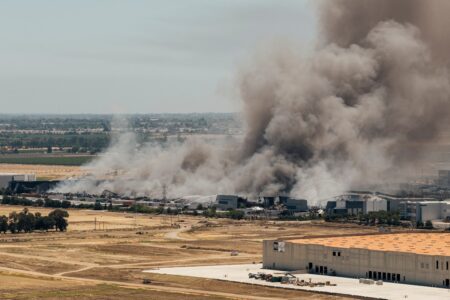
Unhealthy air quality in California city as huge warehouse fire burns for 3rd day
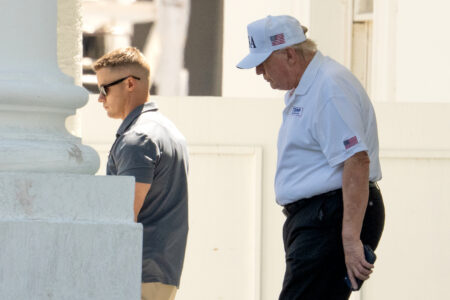
Judge orders Trump administration to restore National Park changes at sites that ‘disparaged’ US
Teens’ reading and math scores have stagnated, US test results show
WASHINGTON (AP) — Younger students have regained ground academically after the pandemic's disruptions while older ...
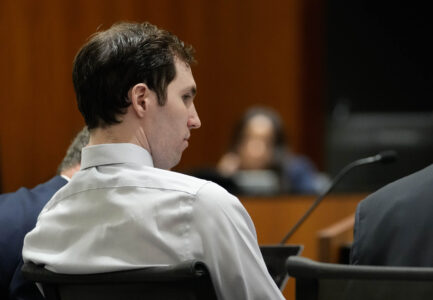
Lawyers for man accused of killing Charlie Kirk try to block death penalty
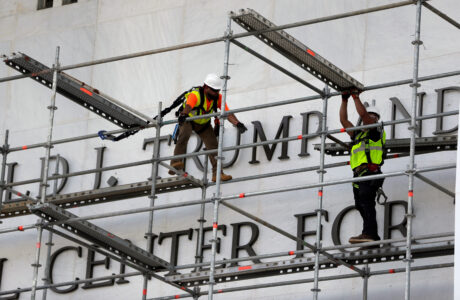
Trump’s name poised to come off Kennedy Center