Iraq troop strength, economic demands both stretched thin
Washington ? America’s war commander in Iraq told Congress Wednesday he is unlikely to endorse any fresh buildup of troops even if security in the country deteriorates, signaling that the limits of the U.S. military have been reached for now.
Gen. David Petraeus, closely questioned by lawmakers for a second day, described Iraq as a frail state still struggling to provide its own security. That volatile situation figured in his recommendation to President Bush that a gradual pullout of U.S. troops be halted this summer – a recommendation Bush is expected to embrace in a speech today.
But Petraeus also spoke of the burden on U.S. ground forces, and Bush will address that, too. In his speech at 10:30 a.m. CDT, Bush will announce plans to cut the combat tours of active-duty soldiers from 15 months to 12 months. The reduced deployments will not apply – at least initially – to any soldiers currently serving in Iraq, unless conditions improve to the point that commanders believe some could go home early.
Petraeus’ resistance to the idea of any renewed increase of troops for Iraq reflects – at least in part – the reality that the rotation pool of some 1.3 million soldiers and Marines has been exhausted. Army soldiers in particular have faced repeated tours in Iraq and Afghanistan, and senior officers warn that the service’s “strategic reserve” is at an all-time low.
After briefings from Petraeus and other military and civilian leaders on the war in Iraq, U.S. Rep. Nancy Boyda, D-Topeka, said she is concerned that involvement there has jeopardized U.S. security in other places.
“The success we see in Iraq – thank God for that – but my main concern is the safety and security of our country,” Boyda said in a telephone interview.
Boyda said the military is stretched too thin in Iraq, making it impossible to send extra forces to Afghanistan or other places where they may be needed.
She said the increase in troops in Iraq, the surge, had produced “tactical” gains but at a tremendous cost that has reduced the security of the United States.
Economic argument
For much of the five-year-old war in Iraq, Democrats have made the argument that the Bush administration’s war strategy has made Iraq less safe and set the U.S. military off track in the broader global war on terrorism.
But as the Democrats continue to make their push for a significantly reduced presence in Iraq – something they acknowledge is unlikely to happen in the last months of the Bush administration – they are now increasingly framing their argument for a troop withdrawal in economic terms.
In two days of hearings with Petraeus, and the senior U.S. diplomat in Baghdad, Ryan Crocker, Democrats and a smattering of Republicans fired criticism at the White House over a war that has already cost $600 billion and could cost hundreds of billions more if a significant U.S. presence is kept there over the next decade, according to projections by the Congressional Budget Office.
“The cost of our deployment is not the determining factor in deciding how we size our forces or how long we stay engaged there,” said Rep. John Spratt Jr., D-S.C. “But when the cost is $600 billion and rising and there’s no exit sign in sight, it has to be a consideration.”
Who should pay?
While polls show that a majority of Americans support a U.S. troop withdrawal, Democrats have been unsuccessful in prodding the administration to abandon its war strategy by arguing there has been a lack of progress since President Bush announced his decision to send in nearly 30,000 additional troops. But the Democrats may find that raising questions about the merits of spending billions on an unpopular war during an economic downturn resonates better with voters.
Over the two days of hearings, Democrats repeatedly leveled questions that they hope will pull the Republicans into a larger debate about fiscal responsibility.
From liberal Democrats like Rep. Lynn Woolsey of California to moderate Republicans like Sen. Susan Collins of Maine, the same essential questions were directed over and over at Petraeus and Crocker: How does the U.S. continue to pay for the war? And why aren’t the Iraqis carrying a heavier load?
Sen. Carl Levin, D-Mich., chairman of the Armed Services Committee, recalled an anecdote a U.S. military officer in Iraq relayed to him about asking an Iraqi official why the Americans were paying for projects when the Iraqis had funds. Levin said the Iraqi responded with his own question for the U.S. officer: “As long as you are willing to pay … why should we do it?”
National
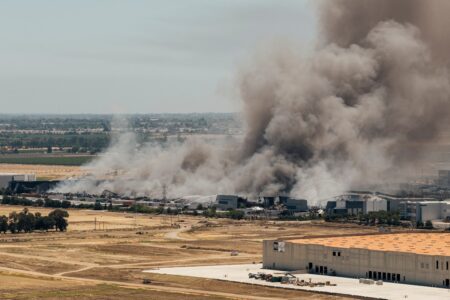
Unhealthy air quality in California city as huge warehouse fire burns for 3rd day
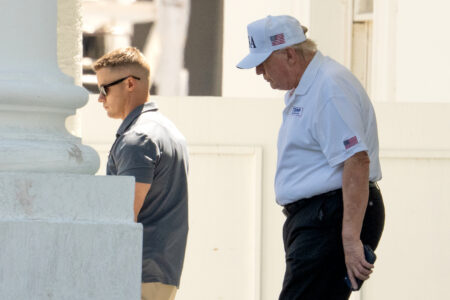
Judge orders Trump administration to restore National Park changes at sites that ‘disparaged’ US
Teens’ reading and math scores have stagnated, US test results show
WASHINGTON (AP) — Younger students have regained ground academically after the pandemic's disruptions while older ...
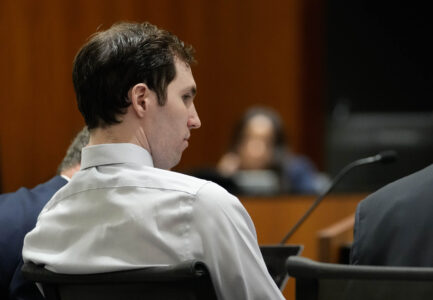
Lawyers for man accused of killing Charlie Kirk try to block death penalty
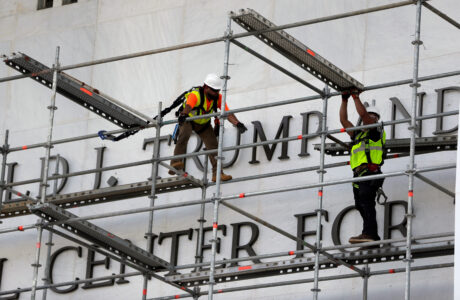
Trump’s name poised to come off Kennedy Center