

U.S. to raise Afghanistan force
Muscat, Oman ? The United States intends to send many more combat forces to Afghanistan next year, regardless of whether troop levels in Iraq are cut further this year, Defense Secretary Robert Gates said Friday.
It is the first time the Bush administration has made such a commitment for 2009.
Gates told reporters while flying to this Persian Gulf nation from a NATO summit in Bucharest, Romania, that President Bush had made the pledge to other allied leaders at the summit on Thursday.
Bush was not specific about the number of additional troops that would go to Afghanistan in 2009, Gates said. The United States now has about 31,000 troops there – the most since the war began in October 2001 – and has been pressing the allies to contribute more.
Gates said he advised Bush to make the pledge in Bucharest even though the movement of the unspecified additional troops would ultimately be a decision for the next president, who will take office in January.
“The question arises, how can we say that about 2009?” Gates said. “All I would say is, I believe … this is one area where there is very broad bipartisan support in the United States for being successful” in Afghanistan, where by many accounts progress against the Taliban resistance has stalled.
“I think that no matter who is elected president, they would want to be successful in Afghanistan. So I think this was a very safe thing for him to say,” the Pentagon chief added.
Gates said he believed it was too early to decide how many additional combat forces the United States should plan on sending in 2009. He said it would depend on several things, including the extent of U.S. and NATO success on the battlefield this year, as well as the impact of a new senior U.S. commander taking over in coming months. Gen. David McKiernan is due to replace Gen. Dan McNeill this spring as the top overall commander in Afghanistan
McNeill has said he believes he needs another three brigades – two for combat and one for training. That translates to roughly 7,500 to 10,000 additional troops. The Bush administration has no realistic hope of getting the NATO allies to send such large numbers.
McKiernan on Thursday told Congress that while he can’t yet say how many more troops he would want there, he believes he needs additional combat and aviation forces, intelligence and surveillance capabilities, and training and mentoring teams.
In remarks to reporters after Bush made the statement at the summit Thursday, the president’s national security adviser, Stephen Hadley, said any extra U.S. combat troop deployments would be in southern Afghanistan, where fighting is heaviest.
It is widely agreed within the administration and between the United States and its key allies in Afghanistan that they have too few troops on the ground to both effectively fight the Taliban resistance – especially in the volatile south – and accelerate the training of Afghan soldiers and police.
Adm. Mike Mullen, chairman of the Joint Chiefs of Staff, said this week there are not enough forces in Afghanistan to hold onto any security gains that troops make there. Troop commitments in Iraq, he said, make it impossible for the U.S. to meet requirements for at least two additional combat brigades.
“We’ve had significant impact there, but we don’t have enough forces there to hold in what is a classic counterinsurgency,” he said.
National
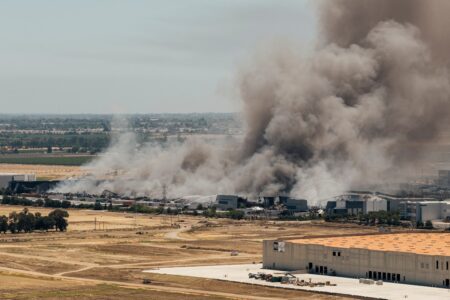
Unhealthy air quality in California city as huge warehouse fire burns for 3rd day
Judge orders Trump administration to restore National Park changes at sites that ‘disparaged’ US
Teens’ reading and math scores have stagnated, US test results show
WASHINGTON (AP) — Younger students have regained ground academically after the pandemic's disruptions while older ...

Lawyers for man accused of killing Charlie Kirk try to block death penalty

Trump’s name poised to come off Kennedy Center
