McCain to challenge GOP rivals on Iraq
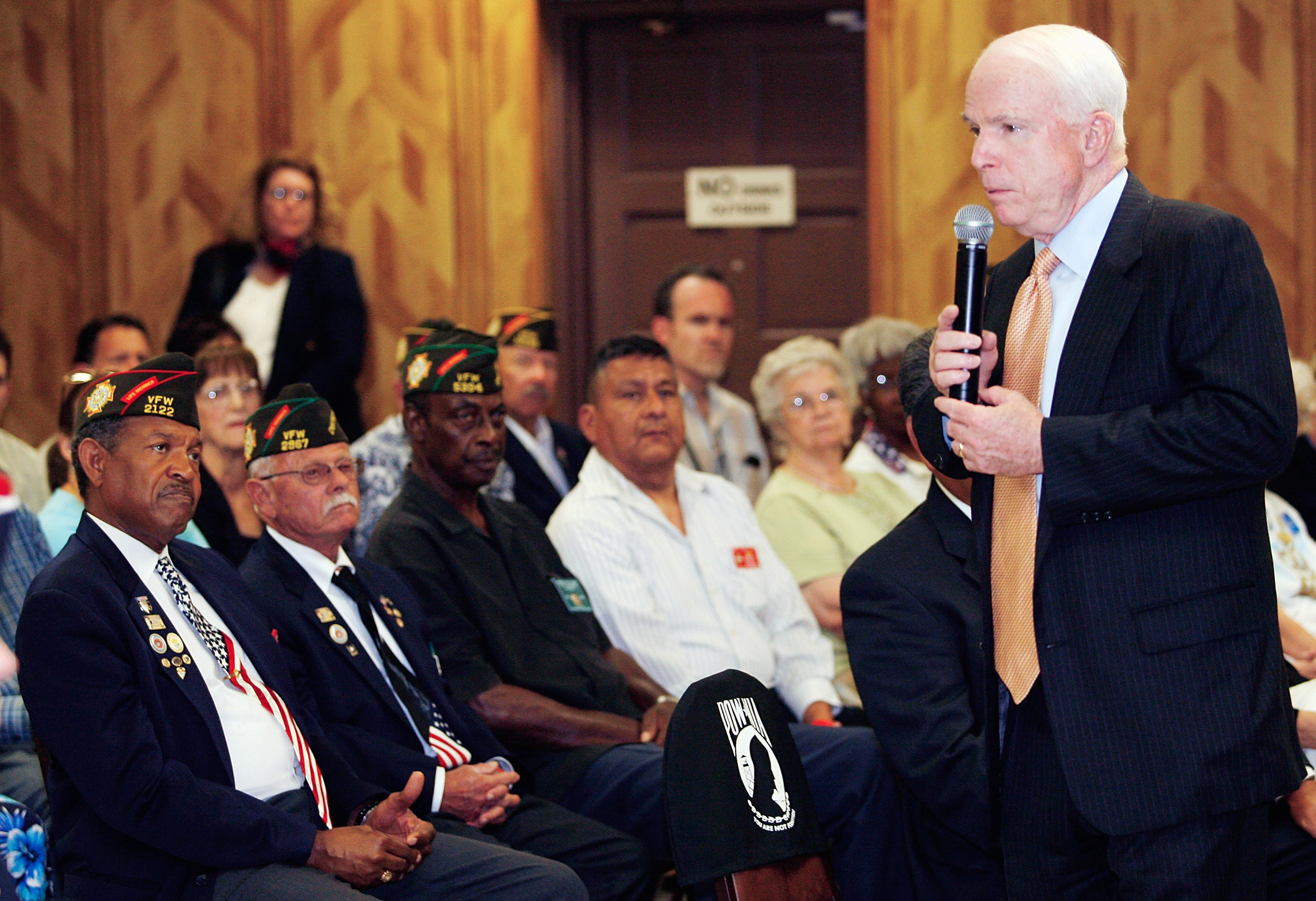
Republican presidential hopeful Sen. John McCain, R-Ariz., takes questions about the Iraq war as he brings his presidential campaign to a town-hall meeting Friday at the Veterans of Foreign Wars Post 1622 in Lomita, Calif.
Washington ? It might be Fred Thompson’s week in the spotlight, now that his entry into the campaign for the Republican presidential nomination is official, but it is the hope of Sen. John McCain, R-Ariz., that, by the end of September, this will be remembered not as Thompson’s moment but as McCain’s month.
It is now his goal to use the coming debates over the report on Iraq by Army Gen. David Petraeus and defense funding to re-establish himself in the eyes of Republicans as the candidate who has been most consistently right about Iraq for four years.
Calling out his rivals on Iraq will be a central part of McCain’s argument, a fact underscored in an interview this week with his new campaign manager, Rick Davis. Speaking of GOP rivals Rudy Giuliani, Mitt Romney and Thompson, Davis said, “Find me one quote where they stuck their neck out and said anything that was counter to Rumsfeld or Bush or Cheney on the war for the last five years.”
McCain will also argue that he was the first of the GOP candidates to fully embrace President Bush’s troop increase at a time when public opinion was running in the opposite direction and that he has been proven right. “For years, it was McCain against the party on the war, and then the war failed, and McCain, instead of getting credit for it, looked like the troublemaker,” Davis said. “Then after the (2006) election, Bush pivots and goes to where McCain is at a time when the war is the least popular thing in American politics, so we get the least popular president and the least popular issue co-enjoined with McCain.”
Far from seeking to de-emphasize the war and shift focus to the issues that propelled his 2000 campaign, McCain has decided to make Iraq the centerpiece of his recovery strategy, with a September schedule focused on the war that includes a “no surrender” tour.
National
Unhealthy air quality in California city as huge warehouse fire burns for 3rd day
Judge orders Trump administration to restore National Park changes at sites that ‘disparaged’ US
Teens’ reading and math scores have stagnated, US test results show
WASHINGTON (AP) — Younger students have regained ground academically after the pandemic's disruptions while older ...
Lawyers for man accused of killing Charlie Kirk try to block death penalty

Trump’s name poised to come off Kennedy Center