

Tenor Luciano Pavarotti dies
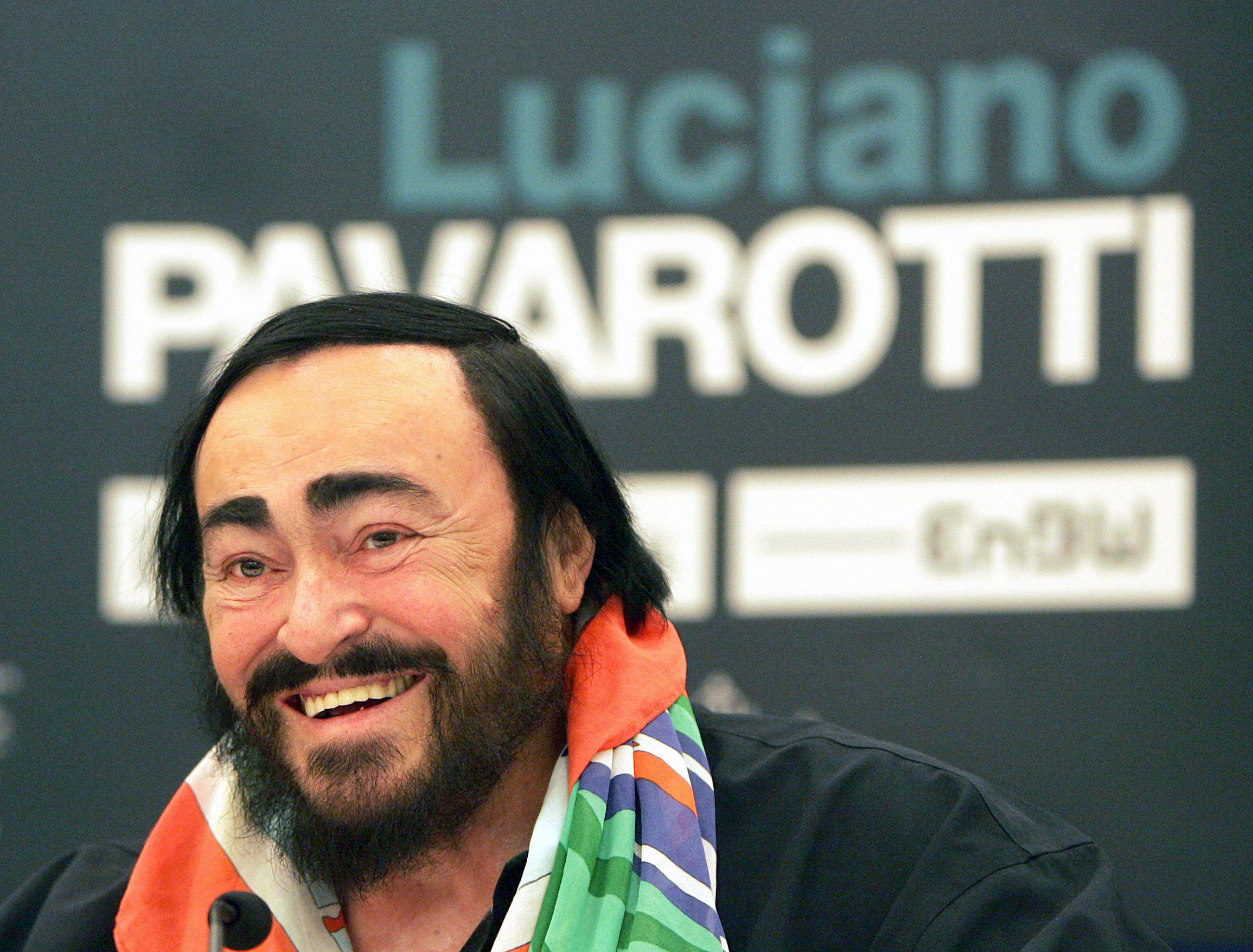
Italian tenor Luciano Pavarotti appears at a press conference in Stuttgart, Germany, in this Oct. 13, 2005, file photo. Pavarotti, one of the world's biggest opera stars, died today at his home in Italy. He was 71.
Rome ? Luciano Pavarotti, whose vibrant high C’s and ebullient showmanship made him one of the world’s most beloved tenors, died today, his manager told The Associated Press. He was 71.
His manager, Terri Robson, told the AP in an e-mailed statement that Pavarotti died at his home in Modena, Italy, at 5 a.m. local time (11 p.m. CDT Wednesday). Pavarotti had been diagnosed with pancreatic cancer last year and underwent further treatment in August.
“The Maestro fought a long, tough battle against the pancreatic cancer which eventually took his life. In fitting with the approach that characterized his life and work, he remained positive until finally succumbing to the last stages of his illness,” the statement said.
For serious fans, the unforced beauty and thrilling urgency of Pavarotti’s voice made him the ideal interpreter of the Italian lyric repertory, especially in the 1960s and ’70s when he first achieved stardom. For millions more, his charismatic performances of standards like “Nessun dorma” from Puccini’s “Turandot” came to represent what opera is all about.
Instantly recognizable from his charcoal black beard and tuxedo-busting girth, Pavarotti radiated an intangible magic that helped him win hearts in a way Placido Domingo and Jose Carreras – his partners in the “Three Tenors” concerts – never quite could.
“I always admired the God-given glory of his voice – that unmistakable special timbre from the bottom up to the very top of the tenor range,” Domingo said in a statement from Los Angeles. “I also loved his wonderful sense of humor and on several occasions of our concerts with Jose Carreras – the so-called Three Tenors concerts – we had trouble remembering that we were giving a concert before a paying audience, because we had so much fun between ourselves,” he said.
The tenor, who seemed equally at ease singing with soprano Joan Sutherland as with the Spice Girls, scoffed at accusations that he was sacrificing his art in favor of commercialism.
“The word commercial is exactly what we want,” he said, after appearing in the widely publicized “Three Tenors” concerts. “We’ve reached 1.5 billion people with opera. If you want to use the word commercial, or something more derogatory, we don’t care. Use whatever you want.”
Other notoriety
His name seemed to show up as much in gossip columns as serious music reviews, particularly after he split with Adua Veroni, his wife of 35 years and mother of their three daughters, and then took up with his 26-year-old secretary in 1996.
In late 2003, he married Nicoletta Mantovani in a lavish, star-studded ceremony. Pavarotti said their daughter Alice, nearly a year old at the time of the wedding, was the main reason he and Mantovani finally wed after years together.
Pavarotti liked to mingle with pop stars in his series of charity concerts, “Pavarotti & Friends,” held annually in Modena. He performed with artists as varied as Ricky Martin, James Brown and the Spice Girls.
It was not just his annual extravaganza that saw Pavarotti involved in humanitarian work. During the 1992-95 Bosnia war, he collected humanitarian aid along with U2 lead singer Bono, and after the war he financed and established the Pavarotti Music Center in the southern city of Mostar to offer Bosnia’s artists the opportunity to develop their skills.
He performed at benefit concerts to raise money for victims of tragedies such as an earthquake in December 1988 that killed 25,000 people in northern Armenia.
Arts and Entertainment
Photos: Lawrence begins World Cup festivities with downtown block party

Watkins Museum to open special exhibit detailing how Douglas County celebrated America’s Bicentennial

Go, See, Do: Kaw River Roots Festival, markets and more

Soccer gear honoring Lawrence history’s all-star team is now on sale as part of city’s public art exhibition

Nominations, call for artists open for Lawrence’s 2026 Phoenix Awards