Sisters pour souls into program
Passion, versatility and communication make the Ahn Trio an exceptional chamber ensemble. All three qualities were evident in their performance Friday evening at the Lied Center.
The trio’s versatility was evident in the evening’s program, chosen from 20th and 21st century composers who themselves are versatile. These included a march-tempo movement by Leonard Bernstein, a tango by Astor Piazzola, and everything from Irish jig to disco by Kenji Bunch. The Ahn sisters seemed perfectly at home throughout, and intimately involved in the spirit of each.
Their communication is doubtless helped by their closeness – not only are they sisters, but the two are twins: Lucia on piano and Maria on cello. Together with Angella, the violinist, they darted frequent looks at one another, seeming to confirm not only the timing of entrances but also the feeling of the piece.
No one attending the concert could doubt the passion. In fact, these are musicians to be seen as well as heard, because emotion was manifest in their bodies and faces as well as their music. The Ahns virtually danced as they played – as much as a seated posture and their instruments would permit.
The opening number, Paul Chihara’s “Orchids,” was written for the trio, with each of its movements named for one of the sisters. It included a haunting Korean folk motif (as well as an allusion to “Leaving Cheyenne”). Its third movement concluded with a remarkable contrast between a sensuous cello line and breathy harmonics from the violin.
Bernstein’s “Trio for Violin, Violoncello and Piano,” written when he was 19, sounded like Bernstein, but clearly a young Bernstein. The Ahns took no liberties with this early study, but it was hard to resist the impression that they were playing ironically at times. Their precision of technique throughout was impressive.
The most moving piece of the evening was the Argentine composer Astor Piazzola’s “Oblivion.” The trio beautifully conveyed the music’s great sadness. Cello and violin alternated the playing of elegiac melodies, then doubled in octaves for an especially moving effect. Maria’s eloquent cello seemed so deeply melancholy, one wanted to comfort the instrument and its player.
The program’s piÃce de resistance was Bunch’s “Danceband,” commissioned for them by the Wolf Trap Foundation, with its five movements corresponding to five different dances.
The first movement, “Slip Jig,” was as Irish as one could wish, complete with bodhran-like sounds from the cello. Next, the “Sarabande” a 17th-century form, included the sounds of strummed and plucked piano strings for a harpsichord-like effect. The third movement, “Backstep,” was a real Appalachian hoedown, complete with convincing fiddlin’ from Angella, as well as a remarkably banjo-like sound from Lucia’s piano, its strings damped with a towel.
The next movement, “Waltz,” seemed like a requiem for this form: definitely a waltz, but without its confidence. The final movement, “Disco Boogie,” was a spirited reprise of the ’70s style, done with enthusiasm and without mockery. Here the piano took the lead, playing vigorous stride after spending much of the evening in capable accompaniment of the violin and cello.
An audience smaller than the performance deserved called them back for three bows, an encore (David Balakrishnan’s “Skylife”), and two more bows after that, and clearly would have liked to hear still more.
Arts and Entertainment
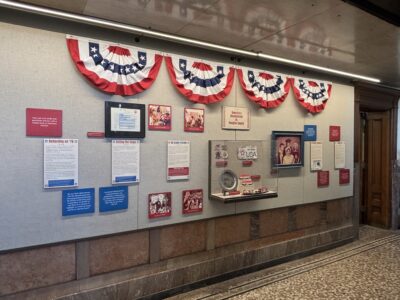
Watkins Museum to open special exhibit detailing how Douglas County celebrated America’s Bicentennial

Go, See, Do: Kaw River Roots Festival, markets and more
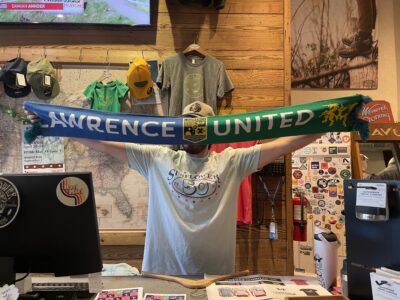
Soccer gear honoring Lawrence history’s all-star team is now on sale as part of city’s public art exhibition
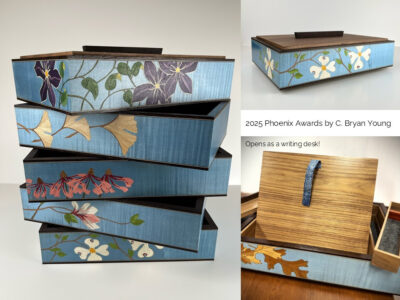
Nominations, call for artists open for Lawrence’s 2026 Phoenix Awards
Go, See, Do: ‘Addams Family’, PRIDE parade and a host of library events among offerings