

Dark Wonderland
Hollywood producer sires literary franchise after reimagining works of Lewis Carroll
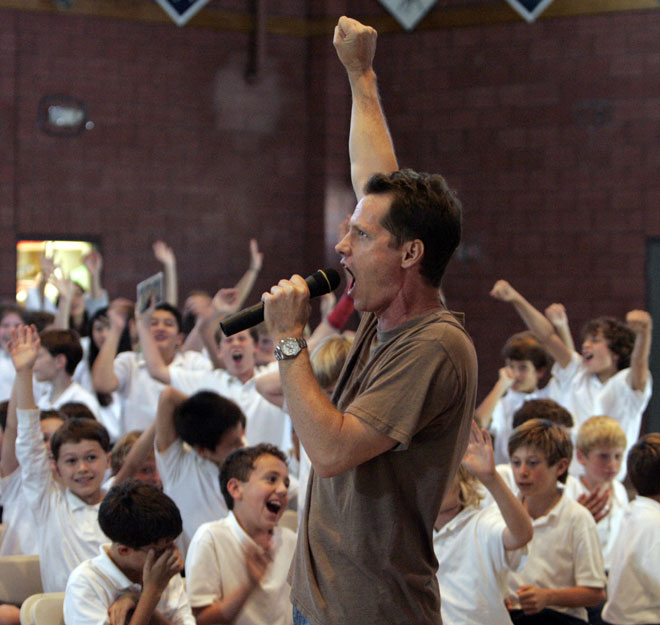
Frank Beddor revs up students at Mayfield Junior School in Pasadena, Calif. Beddor is the author of the popular Looking
Hollywood ? Frank Beddor – a successful Hollywood producer with an oddball book idea he was burning to write – thought he knew how this game was played.
“I was really excited because my agent said, ‘I can put you in the room,'” Beddor recalled. “And I took the Hollywood approach: I would get into the room and pitch them. I thought it was gonna be great. You know how in Hollywood you want to go to the studio head, go over all those layers?”
Beddor, 48, has the energy and zealous confidence you’d expect in a former actor, world-champion freestyle skier and stuntman, as well as the kind of bland, blue-eyed handsomeness that Greg Kinnear has spent much of his career undercutting. He managed to sell the idea for “There’s Something About Mary,” which he produced, in a Sundance ski lift.
But his charms weren’t, in the end, enough: New York publishers listened politely and handed his projects to their editors, who were resentful at being passed over. “An editor wants to discover someone. Not only that, I was from Hollywood – and I was a producer! I mean, I couldn’t have had more strikes against me. They decided it was garbage, I’m sure, before they even read it.”
Whatever the reason, he ended up getting shut down more than a dozen times. Undaunted, he did what Robert Frost and Jimi Hendrix before him did after struggling for attention in the States: He went to England, where the book found a publisher and became a critical and popular sensation.
That battle won, seven years later, Beddor is about halfway into the design of a fantasy-fiction empire called “The Looking Glass Wars.” The series, which extends and inverts the work of Lewis Carroll, includes the eponymous initial volume, published in the U.K. in 2004 and in the U.S., where it became a best-seller, in 2006 ; a second novel in a projected trilogy called “Seeing Redd “; the graphic novel “Hatter M. “; and a scrapbook called “Princess Alyss of Wonderland.”
These last two offer alternate ways to get into the series, as will an online game called the “Card Soldier Wars,” which came out this month, and a CD soundtrack.
Amazingly, given all this Hollywood-style spinning off, which might suggest a cynical franchise, “The Looking Glass Wars” books are intelligently and briskly written, and they don’t read like they were written by a movie producer trying to cash in.
Harrowing tale
The conceit of “The Looking Glass Wars” is that Carroll’s Alice books were a sanitized, watered-down version of the “real” story: the truly harrowing tale of a princess who flees Wonderland when her parents are killed in a palace coup by her evil aunt. Escaping through a looking glass, Alyss – even her name was scrambled in Carroll’s telling – ends up an orphan on the dirty streets of London, pining to return to Wonderland’s armies of cards and chess pieces and the family’s ace bodyguard, Hatter Madigan. If she returns, she and the “Alyssian” rebels must fight the bloodthirsty Queen Redd.
Beddor, who’d disliked the Alice books when he was forced to read them as a kid, was introduced to a new way of seeing them on a trip to London for the premiere of “Mary.” After catching a display of playing cards at the British Museum, he met an antiquarian dealer who showed him a set of Alice-themed cards from the 19th century.
“He said the cards had been handed down to him over generations,” recalled Beddor, “and that this story was handed down with them – a different interpretation of where Lewis Carroll was coming from. That someone had created these cards to tell a deeper, darker story. It was like Grimm’s fairy tales, oral storytelling.”
Struck by this scenario in which Alice was a princess from another world, Beddor immediately thought it would make a great movie. But while sketching it out, he became obsessed.
“It took me a couple of years, simply working on the logic, the rules, the back story, to create the world so I could work on the narrative. And then I thought, ‘I want to live in my world: I want my own private Wonderland. And I don’t want to share it with anyone else.'” And he wanted the depth a movie wouldn’t provide.
Off with his head
He wasn’t sure where it would lead, so he took a smaller load of film jobs and worked on this a few hours a day. His previous writing experience was limited to penning back stories, for the sake of motivation, for the plays he was acting in.
“I’m his best friend, I play golf with him all the time,” said Ed Decter, a “Mary” co-writer. “And I think there was probably two years where he didn’t even mention it. He was probably nervous whether he could pull this off.”
Said Beddor: “I wanted it to be under the radar, so I wouldn’t feel the pressure or expectations. And in Hollywood, a book’s kind of considered a step down.”
The technique of taking a classic literary text and inverting or rethinking it – which predates Shakespeare – has become almost familiar over the last few years, including reimaginings of “The Adventures of Huckleberry Finn” and “Gone With the Wind.”
But when Beddor arrived in England for his book tour, he found some Carroll enthusiasts weren’t exactly on the bandwagon.
“Off with Beddor’s head!” said the signs hoisted by four members of the Lewis Carroll Society who met the author at Heathrow Airport in 2004. At first, Beddor thought they were joking, and approached them, laughing. They weren’t.
“You know the Brits, they’re very nonconfrontational. It was a pretty brief interaction, but they wanted me to know that it wasn’t cool. That my books wouldn’t make it, that they sucked. There are four Lewis Carroll societies and that’s their job, to protect the integrity of Lewis Carroll’s work. But remember: Everybody has adapted Lewis Carroll. I am so at the end of the line.”
School sessions
After trouble with the gatekeepers of the publishing world, and a tangle with the Carroll purists, Beddor has reached his audience in a big way.
He often goes into schools, where he gives a high-spirited, barnstorming presentation – acting out characters, asking the kids to help cast the movie with him – that is in part responsible for his sales.
“This is a book for boys, it turns out,” he said of his school appearances. “But it’s all about women. Women have power, they’re forceful, they rule. But boys are the main audience. I was a little surprised because I thought it was a slam-dunk for the girls – I thought it was a girl empowerment story.”
Arts and Entertainment

Photos: Lawrence begins World Cup festivities with downtown block party
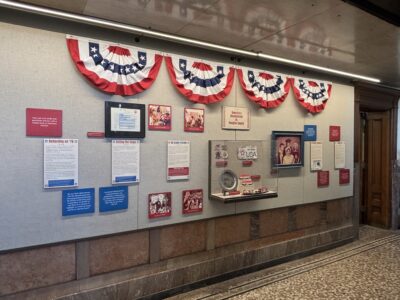
Watkins Museum to open special exhibit detailing how Douglas County celebrated America’s Bicentennial

Go, See, Do: Kaw River Roots Festival, markets and more
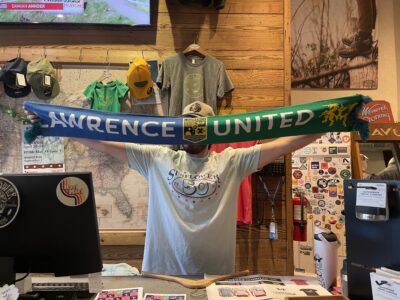
Soccer gear honoring Lawrence history’s all-star team is now on sale as part of city’s public art exhibition
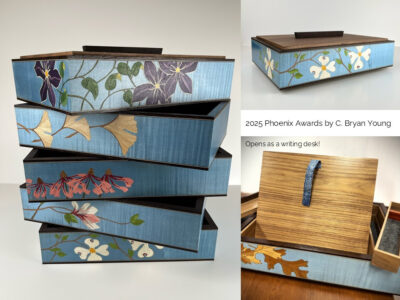
Nominations, call for artists open for Lawrence’s 2026 Phoenix Awards