Volunteer network of breeders aims to bring back chestnut tree
Indianapolis ? Growing up in the 1920s, Bill Lord remembers feasting on the sweet, rich nuts of American chestnut trees – the majestic species that a fungus would soon all but wipe out.
More than a half-century after the prolific nut-producer became little more than the stuff of holiday songs, Lord is now part of a far-flung network of volunteers working to return the so-called “Redwood of the East” to the forests it once dominated.
The American Chestnut Foundation oversees a tree-breeding program with chapters in 15 Eastern states and is closing in on blight-resistant American chestnuts trees it hopes could revive the species.
Unless a new biological invader intervenes, the Bennington, Vt.-based group hopes to begin mass replantings in about a decade in the chestnut’s original range from Maine to Mississippi.
Lord, an 86-year-old retired veterinarian from Plum, Pa., said reviving the tree would be a boon not just to people – for its handsome, highly rot-resistant lumber and tasty nuts – but to a wide range of animals.
“Bears, deer, rabbits, raccoons, crows, foxes – you could just go on and on,” he said. “Bringing it back would greatly increase the food supply for wildlife, and we’d have a wonderful, fast-growing timber tree.”
American chestnuts can grow to 120 feet. One tree in North Carolina had a trunk diameter of 17 1/2 feet.
The fungus that attacked the American chestnut likely arrived on imported Asian chestnut trees. It was first detected in 1904 in trees in New York City, and by 1950 some 3.5 billion trees – about 90 percent of the species – had died.
The American Chestnut Foundation began a tree-breeding campaign in the late 1980s in a quest for trees that could ward off the fungus.
First, the towering American species with its picturesque form was crossed with its blight-resistant but squat Chinese counterpart. The resulting trees were a 50-50 mix of American and Chinese chestnut genetics.
Those trees are then selectively bred with surviving American chestnuts in a process called “backcrossing.” The nuts produced by each successive backcross are planted and eventually pollinated with pure American chestnut trees, making each generation slightly more American.
The final product is years away, but the foundation has partnered with the U.S. Forest Service in a project to plant a mix of its American chestnut trees at six sites, from Tennessee to West Virginia. Those experimental plantings should begin within two or three years.
National
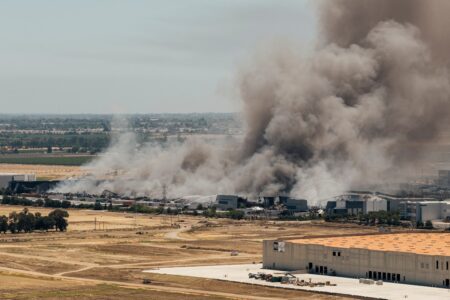
Unhealthy air quality in California city as huge warehouse fire burns for 3rd day

Judge orders Trump administration to restore National Park changes at sites that ‘disparaged’ US
Teens’ reading and math scores have stagnated, US test results show
WASHINGTON (AP) — Younger students have regained ground academically after the pandemic's disruptions while older ...

Lawyers for man accused of killing Charlie Kirk try to block death penalty

Trump’s name poised to come off Kennedy Center