NASA promises to reveal survey that shows problems
Washington ? Abandoning its secrecy claims, NASA promised Congress on Wednesday it will reveal results of an unprecedented federal aviation survey that found that aircraft near collisions, runway interference and other safety problems occur far more often than previously recognized.
The agency’s chief also said, however, that before any release, NASA would scrub the data to make sure none of the 24,000 pilots who were interviewed anonymously could be identified, taking until the end of the year to do what a survey expert told Congress could be done in a week.
Provoking broad criticism, NASA had said previously it was withholding the information because it feared it would upset air travelers and hurt airline profits. NASA cited those reasons in refusing to turn over the survey data to The Associated Press, which sought the information over 14 months under the Freedom of Information Act.
“We did say that, and that was the wrong thing to have said,” NASA’s administrator, Michael Griffin, testified during an oversight hearing. “I apologize. … People make mistakes. This was a mistake.”
Lawmakers from both sides were harshly critical. Rep. Bart Gordon, D-Tenn., chairman of the House Science and Technology Committee, said NASA’s reasons for withholding the research were “both troubling and unconvincing.”
“This appears to be a mess of NASA’s own causing,” said Rep. James Sensenbrenner, R-Wis., the top Republican on the committee’s oversight and investigations panel. “You’ve dug yourself in a hole. I can’t say you’re not digging yourself deeper from what I’ve heard at this hearing.”
Griffin said his agency will release the research data that does not contain what he described as confidential commercial information. He said NASA spent $11.3 million on the research.
“The survey results we can legally release will be released, period,” he said.
Griffin’s end-of-the-year timetable wasn’t fast enough for some lawmakers.
“Shouldn’t it be a priority to your agency to scrub this and get this out to the public immediately?” asked Rep. Jerry Costello, D-Ill. He said NASA “made a huge mistake in how they responded to the AP and to the media.”
Another lawmaker, Rep. Harry Mitchell, D-Ariz., asked: “Why does it take a hearing in Congress and public pressure for a hearing to get this information made public?”
In an odd twist, Griffin raised doubts about the reliability of his own agency’s research by telling lawmakers that NASA does not consider the survey’s methodology or data to have been sufficiently verified.
Griffin confirmed NASA’s research project showed many types of safety incidents occurring more frequently than were reported by other U.S. government monitoring programs. But he cautioned that the data were never validated and warned, “There may be reason to question the validity of the methodology.”
“We did not manage that project well,” he told Congress. “We will fix it and we will try not to do it again.”
“What I’m hearing you say is, we’ve just thrown $11 million down a rathole,” said Rep. Ben Chandler, D-Ky.
“I hope that is not the case, and I believe we should be able to get much that is useful from this data,” Griffin said. “But there will be cause to question it from knowledgeable aviation experts.”
National
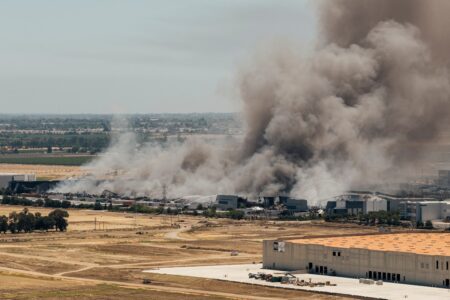
Unhealthy air quality in California city as huge warehouse fire burns for 3rd day
Judge orders Trump administration to restore National Park changes at sites that ‘disparaged’ US
Teens’ reading and math scores have stagnated, US test results show
WASHINGTON (AP) — Younger students have regained ground academically after the pandemic's disruptions while older ...
Lawyers for man accused of killing Charlie Kirk try to block death penalty
Trump’s name poised to come off Kennedy Center