

‘Crashing’ a fascinating account of risky surgery
It would seem like a proposition that merits an unequivocal “yes”: Blind since age 3, a man in his early 40s has a chance to undergo a stem cell transplant that might restore his vision and allow him to see his wife and two sons for the first time.
After an unscheduled visit to an unfamiliar eye doctor while on a trip with his wife, who was having contact lens trouble, Mike May discovers there is a chance for him to see again. The development comes as randomly as the freak chemical explosion that blinded him as he made mud pies. Instead of lunging at the opportunity, though, May inexplicably shrugs it off.
In the first half of “Crashing Through: A True Story of Risk, Adventure, and the Man Who Dared to See” (Random, $25.95), this fascinating exploration of one man’s journey from blindness to sight, author Robert Kurson (“Shadow Divers”) seamlessly weaves between flashbacks to May’s surprisingly normal childhood and distinguished adulthood and his contemplation of whether to chase a sighted life.
Blind, he was hardly limited. As a kid, he rode a bike, persuaded his middle school principal to make him a crossing guard, took his sister’s Datsun for a joyride. As an adult, he won gold medals in the ParaOlympics, started a business, married and had a family.
The chapters dealing with May’s decision-making are sometimes a bit dry, but that seems as much a function of May’s matter-of-fact demeanor as Kurson’s methodical well-researched writing.
The second half of the book describes the gripping scene in which May’s bandages come off. “BOOM! WHOOSH! A cataclysm of white light exploded into May’s eye and his skin and his blood and his nerves and his cells, it was everywhere, around him and inside him, inside his hair, on top of his breath, in the next room, in the next building.”
Kurson expertly captures May’s wonderment during his first year of sight – the joyous discovery of his wife’s body, the exhilarating view atop his favorite ski slope – and his crushing disappointment when he realizes his vision isn’t working the way it does for other sighted people.
Complications medical and emotional mount until May questions whether it might not make more sense to return to being blind. Kurson has so deftly taken us along on May’s roller-coaster ride that, despite our bias, it’s crystal clear that in May’s remarkable life, blindness might actually be desirable.
Arts and Entertainment
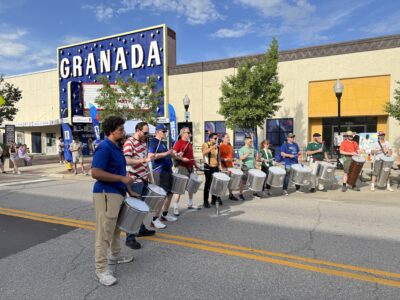
Photos: Lawrence begins World Cup festivities with downtown block party
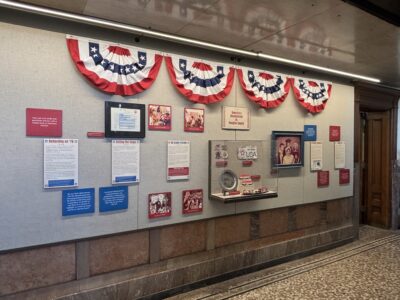
Watkins Museum to open special exhibit detailing how Douglas County celebrated America’s Bicentennial

Go, See, Do: Kaw River Roots Festival, markets and more
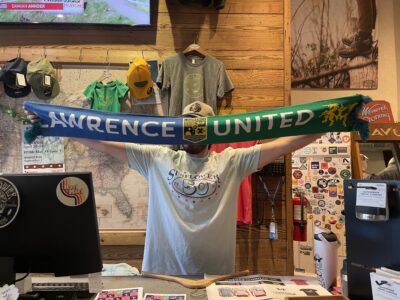
Soccer gear honoring Lawrence history’s all-star team is now on sale as part of city’s public art exhibition

Nominations, call for artists open for Lawrence’s 2026 Phoenix Awards