Threats cancel prince’s Iraq duty
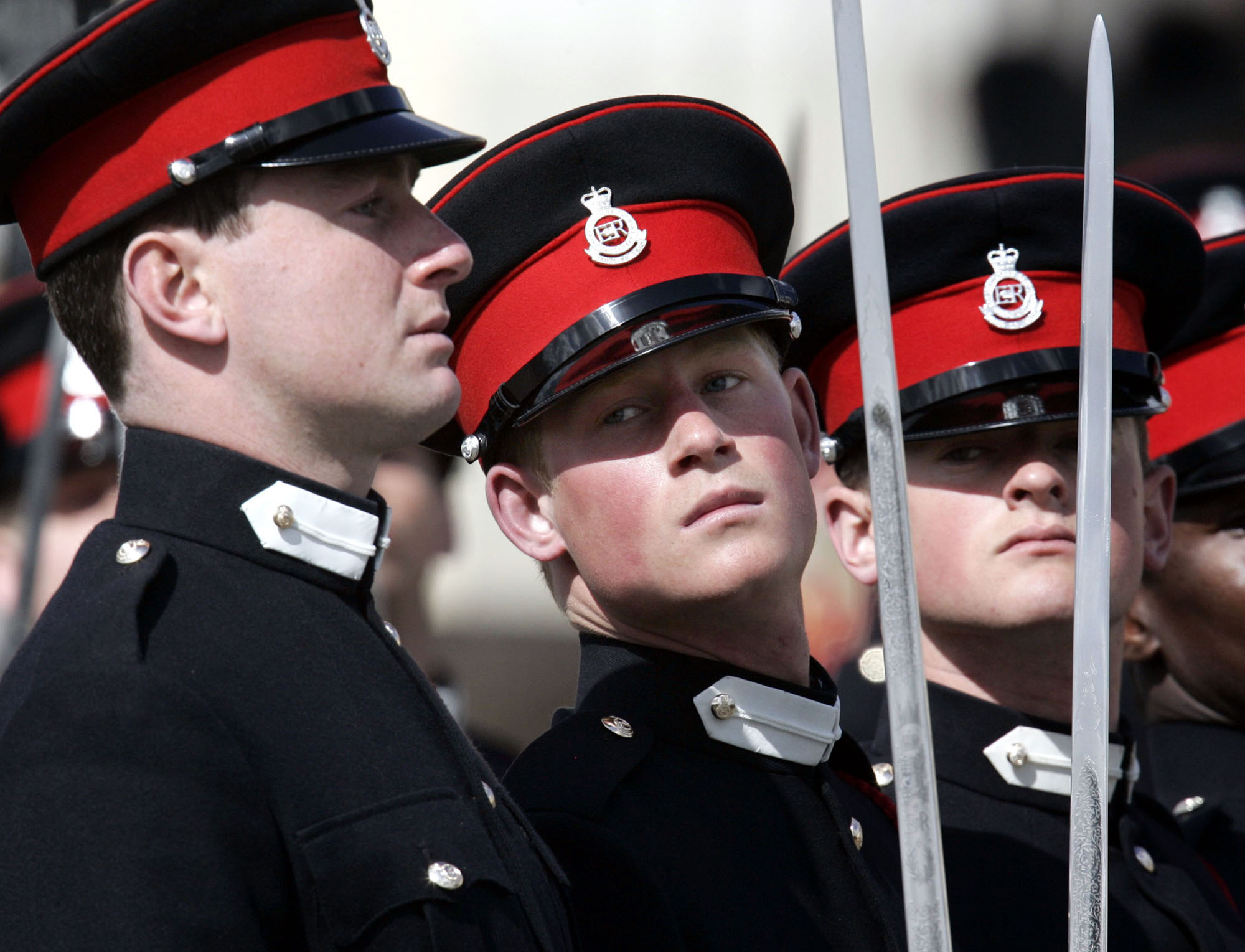
Britain's Prince Harry, center, marches during The Sovereign's Parade at the Royal Military Academy at Sandhurst, England, on the completion of his training in this April 12, 2006, file photo. Harry will not be sent to Iraq, Britain's top general said Wednesday. Army Chief of Staff Gen. Sir Richard Dannatt said the threat to Harry and his regiment was too great.
London ? Britain’s army reversed course Wednesday and announced that Prince Harry will not be sent to Iraq with his regiment due to “specific threats” from insurgents that expose the third in line to the throne to an unacceptable degree of risk.
Harry had been expected to deploy to southern Iraq in the next few weeks but Army Chief of Staff Gen. Sir Richard Dannatt, who recently traveled to Iraq, said the situation there had become too dangerous and media scrutiny of the plans had exacerbated the situation.
The 22-year-old prince, who had long dreamed of leading his tank unit in Iraq, said he was disappointed but respected the decision.
Dannatt said the move was due to specific threats to the prince and risks to the safety of his fellow soldiers.
“There have been a number of specific threats, some reported and some not reported, that relate directly to Prince Harry as an individual,” Dannatt said. “These threats exposed him and those around him to a degree of risk I considered unacceptable.”
Harry’s office issued a statement declaring the prince’s disappointment that “he will not be able to go to Iraq with his troop deployment as he had hoped.”
“He fully understands Gen. Dannatt’s difficult decision and remains committed to his army career,” the Clarence House statement said.
In the past, Harry had spoken of his desire to see active service. In an interview to mark his 21st birthday he said he would not have gone through the rigors of officer training at the elite Sandhurst military academy “then sit on my arse back home while my boys are out fighting for their country.”
The decision comes three days after insurgents claimed to have captured three U.S. servicemen and amid claims that militia groups were making plans for Harry’s arrival in Iraq.
Media reports have said Iraqi insurgents planned to kill or kidnap the prince, and have circulated his photograph among militants in the southern city of Basra. One newspaper report quoted a militia leader saying he planned to take the prince hostage and to send him back to his grandmother – Queen Elizabeth II – “without his ears.”
Britain’s Defense Ministry had long said the decision would be kept under review amid concerns for the security of Harry, a second lieutenant, and other soldiers serving with him. The prince is a tank commander trained to lead a 12-man team in four armored reconnaissance vehicles.
The decision to keep Harry out of Iraq could have a devastating impact on the morale of the British troops in the field, said Charles Heyman, a former British soldier and the editor of the book, “Armed Forces of the UK.”
“Soldiers will say: ‘If it’s too dangerous for Prince Harry, then it’s too dangerous for me. Is his life worth more than mine?’ Well, from a political point of view, yes. But from a morale point of view the answer is no,” Heyman said.
Britain is preparing to withdraw substantial numbers of troops from southern Iraq and hand security to Iraqi forces, concentrating British soldiers at Basra Palace and Basra air base.
That would make it easier for militants to find Cornet Wales – as his rank is described in the Blues and Royals regiment. That alone has raised concern that his presence would heighten the risks for fellow soldiers.
National
Teens’ reading and math scores have stagnated, US test results show
WASHINGTON (AP) — Younger students have regained ground academically after the pandemic's disruptions while older ...
Lawyers for man accused of killing Charlie Kirk try to block death penalty
Trump’s name poised to come off Kennedy Center

Suspect in Texas shooting had fired at police days earlier, officials say
Man pleads guilty to killing a top Minnesota Democrat and her husband