Iraqi government says it’s in race to save residents from ‘despair’
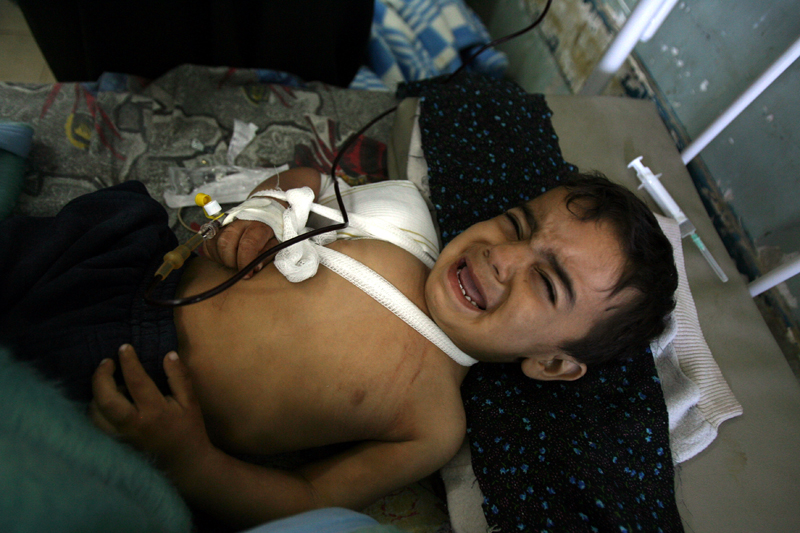
A wounded boy cries at Imam Ali hospital, in the Shiite enclave of Sadr City in Baghdad. The boy was among some 100 people wounded in a twin suicide attack Thursday night on the predominantly Shiite market Shalal in northern Baghdad's district of Shaab. At least 82 people were killed in the attack.
Baghdad, Iraq ? Suicide bombers and militiamen fought back ferociously in the seventh week of the Baghdad security crackdown, killing at least 508 people in the past six days, but the government vowed Friday it would win the race against terrorism and despair.
As the deadly week drew to an end on the Muslim day of rest and prayer, radical cleric Muqtada al-Sadr blamed the United States for the violence and called for a huge anti-American demonstration April 9, the fourth anniversary of the fall of Baghdad.
Marketplaces in Baghdad, Tal Afar and Khalis stood in ruins. Cleanup crews shoveled broken glass and debris into wheelbarrows in blood-stained streets. Bomb victims in wooden coffins were hoisted atop cars and vans for the trip south for burial in the Shiite holy city of Najaf.
In a sign of how deeply officials were shaken by the carnage, a top aide to Prime Minister Prime Minister Nouri al-Maliki, Sami al-Askari, pledged that the government would not relent in efforts to curb violence.
“There is a race between the government and the terrorists who are trying to make people reach the level of despair,” al-Askari said. “But the government is doing its best to defeat terrorists and it definitely will not be affected by these bombings.”
The new U.S. commander in Iraq, Gen. David Petraeus, issued a statement blaming al-Qaida in Iraq for the week’s first major suicide attack, a twin truck bombing that killed 80 people and wounded 185 at markets in Tal Afar in the far northwest portion of the country.
He said al-Qaida’s leaders “once again displayed their total disregard for human life, carrying out barbaric actions against innocent Iraqi citizens in an effort to re-ignite sectarian violence and to undermine recent Iraqi and coalition successes in improving security in Baghdad.”
The Pentagon ratcheted up its rhetoric against Iraq’s Sunni Arab insurgents as well, condemning the recent use of chlorine gas as a weapon. It called that the first use of a poison gas against Iraqis since Saddam Hussein ordered mustard gas attacks on ethnic Kurds in northern Iraq nearly 20 years ago.
Maj. Gen. Michael Barbero, a deputy operations director on the Joint Staff, said he was not implying the insurgents were following Saddam’s pursuit of weapons of mass destruction. But his comments recalled a key U.S. argument for invading Iraq – Saddam’s history of using chemical weapons against his own people.
Insurgents in their Anbar province stronghold have carried out or unsuccessfully launched at least eight attacks using toxic chlorine gas since Jan. 28, when 16 people were killed in Ramadi, the provincial capital. Al-Qaida-linked insurgents were believed to have turned to the weapon to strike terror among fellow Sunnis who have sided with U.S. forces.
While President Bush, the American military and U.S. diplomats in Iraq have expressed cautious optimism about the crackdown on violence that began Feb. 14 in Baghdad, Anbar province and regions surrounding the capital, the ease with which suspected al-Qaida suicide bombers have continued striking Shiite targets must be deeply disconcerting.
Only about a third of the additional 30,000 soldiers and Marines that Bush has pledged for the security drive are in the country, with the full deployment not expected until June.
National
Unhealthy air quality in California city as huge warehouse fire burns for 3rd day
Judge orders Trump administration to restore National Park changes at sites that ‘disparaged’ US
Teens’ reading and math scores have stagnated, US test results show
WASHINGTON (AP) — Younger students have regained ground academically after the pandemic's disruptions while older ...
Lawyers for man accused of killing Charlie Kirk try to block death penalty
Trump’s name poised to come off Kennedy Center