Truck bombs target market shoppers
Baghdad ? Two truck bombs shattered markets in Tal Afar on Tuesday, killing at least 63 people and wounding dozens in the second assault in four days on a predominantly Shiite Muslim city hit by a resurgence in violence a year after it was held up as a symbol of U.S. success.
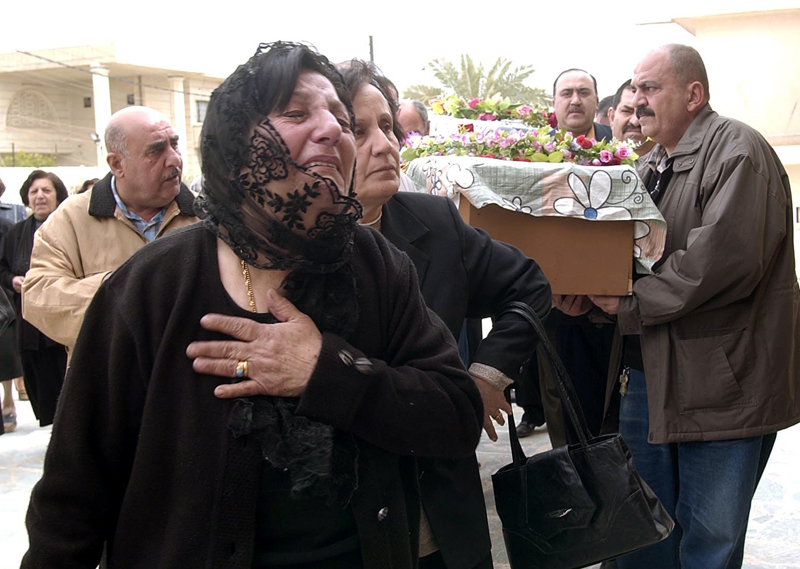
A woman grieves during a funeral for Chaldean Catholic nuns in Kirkuk, Iraq, 180 miles north of Baghdad. Two elderly nuns, Fawzeiyah Naoum, 85, and her 79-year-old sister, Margaret, were stabbed multiple time by two intruders who raided their home Monday night near the Cathedral of the Virgin in Kirkuk.
After the bombings, suspected Sunni insurgents tried to ambush ambulances carrying the injured out of the northwestern city but were driven off by police gunfire, Iraqi authorities said.
The carnage was the worst bloodshed in a day of attacks across Iraq.
A major Sunni Arab insurgent group reported its military leader was slain outside Baghdad, an assault likely to deepen an increasingly bloody rift between al-Qaida in Iraq and opponents of the terror group in Sunni communities west of the capital.
The Sunni insurgent group known as 1920 Revolution Brigades said its military leader, Harith Dhaher al-Dhari, was killed in Abu Ghraib just west of Baghdad. An Iraqi district official said attackers fired rocket-propelled grenades at the man’s car, but the U.S. military said suicide car bombers attacked his house.
In Baghdad, a U.S. soldier and an American working as a U.S. government contractor were killed by a rocket attack on the heavily guarded Green Zone, U.S. officials said. Another contract worker suffered serious wounds and three were slightly wounded. A soldier also was wounded.
A U.S. Marine died during combat operations in Anbar province, a hotbed of Sunni Arab insurgents west of Baghdad, the military said in a statement.
Iraqi police reported at least 109 people killed or found dead nationwide. The toll included two elderly sisters – both Chaldean Catholic nuns in the increasingly tense city of Kirkuk – who were stabbed multiple times in what appeared to be a sectarian killing.
Tal Afar attack
Most of the bloodshed in Tal Afar came when an explosives-laden truck was detonated by remote control as people gathered to buy flour it was carrying in the center of town, 260 miles northwest of Baghdad. A few minutes earlier, a truck loaded with vegetables blew up near a wholesale market on the city’s north side.
Brig. Abdul Karim al-Jubouri, a spokesman for the provincial police, said the first blast killed at least 62 people and wounded 150. The other bomb killed one person and wounded four, he said.
Insurgents waiting in cars on Tal Afar’s outskirts tried to intercept ambulances carrying the wounded to hospitals in nearby Mosul but fled when police escorts opened fire, said Husham al-Hamdani, head of the security committee in Mosul.
Tal Afar, which is about 90 miles east of the Syrian border, is inhabited mainly by ethnic Turkomen. About 60 percent of the residents are Shiite Muslims and the rest Sunni.
The city was an insurgent stronghold until an offensive by U.S. and Iraqi troops in September 2005, when rebel fighters fled into the countryside without a battle. Last March, President Bush cited the operation as an example that gave him “confidence in our strategy.”
Violence spreads out
In other bombings Tuesday, suicide car bombers struck northeast of Ramadi, killing 10 people, and in Baqouba, northeast of Baghdad, killing two policemen and wounding four people, police said.
The vehicle bombings and an outbreak of sectarian clashes in southern Iraq underscored concerns that militants have fled the capital in response to the U.S.-led security crackdown, bringing violence with them to the hinterlands.
Nationwide, the number of deaths from car bombs has decreased slightly since the Baghdad security operation began Feb. 14, but it has more than doubled in areas outside the capital, according to an Associated Press tally.
Car bombs killed at least 349 people in Baghdad in the six weeks since the crackdown began, down from 525 such deaths in the preceding six weeks. But the numbers killed by car bombs outside the capital jumped from at least 100 in the earlier period to at least 233 in the latest six weeks.
National
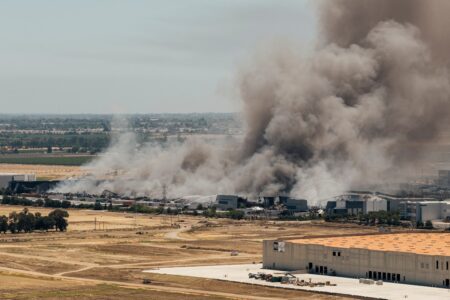
Unhealthy air quality in California city as huge warehouse fire burns for 3rd day
Judge orders Trump administration to restore National Park changes at sites that ‘disparaged’ US
Teens’ reading and math scores have stagnated, US test results show
WASHINGTON (AP) — Younger students have regained ground academically after the pandemic's disruptions while older ...
Lawyers for man accused of killing Charlie Kirk try to block death penalty
Trump’s name poised to come off Kennedy Center