Roadside bomb in Baghdad kills four U.S. soldiers
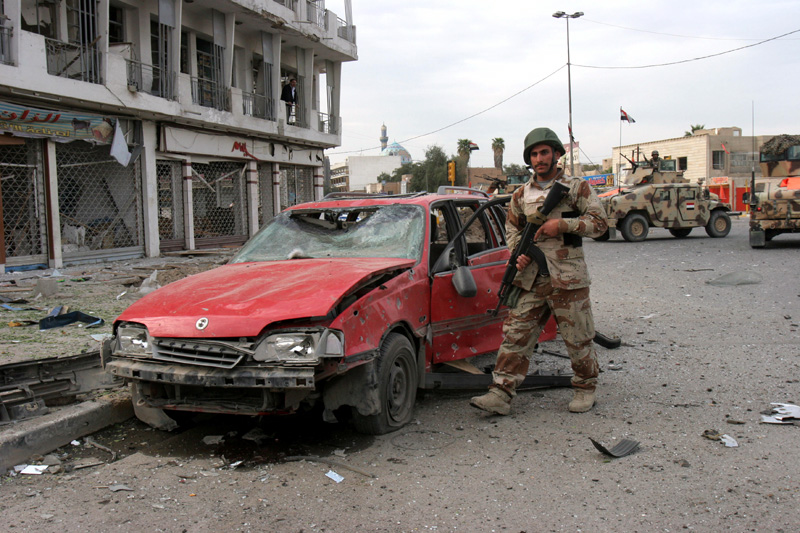
An Iraqi soldier secures Karamanah Square after a car bombing in central Baghdad, Iraq. A suicide car bomber apparently targeted a convoy carrying the head of the Baghdad City Council, Sabir al-Issawi, killing two of his bodyguards. Several other people were killed and 25 were wounded in Thursday's blast.
U.S. Deaths
As of Thursday, at least 3,206 members of the U.S. military have died since the beginning of the Iraq war in March 2003, according to an Associated Press count.
Baghdad, Iraq ? Four U.S. soldiers were killed Thursday in a roadside bombing in mainly Shiite eastern Baghdad and the military said it found a sophisticated weapon at the site of the type that Washington believes is being supplied by Iran to Shiite militias.
Car bombings – the hallmarks of Sunni insurgents – also struck the Baghdad area, killing at least 14 people. More than half of them died when a suicide driver detonated his explosives as a convoy carrying the head of the Baghdad City Council was passing an Iraqi military checkpoint in the central Karradah neighborhood.
The U.S. military said the attack against the Americans began when a bomb went off as a U.S. unit was returning from a search operation. Moments later, a second bomb exploded, killing the four and wounding two other soldiers.
A demolition team that searched the site after the attack found an explosively formed projectile, a type of high-tech bomb the U.S. military thinks is being supplied by Iran in support of Shiite militias. The device was detonated by the team.
American officials say the projectiles account for a relatively small percentage of the roadside bombs used in Iraq but have killed more than 170 U.S. and coalition soldiers since mid-2004.
Earlier, the military said a U.S. soldier was killed Wednesday in fighting in Anbar province, a Sunni insurgent stronghold west of Baghdad, while a Marine died the same day in a noncombat-related incident in Anbar that is under investigation.
The deaths raised to 73 the number of Americans killed in fighting since a U.S.-Iraqi security sweep began Feb. 14.
Most of the U.S. deaths occurred in Baghdad or volatile areas north of the capital and to the west in the Sunni insurgent stronghold of Anbar province.
President Bush committed an extra 21,500 extra combat troops to Baghdad and Anbar as part of the operation to end the sectarian violence in the capital. But violence surged north of the capital as insurgents fled ahead of the crackdown, causing the military to redeploy 700 other troops to that area.
Baghdad has seen a decline in execution-style killings, random shootings and rocket attacks, in large part because Shiite parties have been successful in persuading the Shiite militias to pull armed fighters off the streets to avoid a showdown with the Americans.
Casting a shadow on that strategy, gunmen ambushed the convoy of the top official in the main Shiite district of Sadr City, seriously wounding him and killing two of his bodyguards, according to police and a local official. Rahim al-Darraji has been involved in negotiations with U.S. and Iraqi government officials seeking to persuade the Shiite militias to tamp down the violence against Sunnis.
Sunni insurgents, meanwhile, continued their campaign of car bombings, which the U.S. military has said pose the biggest challenge in cracking down on the sectarian violence in Baghdad.
The attack in Karradah was the second devastating blast to hit the thriving commercial district in four days. An explosives-laden car rammed a flatbed truck packed with Shiite pilgrims there Sunday, killing 32 people.
City Council Chief Sabir al-Issawi was unharmed, but three of his bodyguards were wounded, his deputy, Naeem al-Qabi said.
National
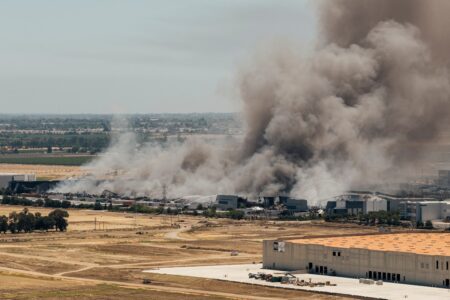
Unhealthy air quality in California city as huge warehouse fire burns for 3rd day
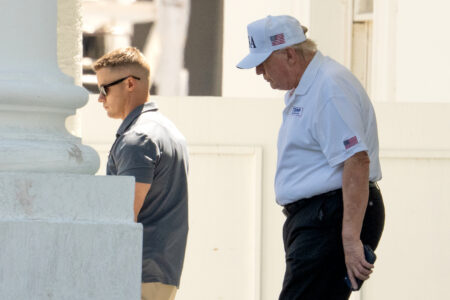
Judge orders Trump administration to restore National Park changes at sites that ‘disparaged’ US
Teens’ reading and math scores have stagnated, US test results show
WASHINGTON (AP) — Younger students have regained ground academically after the pandemic's disruptions while older ...
Lawyers for man accused of killing Charlie Kirk try to block death penalty
Trump’s name poised to come off Kennedy Center