

After quick start, Democrats find obstacles to change
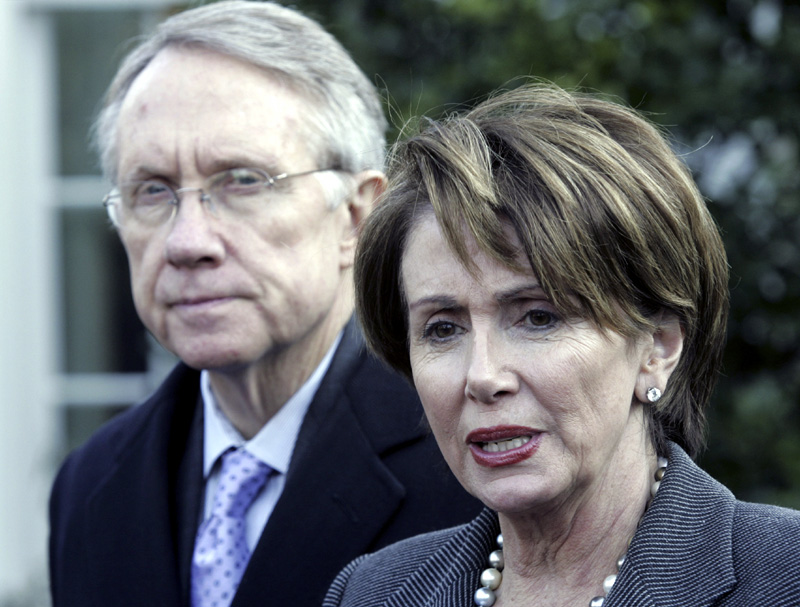
House Speaker Nancy Pelosi and Senate Majority Leader Harry Reid say it's too early to judge them on an unfinished agenda two months after they took control of Congress.
Washington ? Two months after Democrats took control of Congress, there isn’t much to show for the switch in power – despite feverish efforts to weigh in on meaty matters, such as the war in Iraq.
A Vermont park has a new name, a new board oversees the now-infamous House page program and a glitch has been fixed in minting $1 silver coins honoring Thomas Edison.
Democrats also have helped enact into law modest boosts in veterans’ benefits, health research and college loans, perhaps their biggest achievement during their time in power. That accomplishment came on a nearly half-trillion-dollar spending bill that Republicans left uncompleted last fall, when voters decided they wanted a different party than the president’s running Congress.
The face of Congress itself has been altered markedly since Democrats took over this year, with a woman in the House speaker’s chair, anti-war leaders in senior posts and a veritable glut of hearings probing everything from Iraq policy to whether the Bush administration is trying to silence climate change researchers.
But thanks to their slim margins of control, the molasseslike pace of the Senate and a president ready to wield his ultimate weapon – the veto – to block their agenda, Democrats’ wish list lacks a single check mark.
“If it requires action in both houses of Congress and a presidential signature, there are limits to how much one party’s agenda can actually see the light of day,” said Thomas Mann, a Brookings Institution congressional expert.
Given those constraints, Mann added, Democrats “are off to a reasonably good start.”
House Democrats proudly showcased a jam-packed first 100 hours in power, during which they muscled through a $2.10 minimum wage raise, a requirement for the government to negotiate for lower Medicare prescription drug prices and a measure that rolled back tax breaks for oil companies. Many of their priority bills even attracted substantial Republican support.
With the exception of the minimum wage measure, however, most of those marquee initiatives have little chance of becoming law, which would take 60 votes in the closely divided Senate and the signature of a president who is hostile to most Democrats’ priorities.
Some leaders say they’re victims of their own success.
“We raised expectations by doing so much so quickly, so effectively that it would all of a sudden therefore just happen,” said House Majority Leader Steny Hoyer, D-Md., with a snap of his fingers. “In moving so fast, we gave the impression it was easy.”
Changing course in Iraq is the most puzzling of their unfulfilled promises and the one drawing the most public attention. A symbolic House vote and two in the Senate repudiating President Bush’s plan to send an additional 21,500 troops have brought the party no closer to consensus on how to stop the buildup or scale back the war.
The issue already is dividing Democrats and threatens to poison the spirit of bipartisanship that would be needed for them to cut deals on topics that seem ripe for compromise, including immigration, education and energy.
Democratic leaders say it’s too early to judge them on an unfinished agenda and contend they should get credit for using their power to demand answers from Bush and highlight his administration’s flawed policies.
National

Suspect in Texas shooting had fired at police days earlier, officials say
Man pleads guilty to killing a top Minnesota Democrat and her husband

New tornadoes outside Chicago as severe storms pummel the Midwest

Feds won’t seek death penalty in plea deal with man accused of killing top Minnesota Democrat

NASA unveils astronauts to test tech for future moon landing
Social Security’ fund faces shortfall one year earlier than expected
WASHINGTON (AP) — Social Security 's retirement trust fund is projected to face a funding shortfall in 2032, a ...