Democratic candidates appeal to blacks in debate
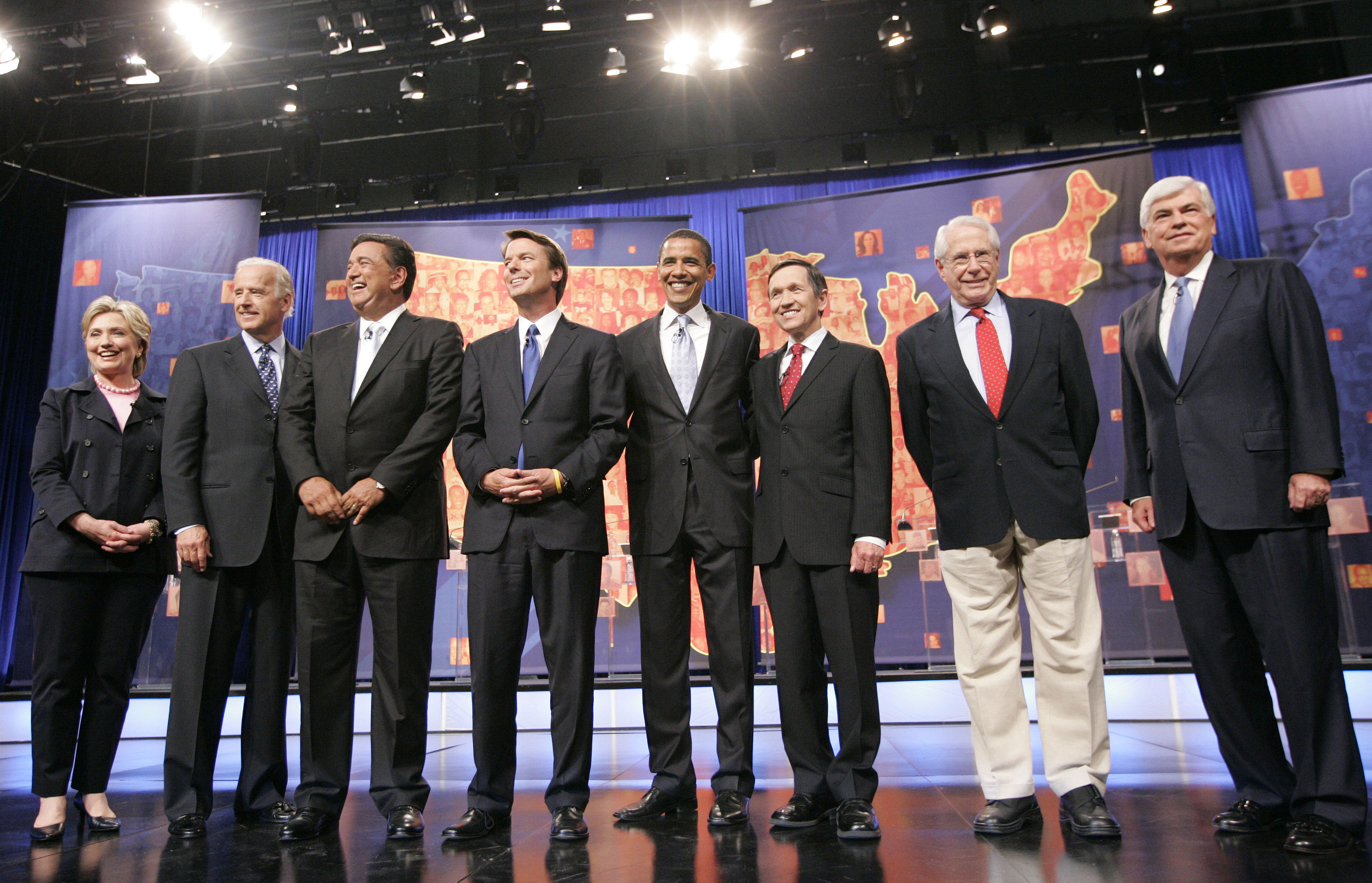
Democratic Presidential hopefuls, from left, Sen. Hillary Clinton, D-N.Y.; Sen. Joseph Biden, D-Del.; New Mexico Gov. Bill Richardson; former Sen. John Edwards, D-N.C.; Sen. Barack Obama, D-Ill.; Rep. Dennis Kucinich, D-Ohio; former Sen. Mike Gravel, D-Alaska; and Sen. Christopher Dodd, D-Conn., gather before the televised Democratic presidential candidates debate Thursday at Howard University in Washington, D.C.
Washington ? A historically diverse field of Democratic presidential candidates – a woman, a black, a Hispanic and five whites – denounced an hours-old Supreme Court desegregation ruling Thursday night and said the nation’s slow march to racial unity is far from over.
“We have made enormous progress, but the progress we have made is not good enough,” said Sen. Barack Obama, the son of a man from Kenya and a woman from Kansas.
Sen. Hillary Rodham Clinton, the first female candidate with a serious shot at the presidency, challenged those who would suggest otherwise. “There is so much left to be done and for anyone to assert that race is not a problem in America today is to deny the reality in front of our very eyes.”
In their third primary debate, the two leading candidates and their fellow Democrats played to the emotions of a predominantly black audience, fighting for a voting bloc that is crucial in the party’s nomination process. They stood united against the Supreme Court and its historic ruling rolling back a half-century of school desegregation laws.
Questions about AIDS, criminal justice, education, taxes, outsourcing jobs, poverty and the Bush administration’s response to Hurricane Katrina all led to the same point: The racial divide still exists.
Clinton drew a huge cheer when she suggested there was a hint of racism in the way AIDS is addressed in this country. “Let me just put this in perspective: If HIV-AIDS were the leading cause of death of white women between the ages of 25 and 34 there would be an outraged outcry in this country.”
Delaware Sen. Joe Biden urged people to be tested for the virus, noting that he and Obama had done so. Cracked the Illinois senator: “I just want to make clear I got tested with Michelle,” his wife, Obama said drawing laughter from the predominantly black audience.
While the first two debates focused on their narrow differences on Iraq, moderator Tavis Smiley promised to steer the candidates to other issues that matter to black America, including health care, education, police accountability, housing and voting rights.
The debate was held at Howard University, a historically black college in the nation’s capital.
Black voters are a large and critical part of the Democratic primary electorate, making the debate a must-attend for candidates seeking the party’s presidential nomination. Civil rights activist Al Sharpton and Princeton University scholar Cornel West were among those in the audience.
The debate was an opportunity for Obama, who got mixed reviews from his first two debate performances, to stand out and share a bond with the audience. He is in a tight contest for the black vote with Clinton, who benefits from good will for her husband among blacks.
In turn, the candidates discussed their hopes to stem poverty, close the economic gap between the rich and poor, fight AIDS and overhaul a judicial system that doesn’t always seem colorblind.
“This issue of poverty is the cause of my life,” said John Edwards, the 2004 vice presidential nominee.
Said Obama: “It starts with birth.”
National
Teens’ reading and math scores have stagnated, US test results show
WASHINGTON (AP) — Younger students have regained ground academically after the pandemic's disruptions while older ...
Lawyers for man accused of killing Charlie Kirk try to block death penalty

Trump’s name poised to come off Kennedy Center

Suspect in Texas shooting had fired at police days earlier, officials say
Man pleads guilty to killing a top Minnesota Democrat and her husband