

Critics make no ‘Secret’ of disliking book
Chicago ? The woman with long, dark hair looks yearningly at the gold necklace in the window of a jewelry store. She fixates on the bling. There’s some kind of disruption in the atmosphere. And then, the necklace is draped around her neck.
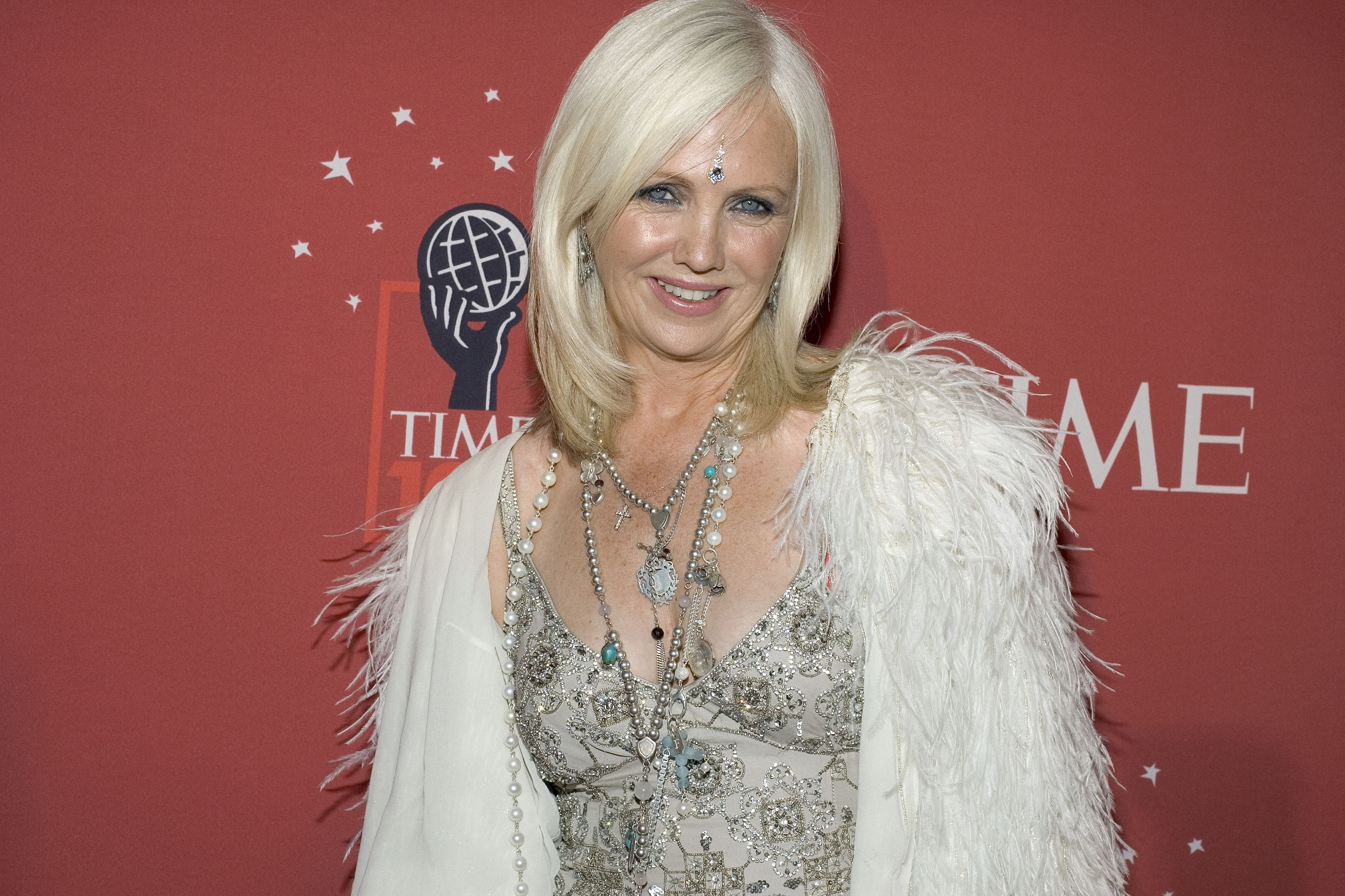
Rhonda Byrne, author of the book The
The scenes unfold in “The Secret,” a 90-minute-long DVD advocating the power of positive thinking that has sold 2 million copies. More than 5.2 million copies of the book of the same name are in print.
While “The Secret” has become a pop culture phenomenon, it also has drawn critics who are not quiet about labeling the movement a fad, embarrassingly materialistic or the latest example of an American propensity of wanting something for nothing.
Some medical professionals suggest it could even lead to a blame-the-victim mentality and actually be dangerous to those suffering from serious illness or mental disorders.
“So that would mean that if you’re poor, you have somehow earned it by your thinking,” said John Norcross, a psychologist and professor at the University of Scranton in Pennsylvania who conducts research on self-help books. “If you’ve been sexually abused, you’d be surprised to hear that some way, you’re responsible for that.
“Cancer victims. Sexual assault victims. Holocaust victims. They’re responsible? The book is riddled with these destructive falsehoods.”
‘Law of attraction’
“The Secret” is the work of Rhonda Byrne, an Australian television and film producer. Her central claim is that the “law of attraction” governs our universe.
“The law of attraction says that like attracts like, and when you think and feel what you want to attract on the inside, the law will use people, circumstances and events to magnetize what you want to you, and magnetize you to it,” Byrne said in an e-mail in response to several questions posed by The Associated Press.
She said she was struggling personally and professionally several years ago when she was given a nearly 100-year-old book called “The Science of Getting Rich,” by Wallace D. Wattles. In it, readers are guaranteed to become wealthy if they learn and follow “certain laws which govern the process of acquiring riches.”
Inspired to do further research, Byrne said, she resolved to create a film to spread the word about what she felt she had learned about the “law of attraction.”
The DVD, also available as a Web-based, pay-per-view video, was released in March 2006. It resembles a videotaped seminar, featuring commentators with titles such as “quantum physicist,” “philosopher” and “visionary” – many of whom had already written their own books. Its trailer has cloak-and-dagger images, yellowed scrolls and mystical music evoking another massive publishing hit, “The Da Vinci Code.”
The book, which followed last November, features images of wax seals and paper that mimics parchment. It’s currently the No. 1 nonfiction book on lists of best-sellers, including Publishers Weekly, The Wall Street Journal and USA Today, and is No. 1 on The New York Times’ hardcover advice list.
As with many publishing hits, the “Oprah Effect” played a role. Winfrey devoted two shows in February to “The Secret,” and Larry King and Ellen DeGeneres also featured it on their shows. It was spoofed on “Saturday Night Live” when a man portraying a refugee in the Darfur region of Sudan was blamed for having negative thoughts.
Harmful line of thinking
However, the fear that “The Secret” will lead to a blame-the-victim mentality is a serious claim of critics.
Psychotherapist and lifestyle coach Stacy Kaiser said that after reading “The Secret,” several patients have worried that it was their fault they were abused, or laid off from their jobs. Others seem to expect everything in their lives to change overnight, she said.
The Los Angeles-based Kaiser joined several other therapists who praised the positive thinking espoused in “The Secret,” but who question its failure to discuss action.
“People start to think that they don’t have to use their free will, that they don’t have to have power anymore, that they don’t have to make choices,” Kaiser said. “They don’t realize they have to do the work. And that’s the conversation I keep having to have with people.”
Arts and Entertainment

Nominations, call for artists open for Lawrence’s 2026 Phoenix Awards
Go, See, Do: ‘Addams Family’, PRIDE parade and a host of library events among offerings

Lawrence library’s ‘How-To Festival’ allows residents to showcase their talents and expertise

AI helped a musician with Parkinson’s finish his new album when he could no longer play guitar
Go, See, Do: Final Friday Art Walk, City Band concert in the park, markets and more