Russia’s rhetoric shows wide discord with West
Moscow ? President Vladimir Putin called himself the world’s only “absolute and pure democrat” in an interview published Monday, and launched scathing attacks on the U.S. and Europe ahead of this week’s Group of Eight summit.
At the same time, the 54-year-old Putin hinted that he may not be ready to leave the public stage after all when his second term expires next year. “I am far from pension age and it would be absurd just to sit at home doing nothing,” he told a group of reporters invited to dinner over the weekend.
Despite Russia’s agreement last month to tone down the rhetoric, Putin’s statements exposed vast gaps between Russia and the West ahead of this week’s Group of Eight summit. He called Britain’s decision to demand the extradition of the man suspected of killing former KGB agent Alexander Litvinenko with a radioactive poison an act of “stupidity.”
The interview touched on much that the rest of the world finds disturbing about Putin’s Russia: the backsliding on democracy, the increasing assertion of military power, the general perception of a leader who feels immune to international criticism.
To the many Westerners who say he has rolled back Russia’s democratic reforms, Putin responded with the startling assertion that he is the world’s one true champion of democracy.
“I am an absolute and pure democrat,” Putin said. “But you know what the misfortune is? Not even a misfortune but a real tragedy? It’s that I am alone, there simply aren’t others like this in the world.”
The transcript noted that Putin laughed when making that comment, suggesting he was joking. A few moments later he added: “After the death of Mahatma Gandhi, there’s nobody to talk to.”
Sandwiched between his acid criticisms and ironic assertions was a brief but brutal criticism of the West.
“We look at what has been created in North America – horror: torture, homelessness, Guantanamo, detention without courts or investigation,” he said.
Rather than try to soothe nerves before the G-8 summit in Germany, Putin repeated, and even amplified, recent Kremlin criticism of the United States – including his allegation in February that the United States was engaging in a “hyper-use of power,” and Russian officials’ denunciation of purported Western attempts to destabilize Russia by funding pro-democracy groups.
Russia is scheduled to hold presidential elections in March. Putin, who was re-elected in 2004 with more than 71 percent of the vote, has presided over one of the most prosperous periods in Russian history and enjoys sky-high approval ratings.
Putin has not publicly said whom he would prefer to see succeed him.
National
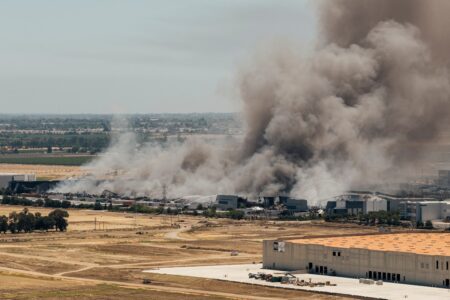
Unhealthy air quality in California city as huge warehouse fire burns for 3rd day
Judge orders Trump administration to restore National Park changes at sites that ‘disparaged’ US
Teens’ reading and math scores have stagnated, US test results show
WASHINGTON (AP) — Younger students have regained ground academically after the pandemic's disruptions while older ...
Lawyers for man accused of killing Charlie Kirk try to block death penalty

Trump’s name poised to come off Kennedy Center