$1M gap stymies teacher salary talks
School district and Lawrence Education Association negotiators say they are more than $1 million apart on their proposals for teachers salaries.
Although they agreed on some nonsalary issues Monday, each side’s offer revealed a rift in philosophy with neither appearing ready to budge.
“There’s no reason for your proposal to be where it is, and I just don’t understand it,” said Kelly Barker, the LEA’s lead negotiator.
“We want to do the best we can for our teachers. We’re just not perhaps agreeing about some of those other expenses that have to take place as well,” said Kim Bodensteiner, the district’s chief academic officer and lead negotiator.
LEA negotiators proposed a $2.2 million increase in the salary schedule, up 5.87 percent from the 2006-2007 schedule.
School district negotiators, including board members Craig Grant and Rich Minder, offered about $1.3 million to be used for salaries plus other benefits. Bodensteiner said the two sides are about $1.2 million apart because the LEA proposal does not include the extra benefits.
The main salary disagreement centers on each side’s interpretation of how to spend new money.
Barker said the LEA thought the district would gain about 11 percent in new state funding and that teacher negotiators were asking for about half of that for salaries. He also said the district is putting itself at a disadvantage in teacher pay compared with competing districts.
But Bodensteiner said pay in the Lawrence district has improved dramatically in recent years, including salary increases of about 15 percent the last two years.
She said the new state funding comes with restrictions that require the money to be spent in certain ways, such as programs for at-risk students and special education.
“(Board members) also have to look at the total picture about what hasn’t been done in the buildings over the past few years,” Bodensteiner said.
But Barker said the district needed to continue to keep pace with area districts’ pay rates.
“If we’re going to stay competitive, we need to put more in than just 2.7 percent,” he said.
The negotiating teams have agreed on other issues, including drafting a memo of understanding on a study of changes to early retirement.
Bodensteiner updated board members on the negotiations in an executive session during Monday night’s meeting, and the two sides are scheduled to resume negotiations Friday afternoon.
K-12 Education
Student-run coffee shop opens at Community Connections at Pinckney, teacher receives surprise $1,000 award
Perry-Lecompton voters to weigh new joint recreation system funded by property tax levy

KU professors, middle school band director, radio personality among this year’s Phoenix Award honorees: ‘It’s a cool mix’
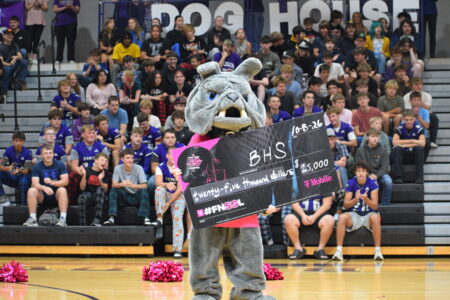
Baldwin High already has won $25K and is competing for $1M through national sports program

A student-run coffee shop will open at Community Connections at Pinckney next week