Cabinet OKs oil management plan
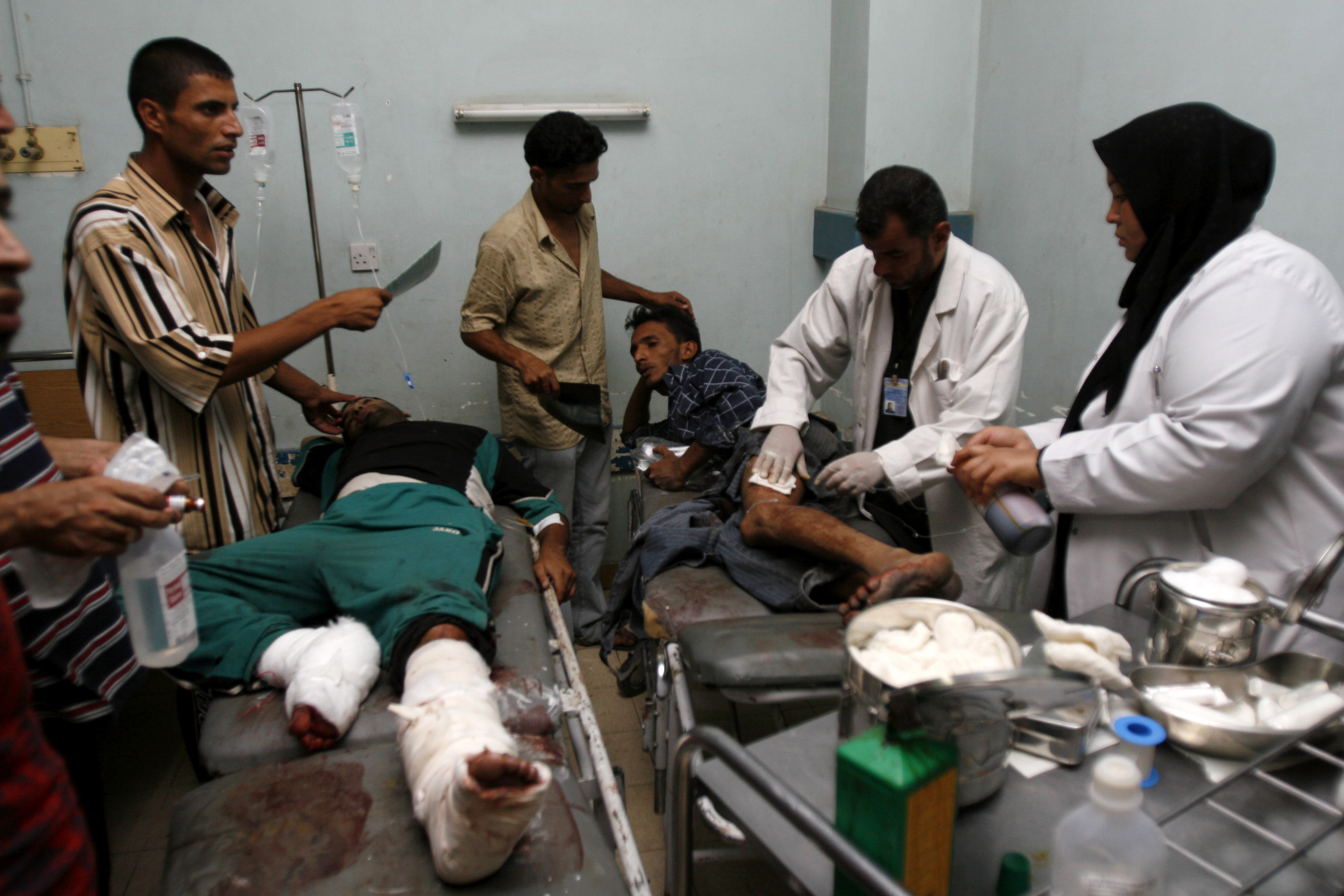
People wounded in a car bomb blast are treated in a hospital Tuesday in the Shiite enclave of Sadr City in Baghdad. A car bomb exploded late Tuesday at an outdoor market in the Shaab area of northeast Baghdad, killing 18 people and wounding 35, police said.
Baghdad ? Iraq’s Cabinet has again approved draft legislation establishing a framework to manage the country’s vast oil resources, Prime Minister Nouri al-Maliki said Tuesday, but has not yet acted on a potentially more contentious companion law that would govern the distribution of oil revenues.
In a televised press conference, al-Maliki also expressed disappointment that a “national unity government” has not been achieved as had hoped, and that recent boycotts by some Sunni and Shiite Parliament members and Cabinet ministers were “causing harm to the citizens and creating depression and disappointment.”
In February of this year, Iraqi officials heralded the Cabinet’s approval of the oil law and said it was headed to Parliament for review, but disagreement halted its progress.
Kurdish officials in particular have been concerned about what power their semi-autonomous state in northern Iraq would have to negotiate oil contracts independent of the rest of the country.
Ashti Hawrami, the minister of natural resources for the Kurdish regional government, said he was unsure what was agreed upon Tuesday. The text approved in February is the only acceptable draft for the Kurds, he said.
U.S. officials have insisted in recent months that progress be made on the oil and revenue-distribution measures in order to promote national reconciliation.
Maliki said the Cabinet voted to approve legislation that outlines the responsibilities of a federal oil and gas council that would have the power to review contracts with oil companies. But 13 of the 37 Cabinet ministers were absent because six Sunni ministers are currently boycotting cabinet as are several Shiite ministers loyal to cleric Muqtada al-Sadr.
Lawmakers said they expected stiff opposition to the draft legislation in Parliament, in particular from Sunni legislators, whose territory in central Iraq does not have the proven oil reserves of the Shiite south or Kurdish north.
In his speech, al-Maliki said he plans to “restructure the entire government” by merging some ministries and slimming the bureaucracy. In coming weeks, he said he will attempt to appoint new ministers to fill vacancies. He called on politicians to stop boycotting the government, a move that is an “embarrassment” for his administration.
Al-Maliki spoke frankly about how the government has not lived up to the promise of cooperation among rival sectarian groups. “It is no shame for us to say that what we were hoping for was not achieved,” he said. “But this does not mean that the government will hesitate from heading toward partnerships with all the components of the Iraqi society.”
Meanwhile, Iraq’s violence continued Tuesday. A car bomb exploded in eastern Baghdad that killed 19 people and wounded 41 others, police said. The blast occurred in the afternoon near a market in the predominantly Shiite neighborhood of Shaab.
In Anbar province in western Iraq, U.S. forces had killed at least 23 suspected insurgents in fierce fighting south of the provincial capital, Ramadi, over the weekend, the military said.
Attack helicopters that flew in to support ground troops fired on suspected insurgents Saturday evening, killing one and wounding two others and destroying two trucks, the military said, according to a military statement. The fighting continued overnight, and by 5 a.m. Sunday a survey of the ground found 22 dead insurgents, seven of them wearing suicide vests.
National
Unhealthy air quality in California city as huge warehouse fire burns for 3rd day
Judge orders Trump administration to restore National Park changes at sites that ‘disparaged’ US
Teens’ reading and math scores have stagnated, US test results show
WASHINGTON (AP) — Younger students have regained ground academically after the pandemic's disruptions while older ...
Lawyers for man accused of killing Charlie Kirk try to block death penalty
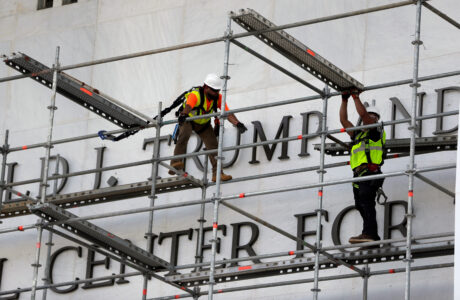
Trump’s name poised to come off Kennedy Center