Writers strike makes Hollywood say ‘humbug’ during Christmas
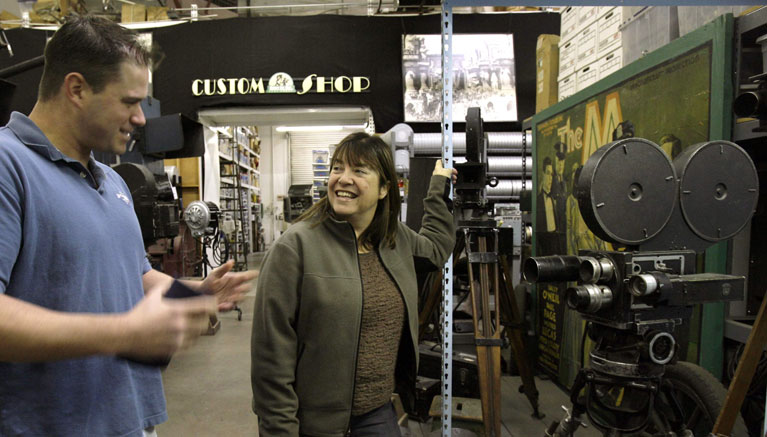
Pamela Elyea talks with a customer, Chris Workman, on Friday inside her prop store, History for Hire, in North Hollywood, Calif. Despite preparing in advance for the writers strike, Elyea had to lay off five part-time workers and shrink the company's holiday party.
Los Angeles ? Nearly two months without paychecks. Scores of shuttered shows. Thousands out of work. The Hollywood writers strike suggests a bleak Christmas for many in Tinsel Town.
But just like a movie script, this story has a twist: many striking writers remain upbeat despite the financial and emotional strains the walkout has brought to the season.
Since members of the Writers Guild of America went on strike Nov. 5, more than $350 million in wages have been lost, said Jack Kyser, chief economist for the Los Angeles Economic Development Committee.
Writers, though, are accustomed to sporadic employment and saving their pennies, and they’re inspired by the feeling that they’re helping their profession and the labor movement at large.
“We’re swept up by the romantic notion of being on strike and doing the right thing,” said Luvh Rakhe, a writer and strike captain for the ABC show “Cavemen.” “By strengthening the union movement in Hollywood, everyone who’s in a union benefits.”
But not everyone sees it that way.
The strike against the studios has also forced nearly 40,000 “below-the-line” workers – including electricians, carpenters, welders and prop masters – out of work, according to the International Alliance of Theatrical Stage Employees. Unlike the writers, who are buoyed by feelings of righteousness and will presumably benefit from the strike’s outcome, these workers are simply jobless at what should be a festive time of year.
The strike has been “devastating” for IATSE members, said spokeswoman Katherine Orloff.
“They’ve not only lost their paychecks, they’re losing hours that contribute to eligibility for health insurance and pension coverage,” she said.
Christmas presents are hardly a concern when “people are going to start losing their homes and their businesses,” she said.
Most writers and below-the-line workers earn middle-class incomes. The average writers-guild member’s salary is $62,000 a year, according to the WGA. IATSE salaries are similar. Strike or no, employment is inconsistent for both groups, with nearly half of writers-guild members and 10 to 15 percent of IATSE members without work during the year.
The WGA prepared its members for the possibility of a strike a year in advance, so many writers saved money and started buying Christmas presents early.
Pamela Elyea, who runs the prop company History for Hire, isn’t pointing fingers. Her main concern is keeping her company afloat and her employees working. She spent a year preparing for the strike and has “a very strong game plan” that will keep the business running through June, she said.
Elyea had to lay off five part-time workers and shrink the company’s holiday party (“This year no guests, no gifts,” she said). She also opted not to exchange gifts with her family. But her full-time staff of 12 is still on the job.
“The best present anybody could have is just to keep their job,” she said.
National

Unhealthy air quality in California city as huge warehouse fire burns for 3rd day
Judge orders Trump administration to restore National Park changes at sites that ‘disparaged’ US
Teens’ reading and math scores have stagnated, US test results show
WASHINGTON (AP) — Younger students have regained ground academically after the pandemic's disruptions while older ...

Lawyers for man accused of killing Charlie Kirk try to block death penalty
Trump’s name poised to come off Kennedy Center