Parliamentary sessions suspended in Baghdad
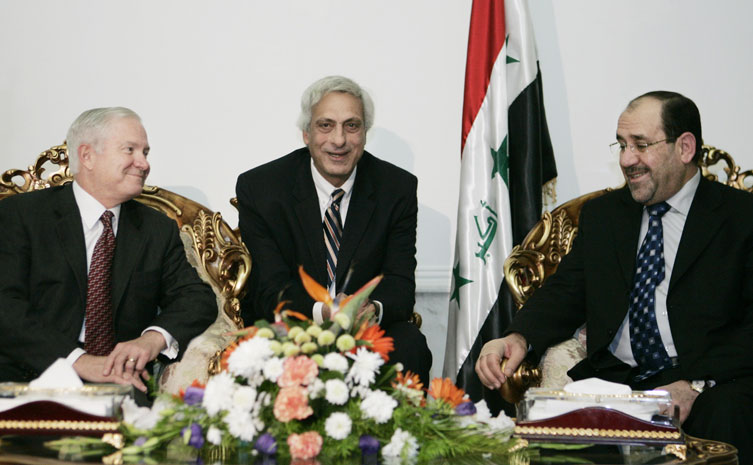
Defense Secretary Robert Gates, left, meets with Iraqi Prime Minister Nouri al-Maliki, right, Wednesday at the presidential palace in Baghdad, Iraq. The man in the center is unidentified.
Baghdad ? Iraqi legislators suspended parliamentary sessions Thursday until the end of the month because of the Muslim religious season – the end of much-delayed efforts to pass U.S.-backed legislation aimed at achieving national reconciliation this year.
Defense Secretary Robert Gates, meanwhile, welcomed a report from his top commander in Iraq that violence has declined 60 percent in the last six months. But Gates warned that “people are getting impatient” for the Iraqi government to take advantage of improved security and move toward needed political reforms.
The Sunni speaker of parliament announced the decision to suspend sessions after days of debate over a draft bill that would allow thousands of former members of Saddam Hussein’s Baath Party to return to their government jobs. The measure is among the 18 benchmarks set by the United States to encourage reconciliation.
Speaker Mahmoud al-Mashhadani said the legislative body would not hold another session until the end of December because many lawmakers would be traveling to Mecca, Saudi Arabia, for the annual Islamic pilgrimage.
Others were expected to leave the capital to spend Eid al-Adha, or the feast of sacrifice, with their families elsewhere in Iraq or abroad. The holiday begins around Dec. 20.
Al-Mashhadani said parliament would reconvene on Dec. 30, a day before the end of the current term for the legislative body. It normally would recess for two months at that time, but legislators were expected to extend the term by a month so they could meet in January to pass a budget and other important measures, a senior U.S. official said, speaking on condition of anonymity because of the sensitivity of the subject.
Nevertheless, the suspension was the latest setback to efforts by Prime Minister Nouri al-Maliki’s Shiite-dominated government to bring minority Sunnis into the political process.
The 275-member parliament came under criticism over the summer for taking the month of August off despite the lack of progress on passing the legislation, including a law to ensure the equitable distribution of Iraq’s oil riches.
Before the legislature adjourned, a shouting match erupted when a Shiite lawmaker accused a powerful Sunni Arab politician of harboring sectarian sentiments against Iraq’s Shiite majority.
The public outburst could renew calls by Shiite politicians that Adnan al-Dulaimi, the Sunni politician, be stripped of his parliamentary immunity to stand trial for inciting sectarian strife.
Iraqi forces have repeatedly raided al-Dulaimi’s offices in a western Baghdad neighborhood over the past week, arresting 42 people linked to the politician after one of his security guards was discovered with a key to an explosives-laden car.
The detained, who included al-Dulaimi’s son, are under criminal investigation, but the chief military spokesman, Brig. Gen. Qassim al-Moussawi, said the politician himself was not under suspicion.
Al-Dulaimi is the leader of the Iraqi Accordance Front, a three-party alliance with 44 seats in parliament, and he has been a harsh critic of al-Maliki, a Shiite. The Front’s six Cabinet ministers have pulled out of the government to protest the prime minister’s policies.
The quarrel began when Bahaa al-Aaraji, a follower of radical Shiite cleric Muqtada al-Sadr, told the 275-seat house that he had evidence that al-Dulaimi branded Shiites “heretics” whose killing is legitimate.
Al-Aaraji said the evidence was in documents he held while addressing parliament, but declined to divulge their contents when he spoke to reporters.
“Everything he said is nothing but lies,” al-Dulaimi told reporters outside the chamber. “I am a well-known and a peaceful personality and I don’t incite the killing of Shiites, Kurds or Sunnis. I dare anyone to prove otherwise.”
National
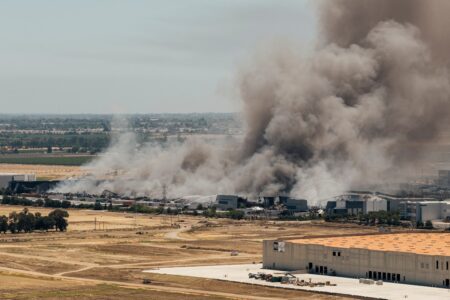
Unhealthy air quality in California city as huge warehouse fire burns for 3rd day
Judge orders Trump administration to restore National Park changes at sites that ‘disparaged’ US
Teens’ reading and math scores have stagnated, US test results show
WASHINGTON (AP) — Younger students have regained ground academically after the pandemic's disruptions while older ...
Lawyers for man accused of killing Charlie Kirk try to block death penalty
Trump’s name poised to come off Kennedy Center