Art on the page
New art books open 'gates of paradise,' from Renaissance bronzes to modern sculpture
Beautiful art, even in book form, may offer a special solace when the world seems awash in every sort of trouble. The season’s most elegant art books don’t take on today’s big problems, but they do bring perspective to the human condition by reminding us that the flame of beauty has flickered throughout the centuries in myriad cultures and innumerable forms: from the biblical bronzes of Renaissance Europe and the Mughal miniatures of Islamic India to contemporary stained glass.
¢ For more than 500 years, Lorenzo Ghiberti’s 15-foot-tall doors in the Baptistery, a black-and-cream marble building in Florence, Italy, were among the wonders of Europe. Called the Gates of Paradise, the doors contain 10 gilded bronze panels depicting, in intricate detail, key scenes from the Old Testament – from Adam and Eve to the reign of King Solomon. Damaged in a disastrous 1966 flood, the panels were replaced by copies in 1990 and the originals restored during the following 15 years. Three of the panels are on view through Jan. 13 at the Metropolitan Museum of Art in New York. The refurbished doors, their history and the restoration process are described and exquisitely photographed in “The Gates of Paradise: Lorenzo Ghiberti’s Renaissance Masterpiece” by Gary M. Radke et al (Yale, $45, 269 color illustrations).
¢ In the mid-1500s, about a century after Ghiberti, a series of Islamic rulers in northern India began to nurture a distinctive culture that became known as Mughal style. For nearly 300 years they commissioned elaborately decorated palaces, carpets, miniature paintings and marble mosaics with dazzling abstract designs and sophisticated floral motifs. The Taj Mahal (1632-43) is the best known of these masterpieces, but its glories are rivaled by monuments and objects throughout the country, many of them lavishly documented in “The Majesty of Mughal Decoration: The Art and Architecture of Islamic India” by George Michell (Thames and Hudson, $65, 300 color illustrations).
¢ Moving briskly on to the 20th century, “Stained Glass: Masterpieces of the Modern Era” by Xavier Barral i Altet (Thames and Hudson, $60, 246 color illustrations) proves that an art form generally associated with religious expression continues to thrive in a largely secular age. The author, a former director of the National Art Museum of Catalonia, documents an astonishing amount of modernist glass – from Art Nouveau bank ceilings to masterpieces by Chagall, Gaudi and Frank Lloyd Wright, the Metropolitan Cathedral in Rio de Janeiro and the National Cathedral of the United States in Washington. Beginning with a thorough history of the form, the book is a revelation.
¢ No holiday book table would be complete without an update on the Impressionists and their chums. “The Impressionists at Leisure” by Pamela Todd (Thames and Hudson, $40, 151 color illustrations) reproduces classic paintings by the greats from Degas’ horse races to croquet scenes by Manet and Winslow Homer. It’s enlivened with sprightly text and period photos of people frolicking in dance halls, at race tracks, by the sea and in other leisure spots. “Van Gogh Paintings: The Masterpieces” by Belinda Thomson (Thames and Hudson, $45. 170 color illustrations) links the artist’s tortured life to his art and laces the very readable text with excerpts from his voluminous correspondence, especially with his long-suffering brother Theo.
¢ While France’s Impressionists garnered inordinate international attention, other countries developed distinctive traditions of their own, as shown in “In Another Light: Danish Painting in the Nineteenth Century” by Patricia G. Berman (Vendome, $75, 288 color illustrations). Between 1790 and 1910, Danish artists – especially sculptor Bertel Thorvaldsen, landscape painter J.T. Lundbye and proto-modernist Vilhelm Hammershoi – proved themselves equal to the best in Europe.
¢ For an aesthetic treat, try “Strawberry Hill: Horace Walpole’s Gothic Castle” by Anna Chalcraft and Judith Viscardi (Frances Lincoln, $45, 56 color illustrations). An 18th-century aesthete and author of the then best-selling novel “The Castle of Otranto,” Walpole virtually invented the Gothic revival style of architecture and interior decor with its theatrical light and color, crenelations, heraldry, tartan wallpaper and other Halloween delights. Walpole (1717-1797) wrote one of the first house guidebooks for visitors to his manse outside London, and he was a delightful letter writer. The recent restoration of Strawberry Hill occasioned this fascinating book, which claims that the film “Psycho” grew indirectly out of a 1764 dream Walpole had about the staircase of his house. Really.
¢ Speaking of houses, one of the United States’ most influential pioneering designers of them is feted in the handsome “Julia Morgan: Architect of Beauty” by Mark Anthony Wilson (Gibbs Smith, $60, 260 color illustrations). Described herein as “America’s first truly independent, licensed woman architect,” Morgan also was the first woman admitted to France’s Ecole des Beaux Arts. That was in 1898, four years after she earned an engineering degree from the University of California, Berkeley. She opened her own architecture office in San Francisco in 1904 and went on to design and build more than 700 structures including churches, cultural centers, bungalows and William Randolph Hearst’s “Castle” at San Simeon, Calif. Fascinating.
Also noteworthy:
¢ “Sculpture Today” by Judith Collins (Phaidon, $69.95, 475 color illustrations). An expansive, useful, well-organized and lucid book blessedly free of the promotional gibberish that too frequently clutters contemporary art publications. The sections on figurative and fragmented body-art are impressively comprehensive, and Collins briskly categorizes and effectively illuminates the work of nearly 400 artists dealing with everything from “traditional materials” to “ephemeral effects.” A rarity in the field.
¢ “Mirror of the World: A New History of Art” by Julian Bell (Thames and Hudson, $45, 267 color illustrations). Bell applies his painter’s eye and sensibility to unusual juxtapositions of world cultures.
¢ “30,000 Years of Art” compiled by Phaidon Press ($49.95, 1,000 color illustrations). Arranged chronologically, this massive and unwieldy volume jumps from culture to culture – so a Leonardo da Vinci portrait of 1475 faces an anonymous Dominican Republic wooden figure of the same date, and Houdon’s famous 1780 statue of Voltaire confronts a Japanese woodblock print. Curious.
¢ “The Worldwide History of Dress” by Patricia Rieff Anawalt (Thames and Hudson, $100, 900 color illustrations). Rather misnamed, this fat, colorful tome has fascinating photos and text about ethnic costumes of people everywhere but in the traditional “West” (i.e. Europe and North America). What is “worldwide” without Paris?
Arts and Entertainment

Watkins Museum to open special exhibit detailing how Douglas County celebrated America’s Bicentennial

Go, See, Do: Kaw River Roots Festival, markets and more

Soccer gear honoring Lawrence history’s all-star team is now on sale as part of city’s public art exhibition
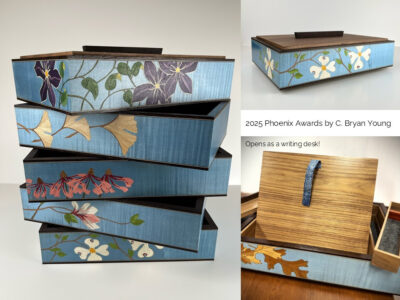
Nominations, call for artists open for Lawrence’s 2026 Phoenix Awards
Go, See, Do: ‘Addams Family’, PRIDE parade and a host of library events among offerings