

‘Absence’ offers a spin on ‘Madame Bovary’-style husband
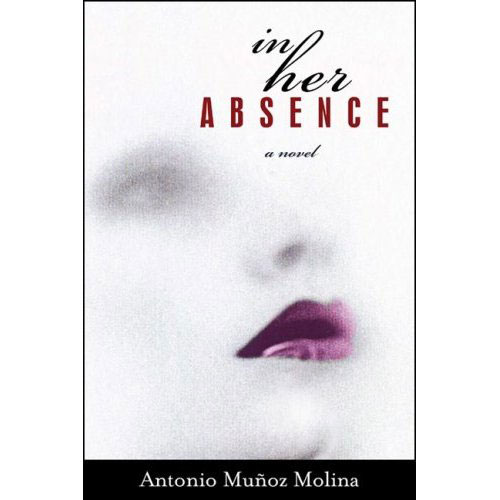
You’d have to be pretty jaded not to get hooked by a book with these opening lines:
“The woman who was not Blanca came down the hall toward Mario wearing Blanca’s green silk blouse, Blanca’s jeans, and Blanca’s ballet flats, her eyes narrowing into a smile as she reached him – eyes the same color and shape as Blanca’s, but not Blanca’s eyes.”
What is going on in “In Her Absence” (Other Press, $13.95)?
Mario Lopez is a civil servant in a provincial town in southern Spain. His wife, Blanca, is a sometime translator and convention hostess with artistic aspirations. In this marriage of opposites, he is from a working-class background, she from a wealthy family; he is plodding and meticulous, she is mercurial and reckless; he wants to start a family, she doesn’t.
Still, having rescued Blanca from a life of druggy dissolution, Mario remains besotted with her. “Six years after meeting her, he was still moved each time he re-entered her presence.”
But when Blanca falls under the sway of an artsy crowd that hangs out in places with names like the “Center for New Theatrical Tendencies,” Mario senses that his life is slipping away from him, “that someone had assigned him a biography that wasn’t really his.” He plunges into despair and isolation, obsessing over the tiniest of details, fearing that Blanca has left him for good.
Has she? Or has she killed herself? Has an impostor actually taken her place? Or is Mario just hallucinating?
Antonio Munoz Molina leaves enough hints for us to figure out who has lost a grip on reality here. But it is the nature of that loss, haunting and obsessional, that makes this slim novella so compelling.
The narrative focuses nominally on the beautiful Blanca and the spell she casts. But the story is really about the earnest Mario and his unraveling. You can read the book as a kind of reverse “Madame Bovary,” told in the third person but from the vantage point of the hapless husband rather than the straying wife. That the narrator is possibly unreliable adds dimension to an already unsettling emotional journey.
Munoz, who shares some of Flaubert’s feel for class distinctions and cultural pretensions, is one of Spain’s most admired writers, and Esther Allen’s fluid translation serves him well, conveying his deceptively spare style, sly wit and eye for telling details. Just don’t expect a resolution of the mystery at the center of this book. It hangs in the air like Blanca’s cigarette smoke: persistent, seductive, suffocating.
Arts and Entertainment

Photos: Lawrence begins World Cup festivities with downtown block party

Watkins Museum to open special exhibit detailing how Douglas County celebrated America’s Bicentennial

Go, See, Do: Kaw River Roots Festival, markets and more

Soccer gear honoring Lawrence history’s all-star team is now on sale as part of city’s public art exhibition

Nominations, call for artists open for Lawrence’s 2026 Phoenix Awards