Truck bombs end lull in violence
U.S. deaths
As of Tuesday, at least 3,700 members of the U.S. military have died since the beginning of the Iraq war in March 2003, according to an Associated Press count.
Baghdad ? A week of relative calm in Iraq was shattered Tuesday when at least two truck bombs blew up in northern Iraq, killing as many as 175 people, and another truck bomb leveled a key bridge north of the capital.
Gunmen in military uniforms kidnapped five officials from a Ministry of Oil building in the capital in what may have been a sectarian attack, and five U.S. service members were killed in Anbar province when their helicopter crashed.
Meanwhile, a tribal leader announced that a follower of Shiite cleric Muqtada al-Sadr had been arrested in the deaths over the weekend of the governor and police chief of Qadisiyah province.
Details of the truck bombings in Nineveh province were unclear. A U.S. military official said that two vehicles blew up near a bus station in the town of Qahataniya, 75 miles west of Mosul. The U.S. official, who agreed to discuss the attacks under condition of anonymity because he wasn’t authorized to speak publicly, said at least 30 people were killed and 60 were wounded.
Other news reports placed the number of truck bombs at four and said that as many as 175 people had been killed. If those figures are correct, it would be the worst one-day total since the U.S. began the current troop surge in February.
The truck bomb that destroyed the Thiraa Dijla bridge, north of Baghdad, was the first major attack on a bridge since June. Police said the blast killed 10 people and injured six. At least three cars fell into the river.
Insurgents had bombed at least a dozen bridges between March and June in what appeared to be an effort to cut traffic arteries that allowed U.S. and Iraqi troops to respond quickly to trouble spots. But those blasts had tapered off in the weeks since the U.S. launched a major offensive to seize car-bomb factories and arrest suspected car-bomb rings.
The kidnapping at the oil ministry’s marketing building in east Baghdad was a return to a tactic that hadn’t been seen in recent weeks. Police said the gunmen were wearing military uniforms. They kidnapped Deputy Minister Abdel Jabar al-Wagaa, four general directors and two guards, police said.
The group exchanged gunfire with the ministry’s guards, injuring five of them. It was unclear if any of the gunmen were injured.
Oil Minister Hussein al-Shahristani, a Shiite Muslim, told state television that he didn’t believe the violence was part of Iraq’s Sunni-Shiite tensions, but an oil ministry official who spoke on condition of anonymity said that four of the five kidnapped officials, including Wagaa, are Sunni. Only one of the officials is Shiite.
Sayd Hussam al-Musawi, a member of a southern Iraqi tribal council, said Iraqi and U.S. troops arrested Sheik Abu Rusil, who’s also a tribal council member and who represents al-Sadr’s political movement, in connection with the Friday assassinations of Qadisiyah Gov. Khalil Jalil Hamza and the province’s police chief, Maj. Gen. Khalid Hassan.
Hamza was affiliated with the Badr Organization, the armed wing of the Supreme Islamic Iraqi Council, Iraq’s largest political party and a bitter rival of al-Sadr’s Mahdi Army. The two organizations have clashed frequently in Diwaniyah, the capital of Qadisiyah. It wasn’t clear if Hassan also had been affiliated with Badr or the Islamic Council.
The U.S. military said the helicopter carrying the U.S. troops crashed in Anbar province during a routine post-maintenance test flight.
National
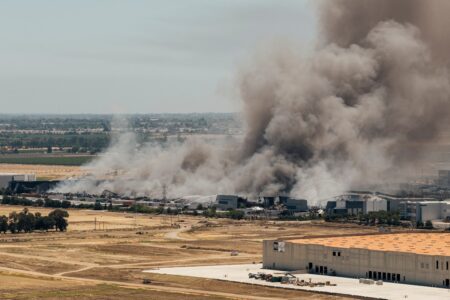
Unhealthy air quality in California city as huge warehouse fire burns for 3rd day
Judge orders Trump administration to restore National Park changes at sites that ‘disparaged’ US
Teens’ reading and math scores have stagnated, US test results show
WASHINGTON (AP) — Younger students have regained ground academically after the pandemic's disruptions while older ...
Lawyers for man accused of killing Charlie Kirk try to block death penalty
Trump’s name poised to come off Kennedy Center