

Historian details backstory of Indian independence
Once the most populous chunk of Britain’s enormous empire, India has become the world’s biggest democracy.
Under Britain, its economy was the world’s greatest basket case. Now its growth rate challenges China’s.
But 60 years after independence, India remains a textbook illustration of enormous wealth and miserable poverty.
Alex von Tunzelmann’s “Indian Summer” (Henry Holt and Company, $30) describes India’s Bollywood film stars taking British-style “memsahibs tea” at the capital’s Imperial Hotel and paying $1,200 for a boutique handbag.
“Outside, shoeless, half-starved children wait at the traffic lights to beg 10-rupee (two and a half cents) notes from rickshaw passengers,” she writes. “From each of these notes, in one of the least appropriate tributes imaginable, smiles the face of Mohandas K. Gandhi.”
“The Secret History of the End of an Empire,” the book’s subtitle, provides a dramatically detailed account of blood, ineptitude and misunderstandings. The first book by von Tunzelmann, 30, an Oxford-educated New Zealander, assembles what Americans will find fascinating oddities of British and Indian life.
She evokes an Indian crowd wildly cheering Lord Mountbatten, Britain’s last viceroy, as he salutes India’s flag for the first time on independence day. About 30,000 people were expected for the ceremony. An estimated 300,000 showed up.
“It was raining babies!” Mountbatten’s daughter Pamela told an Indian writer. Women had brought babies and they were being crushed. “So they threw them up in the air in despair and you just sort of caught a baby as it came down.”
In the rioting after independence, some Indian religious fanatics roasted babies alive because their parents followed another faith. Partisan figures differ widely: 200,000 to 2,000,000 Indians killed over the next few months.
The book sympathetically details the love affair between Mountbatten’s wife Edwina and Jawaharlal Nehru, India’s first prime minister. It began soon after the British couple reached India and ended only with her death a dozen years later.
The affair and Mountbatten’s complaisance were no secret to gossipers. A tacit conspiracy of silence was inspired by fear that public scandal would have unpredictable political consequences: Edwina was much loved by Indians for her charitable work, pursued with great energy at some personal risk. Mountbatten remained devoted, crediting her with much of his success in Asian affairs.
A cousin of Queen Elizabeth, he was tolerated as a young naval officer despite mishaps that won him a reputation among colleagues as “master of disaster.” He lived to become first lord of the admiralty and Earl Mountbatten of Burma, widely known as Dickie. The Irish Republican Army blew him up on a boating excursion in 1979.
Arts and Entertainment
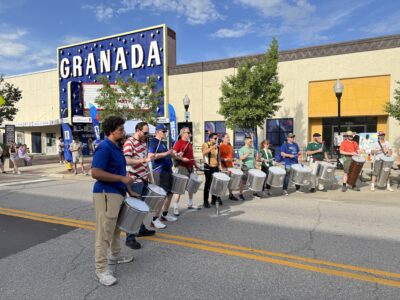
Photos: Lawrence begins World Cup festivities with downtown block party
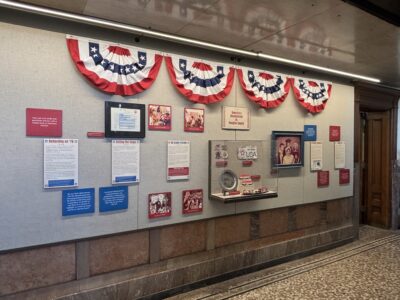
Watkins Museum to open special exhibit detailing how Douglas County celebrated America’s Bicentennial

Go, See, Do: Kaw River Roots Festival, markets and more

Soccer gear honoring Lawrence history’s all-star team is now on sale as part of city’s public art exhibition

Nominations, call for artists open for Lawrence’s 2026 Phoenix Awards