

Roberts regroups after leaving Intelligence Committee
Senator quits high-profile post and spends more time in Kansas
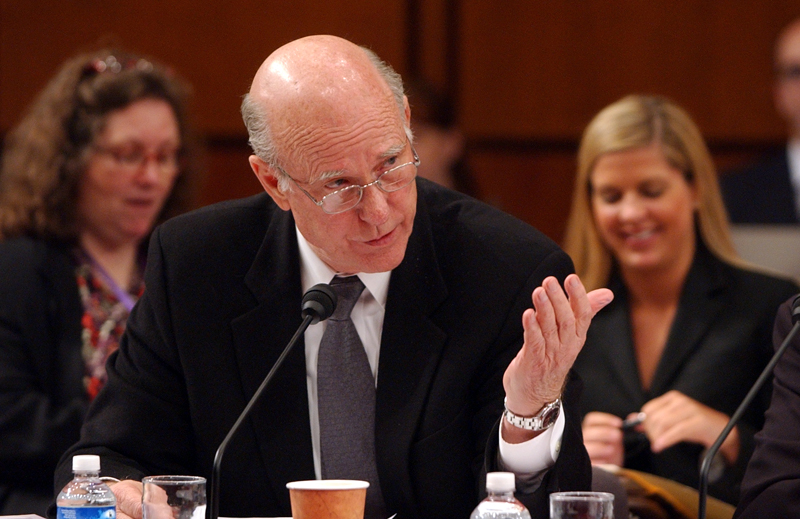
Sen. Pat Roberts, R-Kan., speaks during a hearing Wednesday in Washington, D.C. Roberts, who turns 71 today, plans to run for a third Senate term in 2008.
Washington ? During the four years Sen. Pat Roberts chaired the Senate Intelligence Committee, he was a fixture on the national Sunday morning talk shows.
This year, the Kansas Republican hasn’t made a single appearance on “Meet the Press” or any of the other programs where talking heads once quizzed him about national security and the war in Iraq. Instead, he has spent more time in Kansas talking about senior nutrition programs and small-business child care.
Roberts says his decision to leave the high-profile Intelligence Committee for a spot on the influential Senate Finance Committee after the 2006 election swept Democrats to power was not politically motivated. But it does help him score points with constituents as he seeks a third Senate term.
“Being chairman of the Intelligence Committee was a full-time job,” Roberts said in an interview. “People would ask me, ‘What do you do in the Congress?’ I’d say, ‘Well, right now, I mow the yard, I take out the trash, I feed my son’s dog and I’m saving Western democracy.”‘
Changing landscape
Since leaving the Intelligence Committee, Roberts, who turns 71 today, has been able to increase his profile back home. With the election still more than a year away, he already has launched an aggressive campaign and raised more than $1.2 million to scare off any Democratic challengers.
Though his seat is considered one of the safest among the 21 Republicans up for re-election in 2008, Roberts is taking nothing for granted. He points to the force of outside political groups, known as 527s, which spent nearly $300 million to buy ads that influenced the outcome of elections in 2006.
“I think the political landscape has changed very dramatically and has not been recognized by everybody that is usually interested in the political process,” Roberts said, referring to the clout of the 527s.
“I think without question the outside groups are going to come in,” Roberts said. “I think possibly that they have their pecking order – they would probably lean toward people who are ascertained to be more vulnerable – but you never know. This is way early.”
Roberts watched six sitting GOP senators lose their seats last year, including Sen. Conrad Burns, R-Mont., a longtime friend for whom Roberts spent several days campaigning in Montana last year. Rep. Jim Ryun, R-Kan., also suffered a surprise loss to Democrat Nancy Boyda, giving Democrats new hope in an otherwise solid red state.
“I think he’s doing what other wise politicians are doing,” said Scott Reed, a national Republican strategist. “They’re acting like they’re running for sheriff and they’re 10 points behind and raising the resources to stave off a primary challenge and a possible competitive general election.”
Focus on home
During a recess in February, Roberts launched a 10-city tour of Kansas, talking about the No Child Left Behind Act in Pittsburg, reading to schoolchildren in Coffeyville and honoring World War II veterans in Topeka.
Earlier this year, he addressed a joint session of the state Legislature about his efforts to bring a new federal biodefense lab to Kansas. And last month, he was a “surprise guest conductor” during the National Symphony Orchestra’s performances in Topeka and Wichita.
Roberts has been to so many events in the state this year, even Democrats are taking notice.
“The one thing that’s piqued a lot of interest is that after so many years in Washington, why does Pat Roberts all of a sudden have the urge to reconnect with Kansas?” said Mike Gaughan, executive director of the Kansas Democratic Party.
A Democrat hasn’t been elected to the U.S. Senate from Kansas since the Great Depression and Democrats didn’t even field a candidate against Roberts in 2002. But Gaughan says Roberts can expect an opponent this time, though none has yet stepped forward.
Meanwhile, Roberts is relishing his accomplishments in the Senate this year, despite being in the minority. That includes passage of his bill to provide incentives for small businesses to offer child care for employees with children.
“That was my first promise in 1996, to try to bring a child care bill reality to rural and small-town America,” Roberts said. “And we passed it in a Democratic Congress.”
Out of the line of fire
Political observers call his decision to leave the Intelligence Committee a smart move, considering the questions surrounding intelligence gathering in the lead up to the Iraq war.
Roberts was dogged by claims he helped delay investigations into the intelligence failures that led to the invasion of Iraq. Democrats forced an unusual shutdown of the Senate in 2005 and vented their frustration at Roberts, who called the action a “petty public stunt.”
“By removing himself from that committee at the point at which the Democrats were going to be taking over, he kind of removed himself from being a political target,” said Joe Aistrup, chairman of the political science department at Kansas State University. “That’s a smart thing when you’re up for re-election – not to be the target of some very strong feelings about the way in which intelligence was used to justify the war.”
Roberts said he was proud of his service on the committee, but he just couldn’t pass up a chance to join the Finance Committee.
“Those seats don’t open up,” Roberts said. “That’s the most powerful committee in the Congress in regards to the issues that affect the daily lives and pocketbooks of Kansans.”
State Government
State legislators push back against federal energy regulators ending competitive bids
TOPEKA — Two Kansas legislators asked federal energy regulators to ensure competitive bidding occurs on ...
Senate confirms 1st of 3 Kansas nominees to U.S. District Court
Corporate income tax collections falling sharply in Kansas; Republican, Democratic leaders disagree on what it means
TOPEKA — Corporate income tax collections in Kansas have almost halved since last year, while other sources trend ...
Candidate’s campaign manager created website with documents used to attack rival
TOPEKA — Kansas U.S. Senate candidate Patrick Schmidt’s campaign manager left his digital footprint on ...
GOP secretary of state files to run for governor
