Senator: Funding for war is secure
Political settlement by Iraqis remains key
Washington ? The chairman of the Senate Armed Services Committee, Sen. Carl Levin, D-Mich., said Sunday that the Senate would not cut off funding for the Iraq war but would continue to press President Bush to push Iraqi leaders to reach a settlement to end the violence.
Appearing on ABC’s “This Week,” Levin disagreed with the position voiced last week by Senate Majority Leader Harry Reid D-Nev., who said last Monday that he would co-sponsor legislation to cut off almost all money for the war in Iraq by next March.
“Well, we’re not going to vote to cut funding, period,” Levin said. “Even Harry Reid acknowledged that that’s not going to happen.”
Levin said he believes that a “majority” of Democrats and most of the Republicans will “vote for a bill that funds the troops, period.
“We shouldn’t cut off funding for the troops, but what we should do, and we’re going to do, is continue to press this president to put some pressure on the Iraqi leaders to reach a political settlement,” he said.
“That is what he is not doing. He said that he would insist that they meet their own benchmarks. He said that in January. He has not done that.”
Last month, the Senate and the House voted separately to approve spending bills that would give the Bush administration about $103 billion in new funding for the conflicts in Iraq and Afghanistan but also set timelines for withdrawing U.S. troops from Iraq.
The Senate bill sets a nonbinding target of withdrawing all combat troops by March 31, 2008, while the House bill sets a deadline of Aug. 31, 2008, for complete withdrawal. Democratic leaders in both chambers are negotiating a compromise version to send the president.
In his radio address Saturday, Bush reiterated his threat to veto any spending bill that includes timelines. With slim majorities in both houses of Congress, the Democrats stand little chance of overriding the veto. On Sunday, Levin indicated that once the bill is vetoed, legislators might respond by removing the requirement that troop withdrawals begin within 120 days.
“We’re not going to cut off funding for the troops,” he repeated.
National
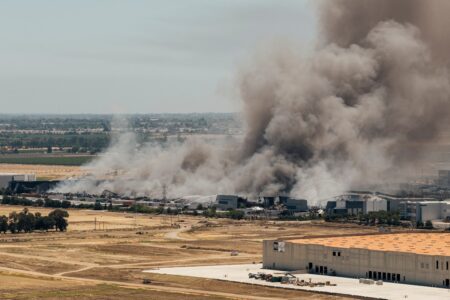
Unhealthy air quality in California city as huge warehouse fire burns for 3rd day
Judge orders Trump administration to restore National Park changes at sites that ‘disparaged’ US
Teens’ reading and math scores have stagnated, US test results show
WASHINGTON (AP) — Younger students have regained ground academically after the pandemic's disruptions while older ...
Lawyers for man accused of killing Charlie Kirk try to block death penalty

Trump’s name poised to come off Kennedy Center