

Democratic leader’s campaign expenditures questioned
Washington ? Senate Democratic leader Harry Reid has been using campaign donations instead of his personal money to pay Christmas bonuses for the support staff at the Ritz-Carlton where he lives in an upscale condominium.
Federal election law bars candidates from converting political donations for personal use.
Questioned about the campaign expenditures by The Associated Press, Reid’s office said Monday his lawyers had approved them but he nonetheless was personally reimbursing his campaign for the $3,300 he had directed to the staff holiday fund at his residence.
Reid also announced he was amending his ethics reports to Congress to more fully account for a Las Vegas land deal that allowed him to collect $1.1 million in 2004 for property he hadn’t personally owned in three years.
In that matter, the senator hadn’t disclosed to Congress that he first sold land to a friend’s limited liability company back in 2001 and took an ownership stake in the company. He collected the seven-figure payout when the company sold the land again in 2004 to others.
Reid portrayed the 2004 sale as a personal sale of land, not mentioning the company’s ownership or its role in the sale.
Reid said his amended ethics reports would list the 2001 sale and the company, called Patrick Lane LLC. He said the amended reports also would divulge two other smaller land deals he had failed to report to Congress.
“I directed my staff to file amended financial disclosure forms noting that in 2001, I transferred title to the land to a Limited Liability Corporation,” Reid said in a statement issued by his office.
He said he believed the 2001 sale did not alter his ownership of the land but that he agreed to file the amended reports because “I believe in ensuring all facts come to light.”
On the Ritz-Carlton holiday donations, Reid gave $600 in 2002, then $1,200 in 2004 and $1,500 in 2005 from his re-election campaign to an entity listed as the REC Employee Holiday Fund. His campaign listed the expenses as campaign “salary” for two of the years and as a “contribution” one year.
Reid’s office said the listing as salary was a “clerical error” and that the use of campaign money for the holiday fund was approved by his lawyers. “I am reimbursing the campaign from my own pocket to prevent this issue from being used in the current campaign season to deflect attention from Republican failures,” he said.
Federal election law permits campaigns to provide “gifts of nominal value” but prohibits candidates from using political donations for personal expenses, such as mortgage, rent or utilities for “any part of any personal residence.” The law specifically defines prohibited personal use expenses as any “obligation or expense of any person that would exist irrespective of the candidate’s campaign or duties as a federal officeholder.”
Reid said Monday he believed the expenses were permissible but he nonetheless was reimbursing the campaign. “These donations were made to thank the men and women who work in the building for the extra work they do as a result of my political activities, and for helping the security officers assigned to me because of my Senate position,” he said.
Larry Noble, the Federal Election Commission’s former chief enforcement lawyer, said Reid’s explanation was aimed at a “gray area” in the law by suggesting donations were tied to his official political work.
“What makes this harder for the senator is that this is his personal residence and this looks like an event that everybody else at the residence is taking out of their personal money as they’re living there,” Noble said.
State and Region

ER visits for tick bites on the rise throughout the Midwest
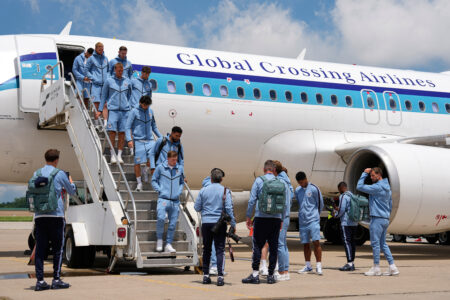
2 Texas men charged after England’s World Cup team gear stolen en route to Kansas City
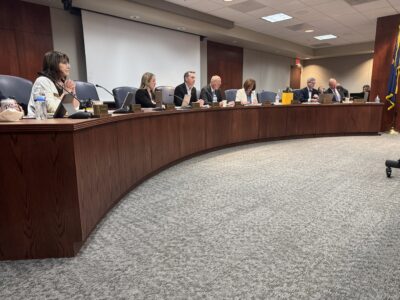
KU professors would be limited in how they could present the idea of systemic racism in future classes

Western Kansas data center project might use less water than farming
State legislators push back against federal energy regulators ending competitive bids
TOPEKA — Two Kansas legislators asked federal energy regulators to ensure competitive bidding occurs on ...
Dozens of delayed ballots arrived after KU pharmacy workers lost union vote
Meagan Bacon was diagnosed with cancer seven years ago. She credits the staff at the University of Kansas Health ...