

Grisham gives nonfiction a try
Best-selling author's newest thriller based on real-world story
New York ? John Grisham’s latest book, “The Innocent Man: Murder and Injustice in a Small Town,” has the usual touches fans have come to expect from the master of the legal thriller: suspense, shock, even a wrongful conviction and near-execution.
But this time, the tale is true.
In his first nonfiction book, Grisham tackles the story of Ron Williamson, a former baseball player who was wrongfully convicted of murder in Ada, Okla., and came within five days of being executed before he was finally acquitted – after nine years on death row.
“The story was all there,” Grisham said in an interview. “All I had to do was put it together.”
Grisham read Williamson’s obituary in The New York Times on Dec. 9, 2004, and he knew he wanted to write the story. He got on the phone with Williamson’s sisters and the deal was done in about three hours. “I was struck by just the compelling nature of the story – it had small town, it was about a trial gone wrong, prosecution not right, man who was mentally ill and a good baseball player.”
Grisham hates research, so he was in uncomfortable territory as he waded through boxes of documents and materials from the family, mental health records, trial transcripts, depositions, fourth-grade report cards. He traveled with a recorder for 18 months, interviewing lawyers, judges and Williamson’s co-defendant, Dennis Fritz, carefully transcribing the quotes.

The newest book from author John Grisham is a legal thriller. But this time it's nonfiction, a new format for the best-selling novelist.
“When I write fiction, it takes a lot to get me out of the seat to check anything,” Grisham said. “I hate to stop the writing to go check a fact, to go find a city, to go to a hotel – I’ll just make stuff up.”
But with “The Innocent Man,” published by Doubleday, he was dogged about getting his facts straight, especially because some of the people in the book still are alive, and because the prosecution botched the case so badly, many individuals aren’t portrayed in good light.
“Many of those people bought that book today, and they’re reading the book now, and what I don’t want people to do is say, ‘Well, here’s a mistake.”‘
Williamson and Fritz were convicted in the slaying of Debra Sue Carter, who was sexually molested and strangled in 1982 in Ada, Okla. Fritz received a life sentence. Williamson spent nine years on death row, at one time coming within five days of execution before a stay was ordered. In April 1999, an Ada judge noted that DNA tests of semen and hair samples did not genetically match Fritz or Williamson and he dismissed the charges.
Glen Gore, the man last seen with Carter, and who helped convict Williamson and Fritz, eventually was convicted in her death, with the help of DNA evidence.
Barry Scheck – a lawyer who founded the Innocence Project, a legal group that uses DNA to exonerate convicts and represented Fritz – said he hopes Grisham’s book will put more focus on the problem of wrongful conviction for people who may not be familiar with such cases.
“Having a writer of his ability and reach getting a story like this will turn the heads of most Americans,” Scheck said. “Hopefully, they will learn that there are solutions, there are ways to make these problems better.”
The story made Grisham – who is against the death penalty – want to get out of his seat and practice law again, although he’s not headed back to the courtroom anytime soon.
“I’m not a crusader,” he said. “I don’t stick to just one issue. I tend to write about it, then leave it. But I hope this book makes people think about the justice system.”
Working with characters he could not control was difficult for Grisham, especially as he got to know Williamson, who died of cancer. A former baseball player in the minor leagues, Williamson was often selfish, a serious drinker and eventually diagnosed with bipolar disease. His behavior often made women uncomfortable.
“About halfway through, I realized my hero was not likable, and that could never happen in fiction, because you control the story,” Grisham said. “I was pretty nervous about the reader. But by the time you get to the trial, you’re sympathetic.”
The story haunts Grisham, who hasn’t been back in court since 1996 when he represented the family of a railroad brakeman killed when he was pinned between two cars. (Grisham won the case, earning his clients a jury award of $683,500 – the biggest verdict of his career.)
Arts and Entertainment
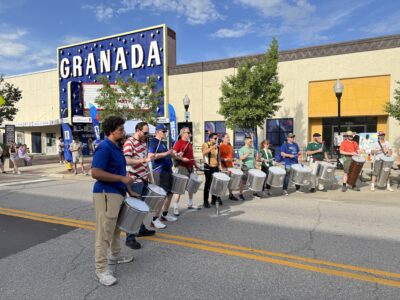
Photos: Lawrence begins World Cup festivities with downtown block party
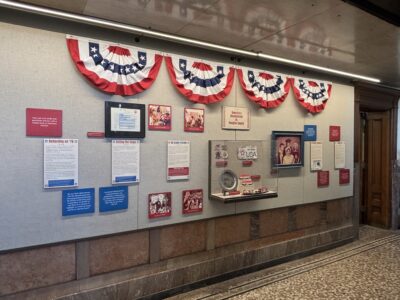
Watkins Museum to open special exhibit detailing how Douglas County celebrated America’s Bicentennial

Go, See, Do: Kaw River Roots Festival, markets and more
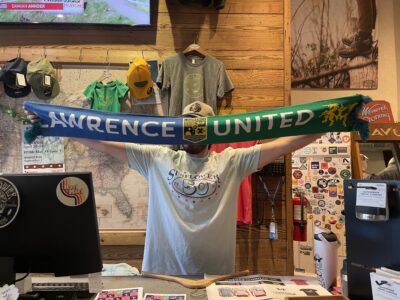
Soccer gear honoring Lawrence history’s all-star team is now on sale as part of city’s public art exhibition

Nominations, call for artists open for Lawrence’s 2026 Phoenix Awards