Companies could be held liable for tainted spinach
Agents must prove negligence
San Francisco ? In opening a criminal investigation into two produce companies involved in the contaminated spinach outbreak, federal agents are following a script first written a decade ago to hold companies responsible for mass food poisoning.
In 1996, authorities secured the first criminal conviction in a food poisoning case when juice-maker Odwalla Inc. was heavily fined for tainted apple juice that killed a baby. It was followed by a case against Sara Lee Corp. five years later that led to a fine for tainted hot dogs and lunch meats that killed 15 people.
Federal officials do not think anyone deliberately contaminated the spinach with E. coli, which has killed two and sickened at least 190 others. Instead, the probe is focused on whether the companies took appropriate steps to make sure their products were safe to eat.
FBI and Food and Drug Administration agents spent 11 hours Wednesday searching Natural Selection Foods LLC and Growers Express, sifting through records for evidence indicating the spinach producers skirted proper procedures.
“We are looking more toward the food-safety issue at this point,” FBI spokesman Joseph Schadler said Thursday, adding that the investigation was in its early stages.
Also Thursday, health officials in Idaho confirmed that the death of a 2-year-old boy was caused by tainted spinach. Test results showed that Kyle Allgood was infected with the same E. coli strain that killed an elderly Wisconsin woman.
Legal experts say the companies do not need to have known that their products were contaminated to be convicted of criminal charges, only negligent in their duties to keep tainted foods from the market.
Lawyers involved in previous food-poisoning cases said the government will likely try to charge the companies under the 1938 Federal Food Drug and Cosmetics Act, which makes it a crime to sell or distribute “adulterated” products – any item deemed unsafe for human or animal consumption.
Distributing contaminated food through interstate commerce is usually a misdemeanor, but it can rise to a felony if authorities find evidence that company officials knowingly took action to compromise the safety of the food supply. Penalties can include jail time.
Tests on spinach recalled from grocers point to nine spinach farms that supplied produce to Natural Selection, one of the nation’s largest distributors of bagged salads. The company issued a statement Wednesday saying it was confident in the cleanliness of its plant and pointing the finger at growers. A spokeswoman said it had no further comment Thursday.
Growers Express operates a food-safety program in which small-scale farmers pay the company to provide health and safety inspections and maintain databases of audit reports. The company turned over those audit reports to the FDA and FBI on Wednesday.
“We make a policy of having our records available,” said Vice President Woody Johnson. “We’re not sophisticated enough to even try to hide this.”
National
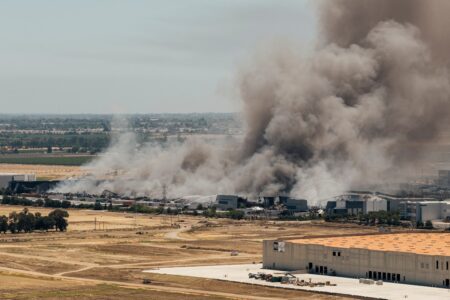
Unhealthy air quality in California city as huge warehouse fire burns for 3rd day
Judge orders Trump administration to restore National Park changes at sites that ‘disparaged’ US
Teens’ reading and math scores have stagnated, US test results show
WASHINGTON (AP) — Younger students have regained ground academically after the pandemic's disruptions while older ...
Lawyers for man accused of killing Charlie Kirk try to block death penalty

Trump’s name poised to come off Kennedy Center