Kidnappers free 70 hostages
Baghdad, Iraq ? Kidnappers released about 70 people snatched in a mass abduction by suspected Shiite militiamen who answer to a key backer of the prime minister – a sign the militants went too far and Iraq’s leader may be yielding to intense U.S. pressure to crack down on sectarian violence.
But Prime Minister Nouri al-Maliki clearly has more work to do. Iraqi police, hospital and morgue officials reported 105 new violent deaths Wednesday; 54 of the victims were tortured and shot, their bodies dumped in Baghdad.
The quick release of many of the captives – less than 24 hours after the abductions – was surprising in a country where hundreds of Iraqis have been kidnapped and murdered each month. In two recent mass kidnappings, both of about 50 people, victims were never seen again.
It was unclear how many Iraqis remained captive from Tuesday’s assault. Government ministries have given wildly varying figures on the number of people seized, ranging from a high of 150 to a low of 40 to 50.
The mass abduction took place in broad daylight when gunmen disguised in the blue camouflage uniforms of police commandos raided the Higher Education Ministry in Karradah, a primarily Shiite area of downtown Baghdad, handcuffed their victims and took them away in about 20 pickup trucks.
The assault was widely believed to have been the work of the Mahdi Army, the heavily armed militia of anti-American Shiite cleric Muqtada al-Sadr, and it raised questions about al-Maliki’s commitment to wipe out the Shiite militias of his prime political backers: the Supreme Council for the Islamic Revolution in Iraq and al-Sadr’s Sadrist Movement.
The mass abduction was seen as retaliation for the recent kidnapping of 50 Shiites south of Baghdad.
But al-Maliki’s public criticism of the kidnappers, and the fact that his Shiite-dominated government quickly won the release of many captives, appeared to be a sign that the militants had gone too far and the prime minister was ready to comply with U.S. demands to corral the militias and their death squads.
When al-Maliki became prime minister in May at the head of a nominal national unity government, he put forward a 24-point reconciliation plan that was optimistically seen as a bid to draw disaffected Sunnis into the political fold.
But as the months passed, extreme violence blamed on the Mahdi Army and to a lesser degree on the Badr Brigade, another Shiite militia, spiraled out of control. The brutal sectarian killings brought Iraq to the edge of civil war.
The unleashing of the militias and their death squads only compounded anger among moderate Sunnis over the prime minister’s seeming inaction on concrete moves toward national reconciliation.
But al-Maliki’s handling of Tuesday’s mass kidnapping suggested that he has realized he can no longer ignore U.S. demands regarding the militias, now that Democrats have taken control of the U.S. Congress and with President Bush reconsidering the goals and mission of U.S. forces in Iraq.
National
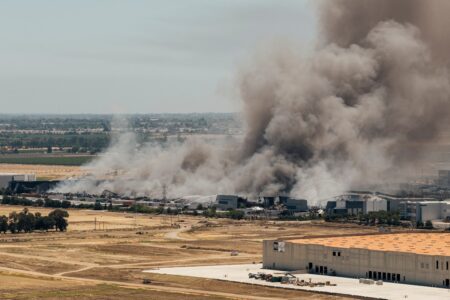
Unhealthy air quality in California city as huge warehouse fire burns for 3rd day

Judge orders Trump administration to restore National Park changes at sites that ‘disparaged’ US
Teens’ reading and math scores have stagnated, US test results show
WASHINGTON (AP) — Younger students have regained ground academically after the pandemic's disruptions while older ...

Lawyers for man accused of killing Charlie Kirk try to block death penalty

Trump’s name poised to come off Kennedy Center