U.S.-Iraqi sweep angers Sunni Arabs
Baghdad, Iraq ? American and Iraqi troops pushing through a desolate area of Iraq’s Sunni Arab heartland rounded up dozens more suspected insurgents, including alleged killers of a television journalist, U.S. and Iraqi officials said Saturday.
The three-day-old sweep through villages 60 miles north of Baghdad stirred growing unease among leading Sunnis. One called it a needless “escalation” at a time of difficult negotiations over forming a broad-based government representing all of Iraq’s communities.
In Baghdad, meanwhile, a dozen more bodies were found as a shadowy war of Shiite-Sunni reprisals went on. And Shiite Muslim pilgrims heading to the holy city of Karbala again came under attack, with a roadside bomb killing one and wounding five.
Reports of violence came from elsewhere as well: an oil tanker driver shot dead 50 miles southeast of Baghdad, a tribal sheik slain 30 miles west of the capital, a car bombing near a U.S. base in the northern city of Tal Afar in which the suicide driver was the only casualty.
Visiting Baghdad, British Defense Secretary John Reid expressed concern about “a greater degree of sectarian violence,” but said he did not believe civil war was imminent. “The most urgent need at the moment is the speedy formation of a government of national unity,” he said.
In a U.S. radio address the day before the third anniversary of the U.S.-British invasion, President Bush said the violence in Iraq “has created a new sense of urgency” among Iraqi leaders to form such a government.
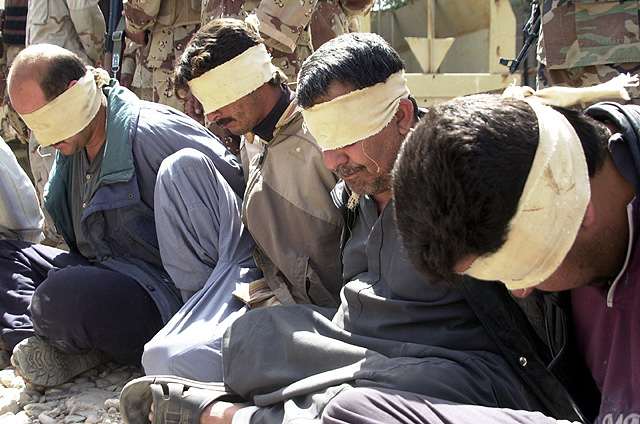
Blindfolded suspects sit after a raid by Iraqi army soldiers near Baqouba, 35 miles northeast of Baghdad, Iraq. Iraqi army solders on Saturday raided a house after a fierce gun battle with unidentified gunmen, killing two gunmen, wounding one and arresting 18 suspects, including a Jordanian national. A large cache of ammunition, RPGs, roadside bombs and CDs of clerics issuing edicts to kill Iraqi police and Army members were also recovered, police said.
Those leaders – representatives of the squabbling Shiite, Sunni and Kurdish blocs in Iraq’s new parliament – were taking a break from negotiations to observe Monday’s major Shiite holiday and Tuesday’s Kurdish new year.
They are deadlocked over how to apportion the most powerful jobs in the new government, as minority factions seek to limit domination by Iraq’s Shiite majority.
In the counterinsurgency sweep, through a 100-square-mile area of semidesert northeast of the Tigris River town of Samarra, Iraqi soldiers and units of the 101st Airborne Division had detained about 80 suspected insurgents as of Saturday, said Lt. Col. Edward S. Loomis, a U.S. spokesman. Seventeen were released after questioning, he said.
The U.S. military reported that two 101st Airborne soldiers were killed Thursday by indirect fire – usually meaning mortars – at the Speicher operating base farther north up the Tigris. The deaths, which Loomis said were not directly related to the sweep, were the second and third involving division soldiers on the day Operation Swarmer began.
At least 2,314 American military personnel have died since the Iraq war began in the early hours of March 20, 2003.
The security net thrown down by Swarmer, described as the largest Iraq operation by helicopter-borne troops in three years, has angered residents of the area, which was a political stronghold of the Sunni-dominated government of Saddam Hussein ousted by the 2003 invasion.
The Iraqi Red Crescent said it sent tents and food to al-Jelam, 15 miles northeast of Samarra, to help people driven from their village by the operation.
National
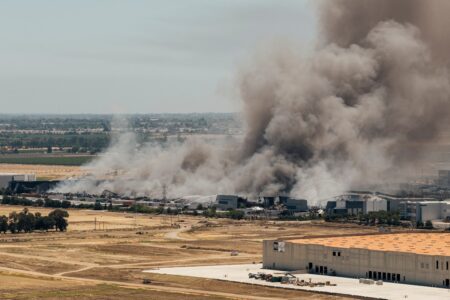
Unhealthy air quality in California city as huge warehouse fire burns for 3rd day
Judge orders Trump administration to restore National Park changes at sites that ‘disparaged’ US
Teens’ reading and math scores have stagnated, US test results show
WASHINGTON (AP) — Younger students have regained ground academically after the pandemic's disruptions while older ...
Lawyers for man accused of killing Charlie Kirk try to block death penalty
Trump’s name poised to come off Kennedy Center