Money-saving move blasted as harmful to children
Some of Kansas’ most needy children are being pushed into foster homes ill-equipped to deal with them because the federal government is trying to save money.
Many of these disabled and troubled children – some of them sexually aggressive teenagers – are being placed in situations where, advocates say, they are nearly certain to fail.
Those who take care of the children are furious about the mandate, which they maintain is the result of bureaucratic decision-making driven by money.
“The long-term outcome is not going to be good,” said executive director Bobick Sarraf of Lawrence’s Achievement Place for Boys. “My kids are wigging out. This is all very stressful to them. Everything is changing. Our treatment program is set up for 18-month lengths of stay. Now we’re being told we’ll only be paid for 140 days” – less than five months.
One boy has already been moved into foster care, and five other children at the Lawrence group home have been told they will be moved by March 31, a deadline now facing dozens of children in similar group homes statewide.
The moves are driven by a recent federal ruling that found Kansas out of compliance with its own Medicaid plan.
The state-written plan restricts stays in group homes to between 140 and 180 days, depending on the level of services provided.
Despite the restrictions, Kansas continued to pay providers for longer stays. And care providers essentially forgot about the unenforced restriction.
“This has been going on for years – 10 years, maybe. It’s never been questioned,” said Bruce Linhos, executive director at Children’s Alliance of Kansas, an association of child welfare programs.
In December, federal officials with the Center for Medicare and Medicaid Services ruled the payments were improper.
And the feds have since heard from Kansans upset with the change in policy.
“A number of concerns have been expressed about the Kansas plan,” said James Scott, an associate regional administrator for children’s health at the Centers for Medicare and Medicaid Services in Kansas City, Mo.
In recent months, federal officials have been scouring state plans, searching for ways to cut or curb Medicaid spending.
“The feds are trying to hold down costs. They’re starting to hold the states to very exact standards,” Linhos said. “They’re tightening the screws.”
State must pay full cost
The crackdown, according to state officials, does not mean children like those at Achievement Place for Boys and Lakemary Center have to be moved. It’s just that the state can’t bill Medicaid for their stays.
Without the federal participation, the state would be left to pick up all the costs, rather than the usual 40 percent. Across the state, group homes are paid $121.50 a day for each child in their care.
“Bad, risky decisions are being made with the lives of some very vulnerable children – and for no good reason other than a conflict between bureaucracies,” said Bill Craig, president and CEO at Lakemary Center, a school and residential center in Paola for children with severe mental disabilities.
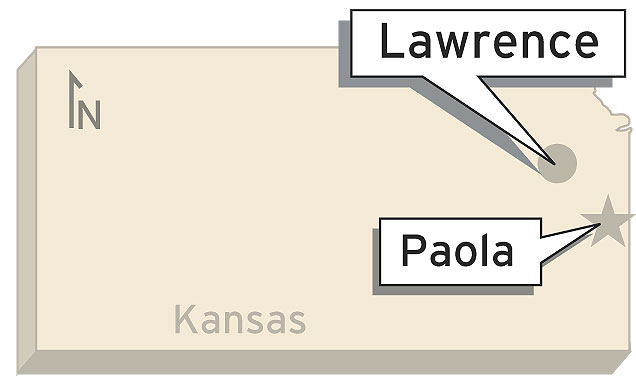
Lakemary Center has been told that 30 children in its care will be moved by March 31, Craig said. Eight of the 30 are already gone.
Of the eight, only two had prior meetings with their new foster families.
“There’s no planning. It’s just ‘move them out,'” said Earl Kilgore, director of children’s services at Lakemary.
Twelve more children are expected to be moved by March 13.
Most of these placements are expected to fail, Kilgore said.
“Two-thirds of the kids we’re talking about have been physically or sexually abused,” he said. “When you’re dealing with a child who’s also developmentally disabled, it takes a really long time to get past that, yet we’re being told they can’t stay past 140 days.”
Until now, the average stay at Lakemary had been 650 days, Kilgore said, or nearly 22 months.
Hasty reviews
Earlier this year, the Kansas Department of Social and Rehabilitation Services directed its regional foster care contractors – St. Francis Academy, United Methodist Youthville, The Farm, and KVC Behavioral Health Care (formerly known as Kaw Valley Center) – to review the files of children who’d been in group homes more than 140 days.
“We fielded a lot of panicked calls,” said Ron Denney, deputy secretary in charge of health care policy at SRS.
The intent, he said, was to find out how many children were ready for foster homes and how many needed to remain in group-home settings.
“We were trying to find out how many kids we might have to fund with state-only dollars,” Denney said.
Records show the state has about 109 children who have been in group homes 140 days and are not ready for foster homes.
It’s not yet known how many children have been moved because of the Medicaid ruling.
Kilgore, of Lakemary Center, said he’s been told by contractors not to worry because children who fail in their foster care placements can cycle back to the center for another 140 days.
“These are extraordinarily high-risk kids,” Kilgore said. “I just can’t see putting them in a foster home so they can fail, so they can come back, so we can repeat the cycle all over again. This doesn’t make sense to me. We’re hurting these kids.”
Caught in the middle
Foster care contractors say they, too, are trapped. They can’t afford to leave children in group homes if Medicaid won’t pay for their stays, and they don’t have enough foster parents to handle the children coming out of the homes.
“It’s true, we are moving children who we prefer could remain where they are,” said Bobbi Mlynar, a spokeswoman for The Farm, the foster care contractor based in Emporia.
It’s unclear when the 140- and 180-day limits were added to the state’s Medicaid plan.
“I’m not exactly sure when the state plan was changed,” said Candy Shively, deputy secretary at SRS.
Linhos said he couldn’t remember, either.
But former SRS Secretary Robert Harder said the limits were added during a Gov. Bill Graves-led campaign to privatize most of the state’s child welfare services in 1996.
“They were put in there to demonstrate to the public and to the Legislature that under privatization, kids would be moving through the system quicker,” Harder said.
Shively did not disagree. The limits, she said, are in keeping with the department’s long-standing goal of caring for children in community settings rather than institutions.
Records show that before privatization, 69 percent of the state’s foster children lived in group-home settings; today, only 15 percent do.
“That’s a good thing,” said Camie Russell, an advocate for parents of children in foster care. “But now we’ve gone too far the other way. No one has ever said there aren’t going to be some kids who need to be in group homes.
“Moving these kids out before they’re ready is just dangerous,” she said.
Finding enough money
Legislators are aware of the Medicaid ruling.
“We got by with this for 10 years and now we can’t do it anymore,” said state Rep. Brenda Landwehr, R-Wichita.
She said efforts were under way to come up with enough money – roughly $750,000 – to pay for the group-home stays through June 30, the end of the state’s fiscal year.
“We’re aware of the problem, we’re trying to address it,” said Landwehr, who leads a subcommittee charged with overseeing the SRS budget.
Landwehr said she’s troubled by reports of children being moved to foster homes before they’re ready.
“That hadn’t better be happening,” she said.
Hearings on the ruling are set for noon Monday and Wednesday.
City Government

Report recommends routing Lawrence Loop down Seventh and New Hampshire; city told consultants not to consider going through Riverfront

Opinion: Lawrence’s data center moratorium is wrong in one way, but right in the most important

Current and former elected officials celebrate Lawrence’s new Municipal Services and Operations campus

‘We have to move forward’: On 3-2 vote, Lawrence City Commission approves budget with 1.4-mill hike

Manufacturer opens new production facility, adds 30 jobs in Lawrence industrial park