Accusations against troops may mark crucial point in war
The accounts are brutal: An Iraqi man dragged from his home, executed and made to look as if he was an insurgent. Three prisoners killed by their Army captors. A team of revenge-seeking Marines going home to home, shooting down unarmed Iraqi men, women, children.
The recent flurry of accusations against U.S. servicemen has stunned military analysts and experts. Many see a critical new point in the war, though few agree whether it shows the toll of combat stress, commanders resolved to stamp out war crimes or, as some claim, an overzealous second-guessing of the troops.
But the number and gravity of the latest allegations have drawn the greatest outcry against U.S. military actions since the Abu Ghraib prison abuses.
“All of a sudden there seem to be charges right and left,” said Loren Thompson at the Lexington Institute, a defense think tank in Arlington, Va. “It clearly has happened in some cases. But it’s hard to tell whether this is a pattern of wrongdoing on our part or just a pattern of closer supervision.”
So far, none of the troops accused in the latest cases has even been tried:
¢ On Friday, a Pennsylvania National Guard spokesman said two Guardsmen were being investigated in connection with the shooting death of an Iraqi earlier this year.
¢ On Wednesday, seven Marines and one Navy corpsman were charged in the April shooting death of an Iraqi man in the town of Hamdania. Charging documents claim the man was taken from his home, forced into a hole, shot and left with a stolen AK-47 near him to make it look as if he fought the troops.
¢ On Monday and Wednesday, three soldiers and a noncommissioned officer were charged in the May deaths of three unarmed Iraqis in military custody in Salahuddin province. A Pentagon official said the detainees were shot while trying to flee.
Those accusations come a few months after another disturbing charge: That in Haditha, a town in the Sunni hotbed of Anbar province, members of a Marine unit killed up to two dozen unarmed Iraqis in and outside their homes after a roadside bomb killed one of the troops. Neighbors told the AP that a small group of Marines went house to house over three hours, while others stood watch.
The death penalty is a possible punishment in at least some of these cases.
One view is that, if proven true, these incidents reflect the toll Iraq has taken on U.S. troops. Since 2003, they have dealt with constant heat and filth, blurred lines between civilian and enemy, and insurgents who rely on dirty tactics like suicide and roadside bombs, lack of uniforms and beheadings.
“This is one of the nastier kinds of fights you could be in,” said Michael O’Hanlon, a defense analyst at the Brookings Institution. American troops “obviously lost a lot of their own compatriots, a lot of them have been there a number of times. Morale is still pretty strong, but I would think there’s a psychological toll.”
Some say that’s to be expected, but criminal behavior still must be prevented: War crimes are an indictment of leadership.
“It’s symptomatic of a combat stress management system that has failed,” said John Pike, director of Globalsecurity.org, a Washington-based military think tank.
“Anybody who contemplates a decision to use force, anybody who contemplates putting boots on the ground has to understand that part of what they’re assuming responsibility for is stressed-out soldiers are going to massacre civilians. It just comes with the territory.”
Still, Pike said that even if true, the number of abuse cases isn’t shocking, given the number of troops and three-plus years of combat: “If this is the worst that the troops have done, the chain of command would appear to have done a pretty good job.”
National
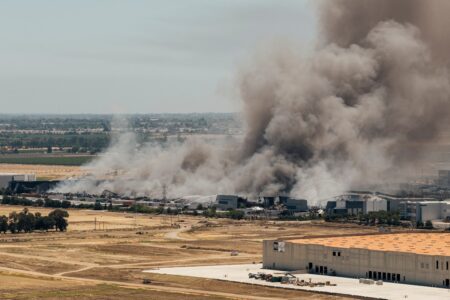
Unhealthy air quality in California city as huge warehouse fire burns for 3rd day
Judge orders Trump administration to restore National Park changes at sites that ‘disparaged’ US
Teens’ reading and math scores have stagnated, US test results show
WASHINGTON (AP) — Younger students have regained ground academically after the pandemic's disruptions while older ...
Lawyers for man accused of killing Charlie Kirk try to block death penalty
Trump’s name poised to come off Kennedy Center