FSHS grad spends summer improving services in African refugee camp
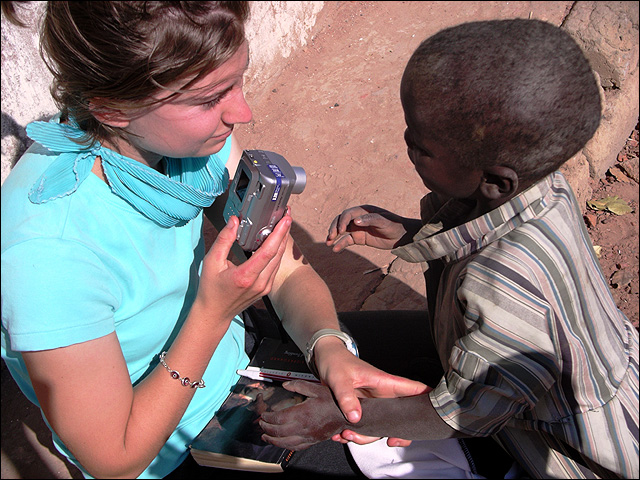
Ellie Ott, a Lawrence native who visited Africa for two months this summer, sits with a child named Kianda at a refugee camp in Zambia. Kianda and other children at the camp were curious about Ott, her camera and other college students who traveled to the camp to improve the library, Ott said.
The challenge when she arrived in Zambia was a little bit different than Ellie Ott, a 2004 Free State High School valedictorian, expected.
When the University of Pittsburgh junior arrived at the Kala Refugee Camp for her two months of work in early May, she discovered that only one person really knew how to use a computer and very few refugees from the Democratic Republic of the Congo knew that United Nations-run camp had a library.
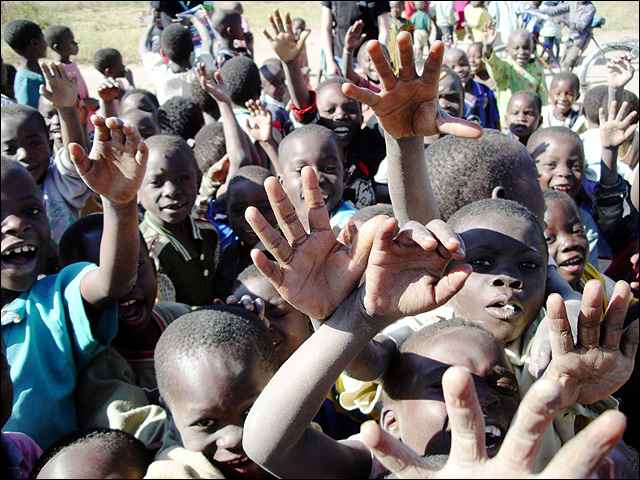
“The refugees have a different culture,” Ott said. “The kids still like to play. They are still kids; they have extended bellies (from hunger), but they are still kids, and the adults – they still want to learn, they want to better their way in life, but they just don’t have the same opportunities.”
After she finished her spring semester at the Pennsylvania school, Ott left for Kala – which houses more than 20,000 refugees – with six other American college students through the student-founded nongovernmental organization Facilitating Opportunities for Refugee Growth and Empowerment, or FORGE. Friends and family members donated $4,500 for Ott’s trip.
When they arrived, Ott and the other Americans had to get the word out about the camp’s library.
“That was part of my project that I really liked because when I arrived, there were only about five people using the library every day,” Ott said. “But by the time we left, there were about 70 people of all ages.”
The Americans also brought five more laptop computers to add to the four already in the camp. After about six computer classes, more refugees had learned the basics. The FORGE volunteers also set up the first newspaper and staff for Kala.
One rocky road leads to the relatively remote camp.
“I’d say it’s pretty safe. It’s a pretty stabilized camp,” Ott said. “A hyena stole one of our goatskins that we had out back, but there was nothing really dangerous that happened.”
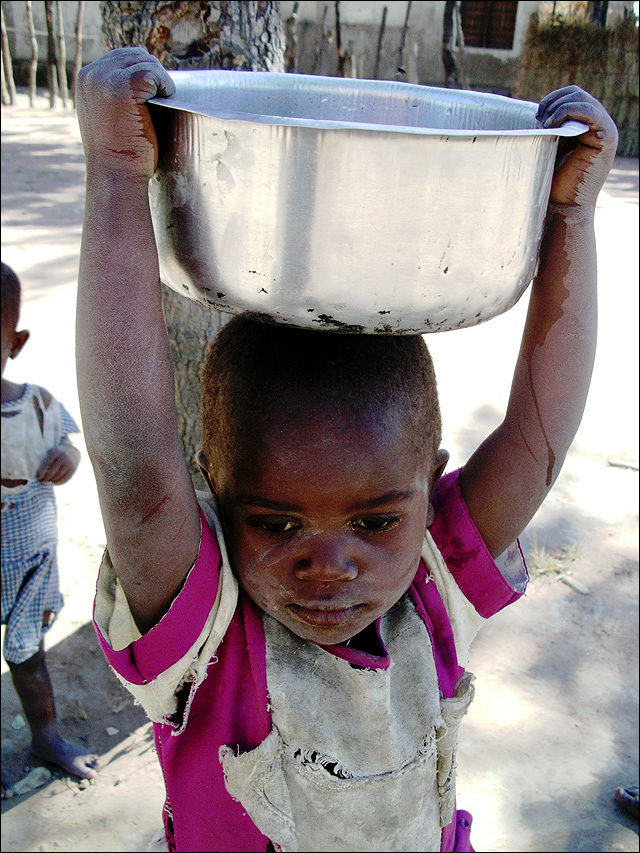
She lived with the volunteers near the Zambian police officers in a primitive mud and brick structure that had no electricity.
They had water for showers, and they hired refugees as night guards and cooks, Ott said. They ate sheema – a ground corn dish – and also bought fresh fruits and vegetables from the camp’s market, which is more than most of the residents could afford, she said.
“They normally don’t feel full. They definitely have problems getting enough to eat,” Ott said.
The volunteers conversed with most of the refugees through translators, who spoke Swahili or other tribal languages. Ott also could speak French with some of the African students.
“What really touched me the most was the people that I became friends with – our translator and the librarian,” Ott said. “I had the opportunity to further my education. I was busy, but the pace of life I actually liked better. Things took longer; it was more relaxed, and you had to spend time greeting people.”
Ott also helped organize a winter-reading program for girl students. If they complete it, they will get a new outfit for school.
Many of the refugees also shared horrific stories, including rape and forced labor, during political turmoil in their former country.
“People became my friends. Then I heard their stories. It’s amazing to me what they have done with what few resources they have,” she said.
Ott returned to the United States on July 12, and she will spend the fall semester in Europe. She hopes to return to Zambia with FORGE next summer to continue education work. The organization’s Web site is www.forgeprogram.org.
“There’s still a lot of work to be done,” she said. “I think it’s important because as American citizens, we have a lot of resources that we use, and we need to keep in mind people through the world and continue to pressure the government to take action and to not forget these people.”
City Government
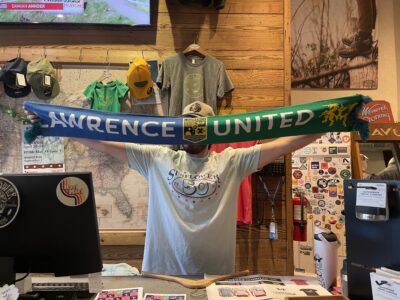
Soccer gear honoring Lawrence history’s all-star team is now on sale as part of city’s public art exhibition
To honor public servants, Lawrence’s July 4 celebration will have a whole gallery of their photos on display; submissions open now
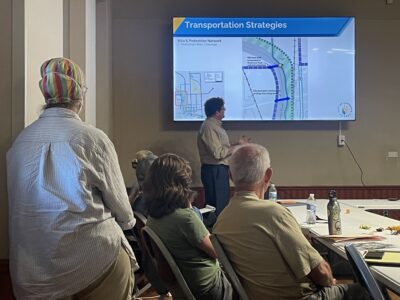
North Lawrence study consultants look at possibilities for a grocery store, food truck park, traffic calming and more
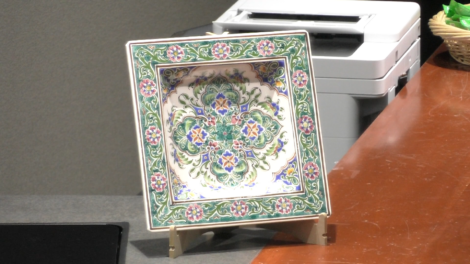
Algerian ambassador gives Lawrence a gift for supporting national team – a piece of art
Lawrence City Commission approves incentives for Alarm.com’s office project in downtown building